
Jonathan Jacob: Photographer's journey from police crime scenes to motorsport, Yorkshire crafts and Mortimer & Whitehouse: Gone Fishing
Jonathan Jacob has photographed everything from scenes of crimes to celebrities and cars, now he is turning his attention to Yorkshire’s at-risk heritage crafts. Catherine Scott spoke to him.

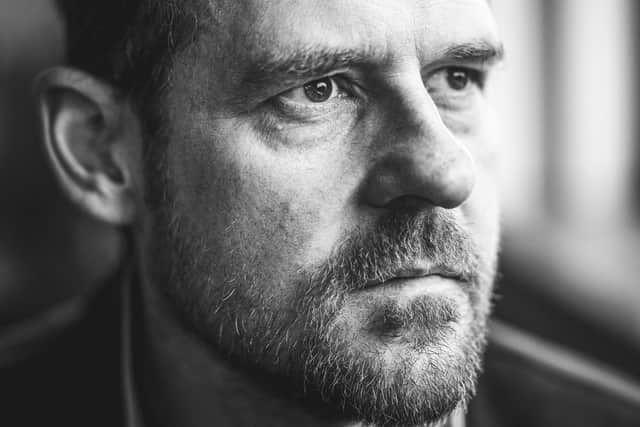
Jonathan Jacob always had a passion for photography he believes passed on from his father through his work for the police. “My dad was bobby in the North East and worked in scientific support in the eighties and nineties doing all the photography at the crime scenes.
"I was brought up with a permanent dark-room at home and knowing my dad photography and that just fuelled me even more.”
At school Jonathan says he wasn’t academic choosing creative subjects such as art, graphics and photography, resulting in the highest grades possible in Photography before moving to Bradford to study photography which resulted in a degree.

Straight from university he worked for a Northern press agency, based in West Yorkshire, dealing with National broadsheets, tabloids and publications. He started as a Picture Desk Manager then progressed to a photographer for a year.
"The feeling of seeing your work in print, being tangible is something that is still as strong today as way back in the late ‘90s,” says Jonathan.
Then an unusual opportunity presented itself when he was given the chance of becoming a Police Photographic Officer for West Yorkshire Police – quite a coincidence when he looks back at what his dad did for a living.
"There was another lad about my age and we were the first two photographers to be employed by the police for a long time.” For Jonathan it was something f a ream come true.
"I always wanted to be a bobby, but my dad put me off it because he said the job was changing from when was doing it. Being employed by the police as a photographer was a really good half way house for me.
“It was a world away from ‘the mags and the rags’, police photography demands high technical and interpretive skills. The remit was wide – from crime scenes to aerial photography, from public disorder to surveillance, and more. Each picture not only captured vital evidence but told the story.”
He said his remit was massive. “I did everything from road traffic accident to murder scenes. I helped train SOCOs (Scenes of Crime Officers) in how to photograph a crime scene. There was a lot of surveillance work for drugs offences and evidence gathering from things like football matches. I love football so that was the best bit of the role.
"There was also a bit of press and PR when needed.”
Often the things he witnessed were quite harrowing and there was little, if any support, compared to now and they often had to rely on a dark humour and banter to get by.
It was the start of digital photography and as West Yorkshire Police had one of the biggest imaging departments in the country it was involved with the Government in bringing in protocols for digital evidence.
"As soon as you started taking pictures you couldn’t format your card as everything had to be in sequence to show that nothing had been added or removed.”
Jonathan thought it was a job for life. “I was so happy. There wasn’t really any career progression but I was so fulfilled, I loved the work. It ticked all my boxes.”
But ten years after he started Government cuts led to him taking redundancy.
It was a difficult time for him as by then he was married with a three year old and a one month old. "I never really wanted to be freelance but I decided to put my faith in action and give it a go.”
He took the difficult decision to become self-employed as a freelance photographer. But having worked for the police for a decade he didn’t have the normal portfolio of work that other freelance photographers did.
It meant he pretty much had to start from scratch.
“I left work on the Friday and started as freelance on the Monday with no kit and no clients,” he recalls. “I fell into business networking with 4N as a way of meeting people and finding clients. I just had to meet as many people as a I could to try to pick up work and get my name out there. But just meeting people isn’t a job.
He started offering to do business portraits at the networking events on the day for small businesses. "I’d take a quick head and shoulders and then send them 10 – 15 black and white and colour and say you can have one for £40 or everything I’ve taken for £70. They were all small or sole traders and they all needed a business portrait . In the end I did about 150 of them over the first four years. They were never going to make me much money but I had to start somewhere. I’d in effect had ten years out of photography and I’m not a businessman either – but I love photography.”
Some commercial work followed, including for 4N who had helped him at the beginning, but he would always go back to what he believed in and that is story telling. “I think that came from my year working for the press agency where your photographs had to tell a story and took that into the business realm.”
Fifteen years later Jonathan is a successful freelance photographer with a wide portfolio from motorsport to events and celebrities.
"It took me four to five years to get back to my police wage which was my aim,” he says.
"My work falls into three categories really: events – like the Baby Show to Manchester Furniture Show and the London show in Olympia. Then I love cars so I shoot for a lot of car magazines and in the last couple of years I’ve tried to get into television work.
"I love to shoot the things that go on behind the scenes I think it is my inquisitive nature. I love to show things that people don’t normally see."
Promoting himself is very much out of Jonathan’s comfort zone, but he realised that he did didn’t have much choice if he wanted to succeed. “I really don’t like making a nuisance of myself but I realised that I did need to push myself and so I did a lot of phoning and email.”
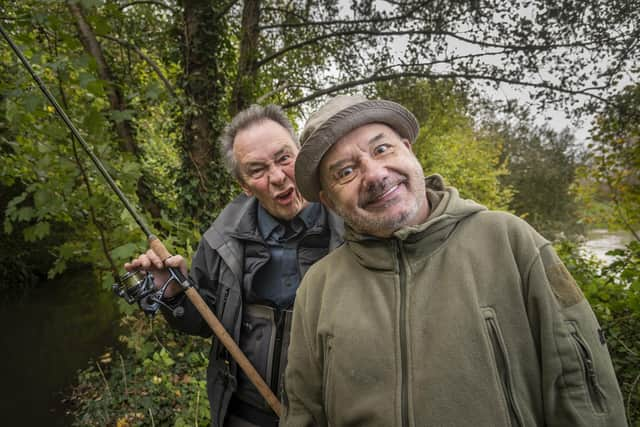
He loves the BBC television series Gone Fishing with Bob Mortimer and Paul Whitehouse.
"I used to be a photographer for a car rally company where we did European tours. The series producer of Gone Fishing was on my last tour. I emailed her and an opportunity arose a year later and since then I have shot promotional photographs of eight episodes of Gone Fishing which was a dream come true.”
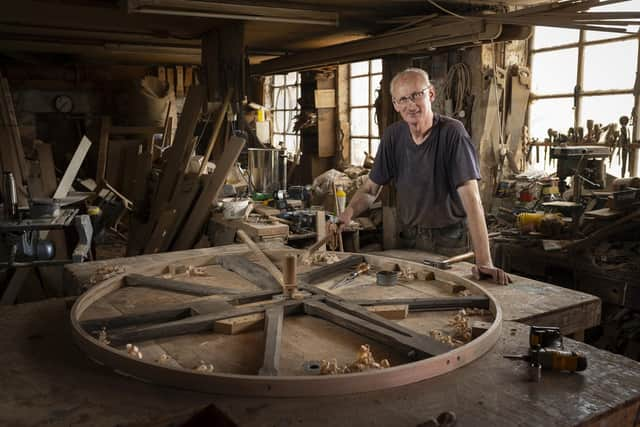
Reviewing his portfolio Jacob decided to do a project at some of Yorkshire’s most at risk heritage crafts.
"I like to tell a story with my photographs,” says Jonathan. “I like to get behind the doors and see what people do.”
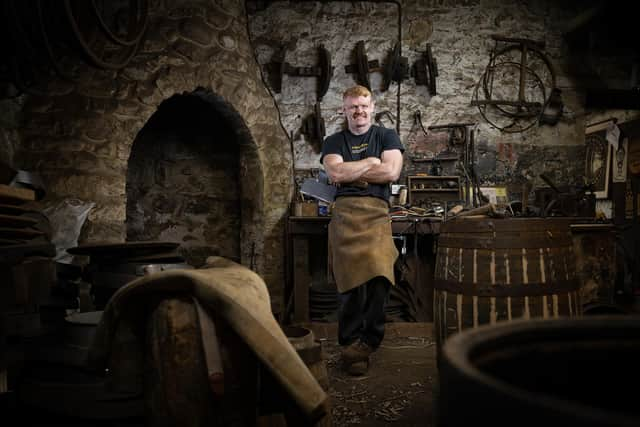
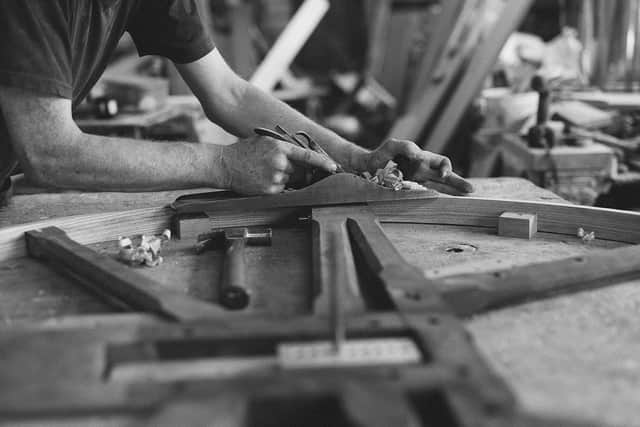
Among those people Jonathan has already photographed are Masham wheelright Ian Johnson and cooper Euan Findlay who works at Masham’s Theakston’s brewery.
“They were both featured in the Channel 4 series, Our Yorkshire Shop. Ian is a carpenter with great skill, and also a wheelwright – and although he is only well known there are probably only four people in the country who do that craft. And also Euan is quite a well known cooper in Yorkshire but there are still not that many in the country.
"But I have also come across less well known heritage craftsmen. Ideally I’d like there to be less than five people in the UK doing that particular craft. I am sure there are people out there going about their business in garages and workshops, and those are the people I really want to photograph."
Jonathan is keen to hear from any heritage craftsmen who might be interested in being involved with his project.