
"You have to be prepared for it to sound ugly when you start," the Yorkshire yodelling sisters Sätteli
A sweet, lilting, almost eerie sound rings out across the valley. The gathered crowd falls silent, some with tears in their eyes, listening to Sätteli, a Yorkshire-based yodelling duo of sisters Louise and Helen Curtis-Streich. Their mother, Barbara, comes from Switzerland’s Bernese Oberland, a heartland of yodelling.
“People have very emotional reactions to our singing,” says Louise.
“They’re often moved to tears,” adds Helen.
Sätteli’s soulful sounds have also been powerful in campaigning for good causes, like performing at an anniversary event to mark the saving of Hardcastle Crags, a wooded valley near Hebden Bridge, from a reservoir flooding scheme.

Known locally as ‘Little Switzerland’, this hilly valley was protected by the community holding peaceful protests until the land was gifted to the National Trust, securing its future.
The Hardcastle Crags Preservation Committee and local arts group 509 Arts marked the moment with ‘Footfall’, a torch-lit woodland procession and ceremony.
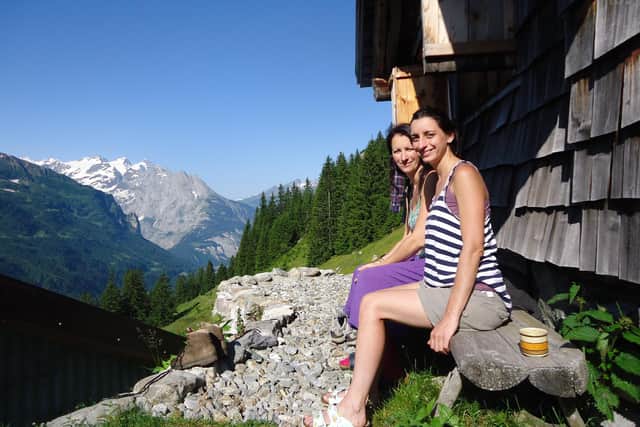
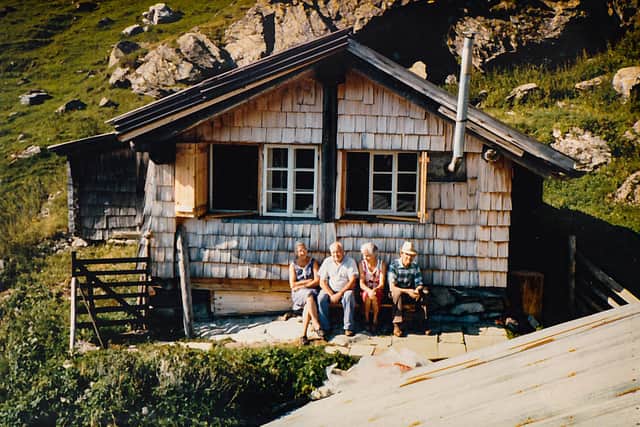
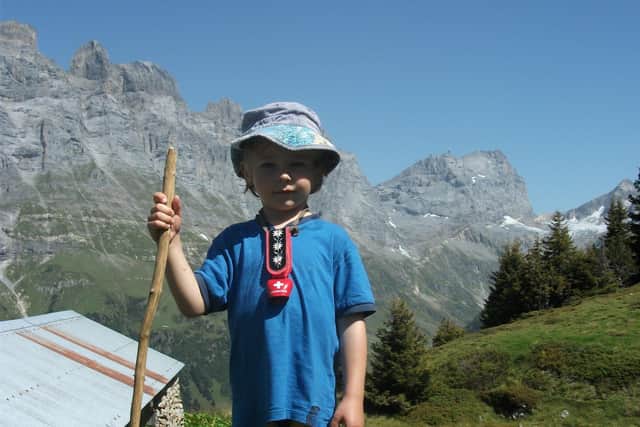
Both sisters spoke Swiss German fluently as children. Helen, going on to study German at A-level and practising with relatives while holidaying at their home from home, a precipitous village called Fuhren perched at 1,200m, surrounded by mountains rising to 3,500m with 200 residents and traditional wooden chalets dating back to the 1700s.
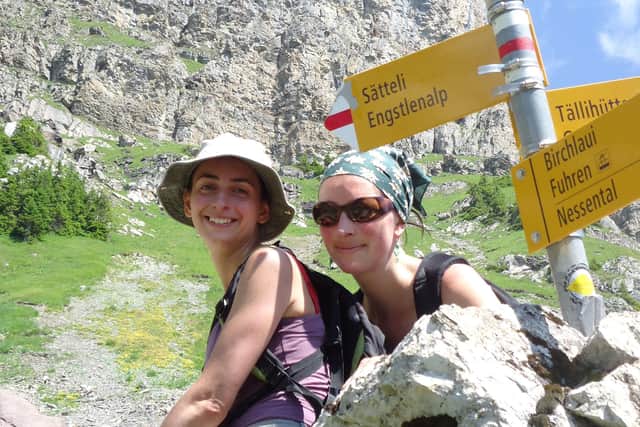
The band name ‘Sätteli’, refers to a small pass or narrow cut in the cliff face where you can cross into the next deep valley beyond their grandparents’ farmhouse.
Idyllic Swiss summers were spent picking bilberries, walking through cool Alpine forests and enjoying picnics by the lake.
“Our childhood was steeped in Swiss culture,” says Louise. “We’re so lucky to have spent summers helping on the farm and hiking the Alps. Our grandad made Alp cheese, a tradition that’s been handed down the generations.”
“‘Mutti’ grew up in a very close-knit traditional community. Uncle Hans ran the local tearoom and bakery. Everyone kept animals, working together haymaking, cheese-making and churning their own butter. Mum’s old next-door neighbours, Francesca and Renee, still live in the village. I often stay with them, but wherever we are, this place remains at the heart of our family,” Helen adds.
“Mum was taught by her aunt, ‘Gotty Hedy’ ('Gotty’ meaning godmother), and we also spent six months at the same one-class school when Helen was six and the youngest in class,” remembers Louise, laughing about their efforts (and, in Helen’s case, sadly failing) to learn to knit.
Mum Barbara worked on the farm from the age of 13. It was hard, physical work, and not without risk, as she once narrowly missed being caught in an avalanche. She and her father were up on the Alp when they heard a huge rumble, and he told her simply to “run”.
She was also warned never to go near the clifftop where golden eagles nest, as they are known to take lambs and baby goats. Defiant young Barbara remembers being chased by an eagle and hiding in a rocky nook, crying, until her father came to the rescue.
The girls remember “smells of nettles and cow dung from the cow shed and freshly cut hay, the sounds of cow bells and wooden floors creaking with the footsteps of our grandparents.”
“Christmas in Switzerland was magical,” says Louise. “With real candles on the Christmas tree, walking through the snow, zesty tangerines and the hypnotic bell ringing in the streets before New Year to rid the village of bad spirits.”
Their fond food memories include just-picked bilberries with cream and sugar (sometimes blended into a smoothie). Bacon, sausage and sauerkraut and Alp cheese melted by the fire and scraped onto bread. They also loved Apfelkuchen (apple cake) and a plum version made with ground hazelnuts, ‘Apfel most’ (a non-alcoholic cider-like apple drink); homemade raspberry syrup and warming milky Ovomaltine.
Helen has visited Switzerland every year for ten years. This year she’s heading to the Monte Rosa mountains near the Italian border, crossing into the Italian Alps.
Louise has children, so she goes every few years, and most recently with Helen and their younger brother, Oliver, to a yodelling festival. Seeing the country as adults, they find the cosmopolitan side of Swiss cities revelatory after Alpine life. “Our connection to the land and Switzerland runs deep,” says Louise.
Already musicians before falling for yodelling, the sisters grew up singing together as a family, and both sets of grandparents play instruments. Louise studied music at university and plays the oboe.
Exploring Swiss folk songs became a way of connecting to their maternal homeland.
Their grandmother’s cousin, Dolfi (which is short for Adolf), lived next door to their grandparents in what was originally one large house split in two. He built his own alphorn from a bent sycamore branch, also playing clarinet and violin.
So, yodelling came naturally. Self-taught, Louise describes learning by ear: “You have to be prepared for it to sound ‘ugly’ when you start.
“We practised in the car where no one could hear, laughed a lot, and celebrated when we first ‘got the break’ [the technical term for the vocal break between chest and head that yodelling exploits].”
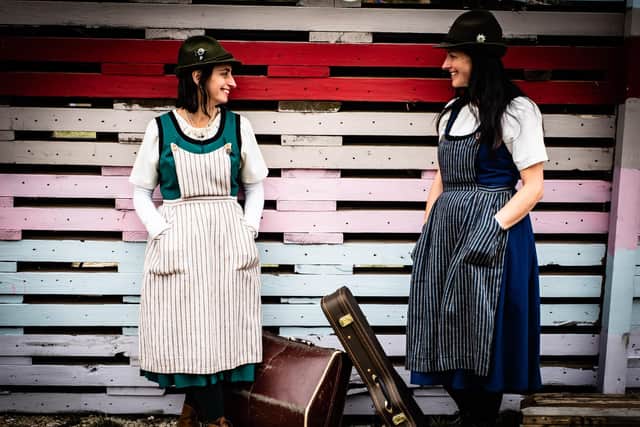
“Swiss yodelling is slower, more lyrical and haunting, and our traditional outfits were gifted to us by Aunty Hanni,” adds Louise.
Helen now lives in Mytholmroyd and Louise in Holmfirth, “surrounded by water with several reservoirs, valleys and waterfalls reminiscent of Switzerland: “Both our hometowns are in steep valleys with over dwellings and under dwellings. I live on the foothills of the Peak District and Pennines.
“We both have such an affinity with hills and really couldn’t live anywhere flat!” Louise laughs.
Yodelling for 17 years, the duo run workshops covering world folk music, including Swiss, Cameroonian and Georgian.
Locally, you might hear them in Hebden Bridge or in a stone railway tunnel that became a popular spot for acoustic singers during lockdown, when people gathered to sing outdoors, and choir leaders messaged each other to book slots.
In 2025 UNESCO named yodelling on the ‘list of intangible cultural heritage’. This unique style of singing, which involves switching between a low-chest voice and a high falsetto, or ‘head voice’, was originally for Alpine folks in rural settings to call across the valleys to communicate. With their Swiss German roots, the girls are proud promoters.
“I don’t fully feel English.” Louise smiles. “I’ve come to accept that we’re a slightly unusual blend of the two.” Helen agrees: “When I’m in England, I feel a bit more Swiss, which might seem weird, but you cling on to that ‘Swissness’. Going back to Switzerland feels like coming home.”
There are two chances to see Louise and Helen Curtis-Streich live this October. Known for their Swiss yodelling duo Sätteli, they also perform as Calluna Sun, a sibling project with evocative folk and jazz songs celebrating nature, life and love.
They appear at Musicport Festival, Whitby, on Saturday, 24 October (Lobster Lounge stage). On Sunday, 25 October, Calluna Sun support Aluca, a Spanish trio bringing Catalan and Balearic polyphonic songs to life, at a workshop and concert at Birchcliffe Centre, Hebden Bridge.