
Government's flagship disability benefit not fit for purpose, review finds
The Government’s flagship scheme for disability benefits is fundamentally not fit for purpose in its current state, and needs significant change to make it financially sustainable, a key review has found.

The study was launched last year after ministers were forced to climb down on plans to reform disability benefits, including for those with mental health conditions, in the face of backbench Labour opposition.
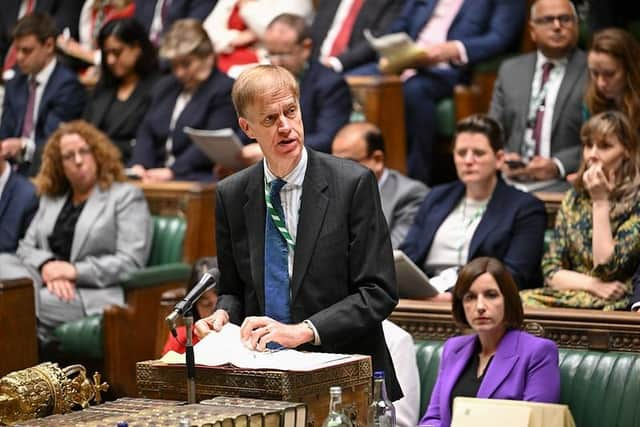
Presenting his interim findings yesterday, its author Sir Stephen Timms said people would have to “wait and see” what his team’s final report into personal independence payment (Pip) said this autumn when asked whether it might include cuts to the numbers of people claiming the benefit.
Brought in by the coalition government in 2012, the payments are designed to pay for the additional costs of disability, including everyday tasks and extra living costs.

But Sir Stephen warned that the “vital support” provided by Pip could be under threat if the costs of the system keep rising.
The latest official figures earlier this year showed the number of people in England and Wales claiming the main disability benefit passed four million for the first time – roughly doubling since 2019.
Spending on Pip was around £15 billion in 2019/20, had risen to around £26 billion by 2024/25 and, by spring 2026, was forecast to rise to more than £41 billion by the end of the decade.
The number of claimants classed as having autistic spectrum disorders has more than doubled in six years, as has the number with mixed anxiety and depressive disorders, while the number with ADHD (attention deficit hyperactivity disorder) has almost quadrupled.
Sir Stephen said his team wants to “come up with a better process”, adding that “for many people, Pip has become a barrier to participation, which is the opposite of what’s intended”.
He told BBC Radio Four’s Today programme: “Because people worry that if they do participate, DWP will come along and say, ‘So you can do things after all’, and take their benefit away.”
The review noted that while Pip “enables many people to stay in work” through covering extra costs of disability, research also “demonstrates that some people on Pip are scared to participate, either in physical activities or employment, as this could be seen as evidence that their functional ability has improved”.
Sir Stephen told Today the system “hasn’t kept up with our changing understanding of disability and ill health over the 13 years since it was first introduced, so we do think fundamental change is needed and we’ll be making our recommendations for change in the autumn”.
Addressing the Commons yesterday, Sheffield MP Clive Betts described Sir Stephen’s review as a “very challenging piece”.
He said: “I think the theme of fairness for the people needing benefits and fairness for the taxpayers is right.
“The Link Community centre in my constituency in Stradbroke, where they’re saying there are people there with mental health conditions claiming Pip, who have actually got drug abuse and alcohol abuse conditions, and they’re using Pip to fund those conditions.”
He added: “I’ve complained about young lads in their 20s driving around in motability cars, and someone in the community is paid to fill the forms in for them.
“On the other hand, I have so many constituents with really serious conditions who get turned down for Pip and can only get it if they struggle through the appeal system, sometimes without any help at all.
“So the system isn’t there to help anyone at present.”
SEE MORE COMMENT, PAGE 10