
Antiques focus: Explorer’s key role in the Golden Age
Historians have long been divided about who was the real hero of the Golden Age of Polar Exploration: Scott or Shackleton?
One man who was firmly in Shackleton's corner was pugnacious seaman-explorer Albert Borlace Armitage, who was brought up and educated in Scarborough and was Scott's second-in-command and navigator on the 1901-04 Discovery Expedition to the Antarctic.
The quick-tempered merchant seaman, a boarder at Clifton Villa School from the age of six, had three years' experience in the Arctic Ocean and got on well with Scott initially when he was invited to join Discovery.
Armitage records in his biography Cadet to Commodore: "I felt we would be friends. I wanted to see the Antarctic; I consented to go even though it was against my better reasoning. Scott had no experience of the work he was undertaking. I had three years knowledge of it. I was to be his adviser, a sort of dry-nurse, and knew enough of human nature to fear the result."
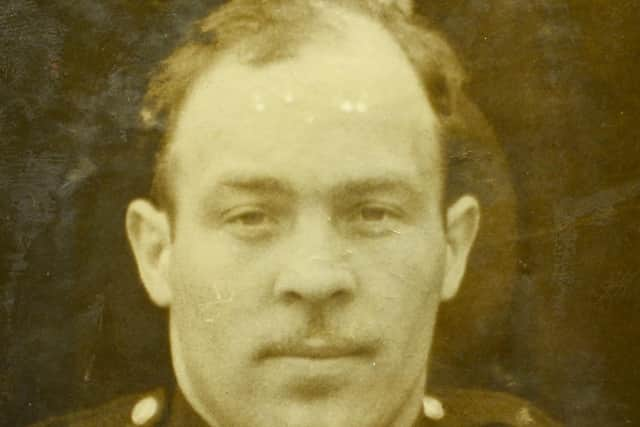

Despite his reservations, the pair got on well and he found Scott "athletic, brainy, with a keen, quick intelligence, great courage and charming manners." And yet, "he had not to my mind that magnetic quality which could have made me follow him in all things."
The pugnacious Armitage, a tough former boxer who rose to the rank of commodore, led the first team to reach the Polar Plateau, a pioneering breakthrough somewhat undermined by a bitter bust-up with Scott over contractual arrangements, in the wake of which he pronounced his friend Shackleton as the real hero of the Golden Age of Exploration. "Had they been kept, all would have been well, "says Armitage, whose main complaint was that Scott curtailed his sledging expeditions to just one outing. Reading between the lines, it seems apparent that Scott was determined to remain the star of the show and to keep his number two and expedition navigator in his place.
The story of the Antarctic falling-out surfaced with the appearance at Noonans in London of Royal Naval Reserve Captain Armitage's Polar Medal group, which fetched more than £31,000. It was made up of his British War and Mercantile Marine War medals; Polar Medal, 1904; Antarctic, 1902-04; and Royal Naval Reserve Decoration.
As for Shackleton, Armitage recalls a poignant last meeting before his friend sailed on his last voyage on the Quest in 1921."He was not the same old Shackles.; he was jumpy and nervy and very ill-looking." When he and his brother drove away, "we both agreed that Shackleton would probably never return. He not only look ill, he looked fey. It was a great blow to me when I heard that he, that `Joyous Adventurer' of explorers, had gone under. He has left a record of pluck, determination and cheerfulness in all circumstances that is of priceless value to other. Dauntless, staunch, he was the knight-errant of Polar explorers."
Sir Ernest Shackleton (1874-1922) is famous for one of the great adventures in the history of polar exploration. The 1914-16 expedition ship Endurance was gripped by pack ice for ten months before finally sinking, leaving the 28-man crew, facing extraordinary privations to make the arduous trek to Elephant Island, from where he and five others made a perilous, 800-mile voyage to South Georgia to raise the alarm.
Captain Robert Falcon Scott (1868-1912) is remembered for reaching the South Pole with Edward Wilson, Lawrence Oates, Edgar Evans and Henry Bowers on January 17, 1912 only to find that the Norwegian Roald Amundsen (1872-1928) had beaten them to it. Delayed by illness and blizzards they perished just 11 miles from safety.
At the same medal sale, the rare Second World War "Cockleshell Heroes" Distinguished Service Medal group of seven awarded to Quarter-Master James Malcolm King of the Royal Marines realised £37,200. It was for his part in pulling off the brilliantly executed Operation Sunbeam that he won the DSM. In a badly damaged canoe and in the face of the enemy he and his comrades placed six limpet mines on an Italian destroyer. The op seriously damaged two destroyers and sunk three escort vessels.
The unique Albert Medal in Gold for Gallantry in Saving Life at Sea group awarded to Captain William John Nutman of the cargo ship Aidar in saving an injured fireman during a storm in the Mediterranean in January, 1896 realised £17,360. With the rest of the crew saved, he refused to leave the injured man behind, waving away lifeboats as his ship foundered, "choosing to face almost certain death than leave him behind". Nutman survived to be presented with the Albert Medal in Gold by Queen Victoria in July, 1896.