
Antiques: Great innovator of polar exploration Captain Robert Falcon Scott
Scott or Shackleton… who was the greatest British polar explorer of the Heroic Age? It's a matter of opinion, of course, but here are the bare facts: Captain Robert Falcon Scott reached the South Pole in January 1912 to find he had been pipped by Norwegian Roald Amundsen and died with his four colleagues on the return journey, incurring belated criticism for his faulty judgement and organisational failures, while Sir Ernest Shackleton never reached the Pole but became an international hero for saving his men after his extraordinary display of stoicism, stamina and courage in a 1,110-mile trek on foot and by dinghy during the 1915 Endurance expedition.
Those who railed against Scott point to his short temper, poor logistical decisions, lack of basic survival skills and training for life at the South Pole and his reliance on ponies and man-hauling instead of dogs.
Shackleton was a born leader who never lost a man but was regarded as an unlicensed intruder in the weird, white world of Antarctica and damned by Scott as a "professed liar" and "plausible rogue". He had a reputation for being self-serving and not entirely trustworthy with money. Shackleton was also considered reckless, ignoring expert advice that he should avoid entering the ice-choked Weddell Sea and despite knowledge that his ship Endurance was not designed to spend winter in Antarctica.
All this would have proved academic but for men such as Sir Clements Robert Markham (1830-1916), the Stillingfleet, North Yorkshire-born geographer and Arctic explorer who threw his heart and soul into the promotion of Antarctic exploration at a time when the South Pole had not caught the imagination of the British public. From the fresh-faced boy of 13 or 14, seen in our main picture in uniform on joining the Royal Navy in 1844, he became president of the Royal Geographical Society for 12 years and was an influential figure in securing funds for Antarctic expeditions while fighting against the maddening indifference of the British government.
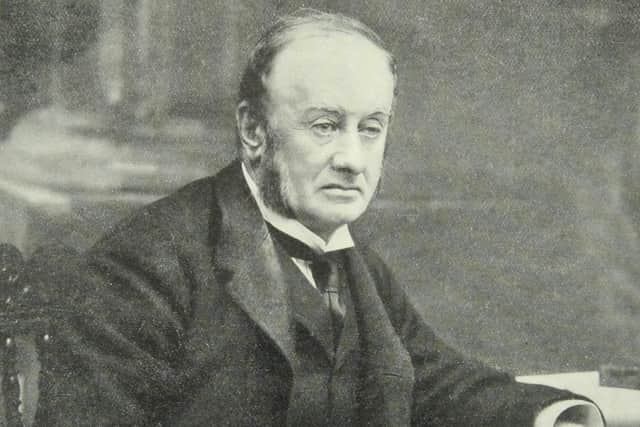

It was Markham, dubbed "The Father of Polar Exploration", who got the 1901-04 Discovery expedition under way and was responsible for the appointment of Scott as commander. A man accused of living in the past, he extolled man-hauling and deplored the use of skis and dogs, to the astonishment of the Norwegians. Markham, it is clear, was no fan of Shackleton and is reported to have "had no good word for him but many bad ones".
Although distrusted by the Admiralty in later years, Markham earned a worldwide reputation as the leading British geographer of his day and his achievements were recognised by his many awards. Now a historic group of the Yorkshireman's insignia, medals and decorations have surfaced at Noonans in London, where they fetched £54,560. They included his Knight Commander of the Order of the Bath (KCB) insignia, Abyssinia 1867 Medal and Arctic Medal 1818-55, along with many overseas medals and awards, the Royal Geographic Society's Founder's Gold Medal and other arts, geographical and medical college honours.
Roland Huntford's absorbing biography, entitled simply Shackleton, provides further insight into Sir Clements Markham, who was quoted as saying: "The Navy needs some action to wake it up from the canker of prolonged peace. Polar exploration is more wholesome for it, in a moral way as well as a sanitary point of view, than any more petty wars with savages." Markham had some trenchant words on Shackleton's failure to reach the Pole: "(It) was due to faulty management...pushing on with half rations...and he reached a very high altitude by risks which ought not to be run."
Huntford gave this description of Sir Clements at 70: "Venerable in appearance; high-minded, yet devious, cunning, complacent, self-seeking and a master of intrigues, Markham might have stepped out of a novel by Trollope. He usually got his own way." Markham died in January 1916 when the candle he used for bedside reading fell over while he dozed and set his bedclothes alight.
*At the same Noonans sale, the posthumous Great War Victoria Cross of Lieutenant-Commander Charles Henry Cowley, of the Royal Naval Volunteer Reserve, known as "The Pirate of Basra", sold for £248,000. In Mesopotamia in April, 1916,he was commander of SS Julnar on the River Tigris when it was attacked by Turkish machine guns and artillery during a suicidal attempt to reinforce a garrison. Cowley was murdered by his Turkish captors after he was taken prisoner.
On a local note, the Great War Distinguished Service Cross of Leeds-born Group Captain Vivian Gaskell-Blackburn, who took part in the first ever carrier-borne air strike in 1914 and was twice decorated for gallant deeds in Iraq, made £13,640.