
Antiques: Stepping out of the shadows at last
A woman’s place… well, you know the rest. Perhaps we can blame the Ancient Greek playwright Aeschylus for originating the suggestion that a female’s primary role was a domestic one. In 467 BC, he wrote: “Let the women stay at home and hold their peace.” Retribution was swift; according to legend, an eagle that had just caught a tortoise mistook Aeschylus’s bald head for a shiny rock and accidentally killed the tragedian by dropping the heavy reptile onto him.
Women’s talents have been hidden from the world ever since, of course, particularly in art, with society prioritising domestic duties over creative and imaginative pursuits.
Eileen ‘Tirzah’ Garwood is a case in point. In an ideal world, she would have been a household name, acknowledged as one of the most original and distinctive figures of 20th-century British art. Instead, as a mother of three children and the wife of the much more famous Eric Ravilious, painter, designer, book illustrator, wood engraver and celebrated war artist, her skills were long confined to the shadows.
Garwood (1908-1951), born to a wealthy Kent family and nicknamed Tirzah by her siblings after a Biblical character, was a multi-talented artist and designer. In 1930, she married Ravilious (1903-1942) against her parents’ wishes. Ravilious, as the son of a shopkeeper, was considered ‘not quite a gentleman’. Sadly, and in keeping with the domestic and maternal realities of the age, the marriage brought a premature end to her career in wood engraving.
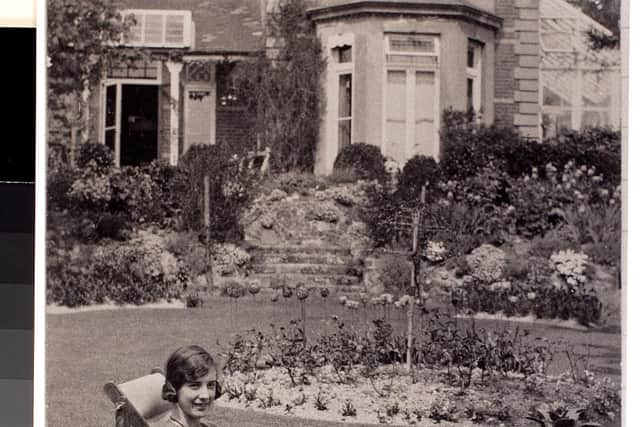

While her husband’s career blossomed and his work was fashionable for decades after his premature death, Garwood remained relatively unknown, her brilliance as an engraver and creator of enigmatic oil paintings obscured by Ravilious’s fame and her own untimely death.
But buoyed by the success of the first major retrospective exhibition of her work at Dulwich Picture Gallery in south London, tellingly entitled Tirzah Garwood: Beyond Ravilious and showcasing her wood engravings, ‘sophisticated naive’ oils, pencil sketches and experimental marbled papers, her work is undeniably back in vogue.
As proof, a rediscovered archive of her work, mainly the witty, well-observed engravings she abandoned on her marriage, surfaced at Cheffins of Cambridge to fetch £67,500, to almost double expectations, after being consigned by the granddaughter of Garwood’s friend, fellow artist and engraver Frederick Austin (1902-1990). Engravings included an unorthodox self-portrait, Cat and Wife, which fetched £5,250; another unconventional self-portrait, The Wife, with Garwood in bed (£4,250); a satirical suite of four, entitled The Seasons, (£9,375); Hall of Mirrors, showing Garwood happily admiring her oversized reflection (£5,500); a long line of behatted schoolgirls, The Crocodile (£8,125); and a baby being pushed in a pram, The Grandchild (£8,125). Several sketches were also included, including three working drawings for The Grandmother (£3,560).
Wood engravings aside, Garwood continued in her artistic endeavours during her marriage, experimenting with delicate designs on marbled paper. But she was, for the most part, content to fulfil her duties as wife and mother to three children, John, James and Anne. Then, in 1942, she was diagnosed with breast cancer and underwent an emergency mastectomy. She was still recuperating when, later the same year, Ravilious was killed when his aircraft was lost off Iceland, and he became the first British war artist to die on active service during the Second World War.
Garwood recorded in her autobiography, Long Live Great Bardfield, which she was writing at the time, that she suffered ‘spasms of dreadful sorrow’ after her husband’s death, but following a period of mourning, she rallied, and ventured into oil painting, creating a series of simultaneously naive yet arduously detailed work. “I have started painting in oil,” she wrote to a friend, “and I believe it may be my cup of tea.”
But her cancer returned in 1948, and by 1950 it had spread. She moved to a nursing home in rural Essex, where she died in March 1951, astonishing friends by producing 20 canvases in her final year.
A final word on her husband, Eric Ravilious. He engraved more than 400 illustrations and drew over 40 lithographic designs for books and publications during his lifetime. His woodcut of two Victorian gentlemen playing cricket has appeared on the front cover of every edition of Wisden Cricketers' Almanack since 1938. He was also a successful ceramics designer, notably for Wedgwood, glass designer for Stuart Crystal, watercolourist, creator of graphic advertisements for London Transport and of murals on the walls of the tea room on Victoria Pier at Colwyn Bay – all before becoming a celebrated war artist.
The release of Margy Kinmonth's 2022 cinema documentary, Eric Ravilious: Drawn to War, reminded us of his supreme talent.