
Birdwatching: Crossbills are sprucing up in search of food
Crossbills are moving around the countryside looking for spruce firs in which they can rip the seeds from the long orange cones.
At this time of year when the cones are fully formed crossbills can turn up in conifer woods almost anywhere with recent reports of several thousand of them on the move as far south as the Isle of Wight and the highest count on the Scilly Isles since 2009.
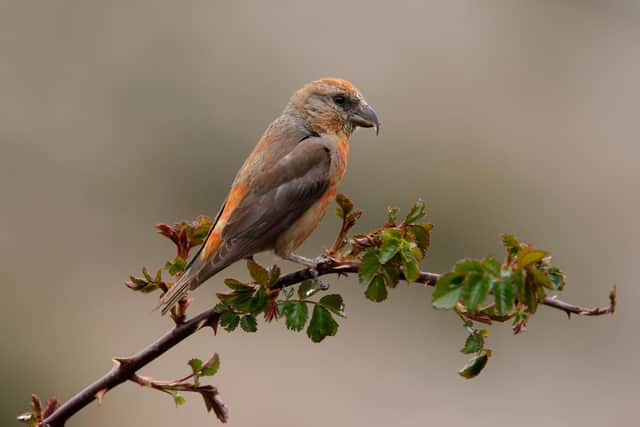
Crossbills get their name from the way in which the sharp upper and lower mandibles of their beak cross over at the tip.
They. tear the cones off the tree, hold them in their claws and use their beaks to force open the cones and draw the seeds out.

This summer's hot dry weather has ensured that most of the cones are fully opened earlier than usual, creating ideal conditions for the crossbills who also feed their young on pine seeds .
When there are plentiful food supplies crossbills can nest again this month and bring up broods of young all the way through winter.- food is more important than temperature to them.
They are robust birds, similar in size to the greenfinch to which they are related. The males are a striking brick red colour but some are more orange or yellow while the females are a greenish-grey.
In some autumns there can be a dramatic influx of crossbills into Britain from Scandinavia after a good year for pine seeds with the last one in 2020.
With reports of more arrivals from the Continent it looks as if this is happening again this year with flocks on the move on the Shetland Isles and as far south as the isle of Wight.
It is certainly worth listening out for their loud quip quip calls or look out for them clambering around in the treetops using their beaks as well as their feet.
Another crossbill species which might arrive here in an irruption year is the Two-barred crossbill which has white wing bars like a chaffinch and comes here from further east.
More waders have been moving through the region including Little stints, Curlew sandpipers and two Pectoral sandpipers on the same day at the St Aidan's reserve.