
Calls for changes to retrofit rules for historic buildings
Experts have urged the Government and councils to implement changes to help speed up works to decarbonise and future-proof thousands of heritage homes.

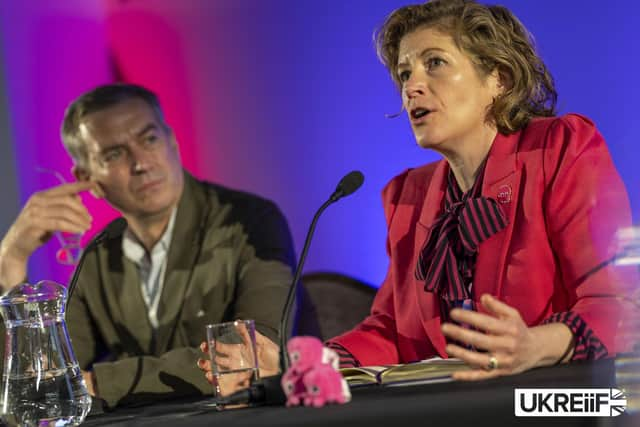
Speaking at the UKREiiF conference, in Leeds, experts from Historic England, the National Trust and other bodies called for policy changes in areas including planning and workforce training.
It comes after a report from property and estate management firm Grosvenor recommended a string of policy changes to help the UK’s millions of historic buildings decarbonise.
According to research from Verco, annual carbon savings equivalent to 30 per cent of the UK’s Sixth Carbon Budget could be achieved through fabric improvements to listed buildings and properties in conservation areas.

England is home to around 350,000 listed homes, with roughly 2.8 million homes located in conservation areas.
Speaking at UKREiiF, Ian Morrison, director of policy and evidence at Historic England, called for “obstacles and challenges” to be removed in the planning system for heritage homes.
Mr Morrison also cited costs as a key hurdle for retrofitting heritage buildings, adding: “It is expensive to retrofit historic buildings, and the more complex a historic building is, and the more significant it is, the more expensive it can be.
“We need to find ways to reduce that cost, and then we need to find other ways to bridge that cost, and those are some real challenges.
“From Historic England perspective, we don't think it's a question of if our historic buildings should be retrofitted, it's a question of how it should be done.
"We need to move to a much more permissive framework that thinks: ‘right, we need to retrofit this building, we need to make it more energy efficient. How do we do it? What's the most significant way we can do it?’ ”
Mr Morrison also called for changes in how listed building consent and planning permission work together.
His comments were echoed by Grosvenor’s recent report, which called for the Government to introduce a National Listed Building Consent Order for Grade II-listed buildings to establish a “national baseline” of consent for low-risk, high-benefit energy efficiency and retrofit measures for historic buildings.
The report also calls for the Government to introduce a national model Local Development Order for retrofit, setting out "clear technical standards and visual design parameters” for energy efficiency improvements in historic and traditional buildings.
Speaking at UKREiiF, Ingrid Samuel, director of placemaking and heritage at the National Trust, called for an extension to VAT cuts for energy efficiency measures. Homeowners pay 0 per cent VAT on energy efficiency measures but only until March 2027.
Ms Samuel also asked for the Government to “look again” at 0 per cent VAT on repairs and alterations on listed buildings, adding: “That would really incentivise some of this work.”
Grosvenor has also called for a Heritage Capacity and Skills Programme designed to make sure all local planning authorities have access to at least one qualified conservation specialist, supported by a national training offer on heritage retrofit.
Ms Samuel added: “One of the biggest things that came out of our work over the past three years is the challenge and the opportunity of working with people.
“When we’re looking at pathway planning and our understanding, we have to find ways to make it meaningful, to make it bite-sized, to make it prioritised, and to make it deliverable “Its about culture change and building climate aware decisions into everything that we do, so it's a really fundamental shift.”
Emma Fletcher, low carbon homes director at Octopus Energy, also called for more local authorities to “embrace” the technological changes in retrofitting. She said: “In terms of working with local authorities, on the whole, they find this stuff new, strange and weird, they don't get it.
“It's like everybody's got on a train, and they've got on at the first stop, and then different offices have got off at different stages, depending on when they went to university, or when they last had their training. So everybody's at a different stop along the line, just about what their technology knowledge is.
"Trying to keep up to date is hard. However, for the local authorities that have embraced it, we're seeing huge benefits.”