
Leveson report: Justice delayed is justice denied for families facing anxious wait
For the hundreds of thousands of victims and family members facing years-long waits for the cases to come before a judge, Lord Leveson’s report could not come soon enough.

The Ministry of Justice’s figures show the scale of the problem faced in Yorkshire and nationally, and all the indicators suggesting the problem will get considerably worse before it may get better.
The cause of the rise is multi-faceted, with increasingly complex trials, an increase in demand for trials, limited sitting days and industrial action all being highlighted.
But while the reasons may be complex, the effect is simple – justice is being delayed, and therefore denied.

Official figures from HM Courts and Tribunals Service show that the backlog in crown courts in Yorkshire has risen sharply in recent months, with Leeds, Sheffield and Bradford among the worst affected.
As of May 2025, more than 6,400 cases were awaiting trial across the region – a 6 percent increase on the previous year.
Nationally, the number of cases awaiting trial is more than 75,000 – the first time this number has been reached.
Crown Courts deal with the most serious cases – including rape and murder, where Magistrates’ Courts do not have the sentencing power to deal with the severity of the offence.
Lawyers warn that the system is now beyond creaking. In Leeds Crown Court, the average wait for a trial date in serious criminal cases such as assault, robbery or fraud has stretched to nearly 16 months.
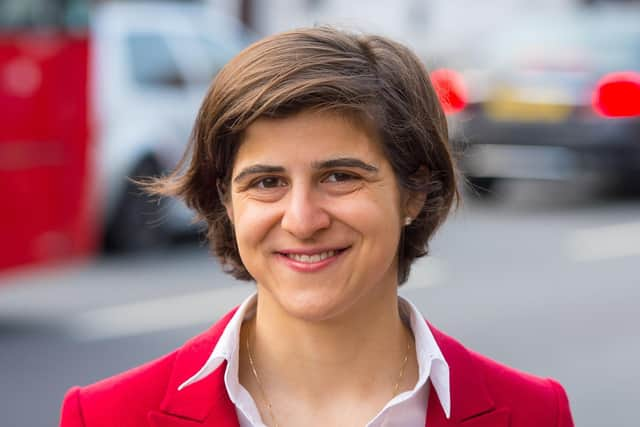
On the current trajectory, the backlog would hit 100,000 before 2028, Justice Minister Sarah Sackman, inset, said in March, earlier than the Mminister’s previous warning that it could hit the milestone by the end of 2029.
This is not a crisis of this Government’s making. COVID-era closures created a severe backlog, which was compounded by industrial action last year by criminal barristers over legal aid rates.
While a deal was reached in late 2024, the effects are still being felt on court capacity and case throughput.
But many within the legal profession argue that long-established government underfunding is the root cause.
Between 2009-10 and 2022-23 the justice budget fell by 22 per cent.
The number of court sitting days—essentially the hours judges are paid to preside over trials—has been artificially capped for years.
This has forced courts to leave courtrooms empty even while case files pile up.
When the latest figures were published by the MoJ at the end of last month, Ms Sackman acknowledged courts were ‘at breaking point’.
She said: “We inherited a courts crisis with an ever-growing backlog which, at its current rate of increase, will hit 100,000 before 2028.
“It is simply unacceptable that any victim has to wait years to see justice done and it is clear the status quo is not working.
“Only radical reform can deliver swifter justice for victims and that is why we asked Sir Brian Leveson to make recommendations for once-in-a-generation change.
The data also shows violence against the person, sexual and drug offences had the highest number of open cases, at 23,803, 12,532 and 10,775 respectively at the end of March.
The biggest increases in the open caseload were also for violence against the person, up 19 per cent from 19,959 a year earlier, and sexual offences, up 18 per cent from 10,611 in the same period.
Mary Prior KC, chairwoman of the Criminal Bar Association, said ministers must open up closed crown court rooms to allow delayed cases to be heard, adding: “Whatever the radical reforms suggested in ongoing reviews, implementation will take at least another year.”