
Ann Widdecombe obituary: One of the most formidable yet underrated politicians of her generation
Ann Widdecombe, whose sudden death at 78 last week has dominated the national debate, was one of the most forthright, hard-hitting, imaginative, formidable yet often underrated politicians of her generation, first as a Conservative and later for the Brexit and Reform parties.

She also became a national but popular figure of fun with her “galumphing” appearance on TV’s Strictly Come Dancing in 2010.
Her appearance – “I am toothy, dumpy, ugly, overweight, a spinster – what the hell,” she said of it – brought derision from political journalists and politicians alike.
Once, even her own front-bench Conservative colleagues orchestrated a campaign of ridicule against her, over her total opposition to drugs.
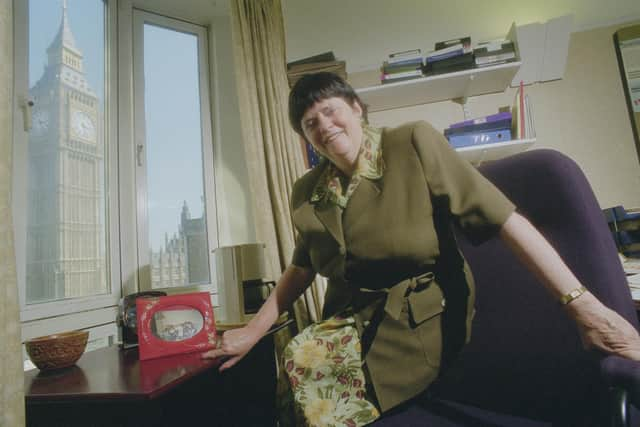

But she took all the flak without flinching, sometimes even appearing to enjoy the aura of notoriety which it kindled.
Indeed, she had two major run-ins with party colleagues, famously with Michael Howard, the former Home Secretary, whom she described, after they had both ceased to be Home Office ministers, as having “something of the night about him”.
She also clashed with Michael Portillo, and the “backbiters” who surrounded him when he disastrously failed in his bid to become Tory leader in 2001.
Miss Widdecombe said she would never have served under him if he had become leader.
And as Minister of State at the Home Office, between 1995 and 1997, she was at the centre of a furious row when she defended the shackling of a pregnant woman prisoner to a bed.
Ann Noreen Widdecombe was born in October 1947 and educated at La Sainte Union Convent, Bath, Birmingham University, and Lady Margaret Hall, Oxford.
She worked in the marketing department at Unilever from 1973-75 and later as a senior administrator at the University of London from 1975-87.
She unsuccessfully fought the parliamentary seats of Burnley (1979) and Plymouth, Devonport (1983) before becoming MP for Maidstone (later to become Maidstone and The Weald) in 1987.
Miss Widdecombe quickly made an impact with her no-nonsense, brisk and bustling approach to everything.
In 1990 she was appointed an Under-Secretary at the Department of Social Security and three years later held a similar post at the Department of Employment.
But it was as Minister of State, Home Office, from 1995 until the Tories were voted out of office in 1997, that Miss Widdecombe became a household name.
She had responsibility for prisons and in that job she blossomed – or rather exploded – into one of the most pugnacious members of the John Major Government.
When she defended the policy of chaining pregnant prisoners to prevent them from escaping, she was attacked, particularly by matronly Labour MPs who asked her what she knew about giving birth.
But she thrived on controversy, and even relished the nickname “Doris Karloff”.
She did not mind being described as the sort of lady you would expect to find manning the desk of an Albanian library, nor did she bother when her hairstyle was dubbed “new brutalist”.
Later on she was to dye her hair blonde. The effect of that, she told colleagues, was that people spoke more slowly to her.
She claimed to have no interest in sex and never married.
Her ferocious “something of the night” attack on Howard, soon after the Tories returned to Opposition in 1997, almost certainly wrecked whatever chance he had of securing the Tory leadership.
Later, Mr Howard achieved the leadership, only to lead the party to their third successive defeat in 2005.
Her onslaught on him concerned the sacking, when both were Home Office Ministers, of the then prisons director Derek Lewis.
But Miss Widdecombe’s continued robust performances on the Opposition back-benches made it impossible for the new leader William Hague to ignore the clamour to bring her into the shadow cabinet.
She became shadow Health Secretary, and tormented her opposite number, Frank Dobson, without mercy. Later, as shadow Home Secretary, she was to make life uncomfortable for Jack Straw.
It was after a barnstorming Tory conference speech denouncing – without a note in her hand – all aspects of drug use and abuse, that some members of the shadow Cabinet ganged up against her, led allegedly by Mr Portillo.
There began to appear in the papers admissions from senior Tories that they had smoked “spliffs” in their time, thus indirectly pouring scorn on their colleague.
But Miss Widdecombe took it in her stride and that incident was almost certainly the reason why later she bitterly attacked Portillo when he made his feeble attempt for the party leadership.
She herself came within a touch of standing as a candidate at that time.
She was one of the few Conservative MPs who bitterly opposed hunting – a stance which added to her unpopularity in some quarters of her own party.
She was as forthright as a deeply religious person as she was a politician. In the 1990s she converted to Roman Catholicism because of her opposition to the ordination of women by the Church of England.
Like Margaret Thatcher she never had any sympathy for the feminist cause, denouncing them as “whingers”.
In 2009, even though she had previously announced that she would be retiring from the Commons at the end of that Parliament, she submitted herself for the Speakership of the House after Michael Martin had been forced to resign from the post.
She retired from Parliament in 2010 and entered the BBC’s Strictly Come Dancing that year, regularly securing the lowest marks from the show’s judges.
However she was saved time and again by the public’s phone-in votes, and survived until the round before the semi-finals, announcing: “I have never had such fun in my life.”
But she would not remain away from frontline politics forever, and became a prominent voice in the Vote Leave campaign during the 2016 referendum on the UK’s membership of the EU.
She joined Reform UK, the successor to the Brexit Party, in 2023, and spoke at its party conference the following year as its immigration spokeswoman.
In addition to the hurly-burly nature of her political life, Miss Widdecombe also found time to write novels.
Her first, The Clematis Tree, was an instant success and she was made lucrative offers by publishers to write more, which she did.