
Number of police forces could be cut to 10 under reforms
The number of police forces in England and Wales could be cut to as low as 10, the Policing Minister has said, although how those reforms will affect Yorkshire is still to be determined.

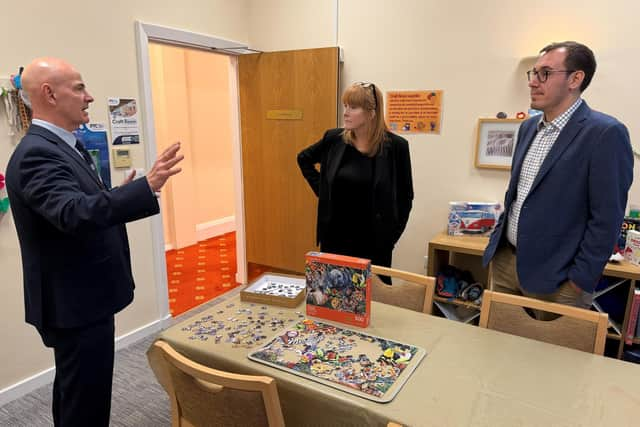
Sarah Jones was visiting Harrogate this week to announce greater mental health support for officers, as part of the policing white paper.
As part of this, the Home Secretary has announced a review into the number of police forces, with an expectation that reforms will create fewer, larger constabularies.
This has long been called for from senior police officers, from Scotland Yard Commissioner Sir Mark Rowley to NPCC chair Gavin Stephens.
There was speculation that Yorkshire’s four forces could be combined into one super force, however Home Office sources pushed back on this as a possibility.
Ms Jones told The Yorkshire Post: “Most people who think about these things and talk about reform have a preference between 10 and 20 forces, and I suspect that is where we’ll end up.

“But how the geography works, how that ends up being designed is for the independent review to look at.”
If the 43 forces across England and Wales were cut to 10 it is inevitable that some of the Yorkshire forces would end up being merged.
West Yorkshire is the fourth biggest force in England, after the Met, Greater Manchester and West Midlands Police, with more than 6,000 officers.
While North Yorkshire Police is one of the smallest forces in the country, with around 1,500 officers each, it covers the largest area of any force in England.
However, it is understood that should the pan-Yorkshire force be on the table, local and regional leaders would push back on this proposition.
One Yorkshire Labour source told this paper that the super force “would be too big” and the different “areas’ challenges are unique and nuanced”.
Ms Jones said: “We are coming at this on the basis of how do we make sure policing can tackle the epidemic of everyday crime in our communities, on our streets, that the public want us to.
“aA the moment you have national capabilities done by a myriad of different organisations across the country.
“You have a regional structure to tackle organised crime and then you have the 43 forces, which I think everybody knows is not where you would start if you were building it from scratch.”
The reforms will see the creation of a new National Police Service, dubbed the “British FBI”, that will investigate terrorism cases, fraud and criminal gangs, with a new commissioner becoming the most senior officer in the country.
“The idea is you have some simplicity,” Policing Minister Ms Jones added.
“Local accountability, local police areas and local crimes have to sit at the heart of this.
“Broadly MPs and broadly policing are welcoming the white paper. We know there are some pinchpoints where we need to make sure we get this right, and make sure that local policing is at the heart of everything we do.”