
Police officers suffer burns from petrol bombs after Yorkshire riot training goes wrong

A police force has been fined after several officers suffered burns from petrol bombs after riot training in Yorkshire went wrong.
Derbyshire Police officers attended the training in Rotherham in February 2021, but four of them were left with burns from petrol bombs they were required to face as part of the training.
The Health and Safety Executive (HSE) said the force has been fined £60,000 following a cour hearing on Monday (Jan 19).
An investigation into the incident by the HSE found the officers had been exposed to “significant and avoidable risks” during the exercise.
Officers wearing flame-retardant personal protective equipment (PPE) had been required to face petrol bombs thrown by other officers as part of a training drill intended to replicate a public disorder situation.
Four of the 13 officers taking part were left with burns to their lower bodies, and three of them required hospital treatment.
All four have since returned to work, but the incident resulted in “permanent scarring, and psychological harm which will have a lasting effect”, the HSE said.
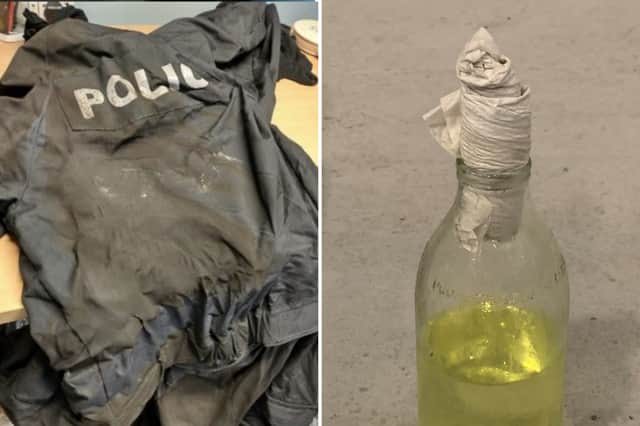

The HSE investigation found that Derbyshire Constabulary had failed to properly plan and risk assess the exercise. Key failings included:
- Failing to give officers adequate information on the lifespan, care, and inspection of the flame retardant PPE to ensure it provided adequate protection.
- Failing to carry out a suitable and sufficient risk assessment for both the production and deployment of petrol bombs during the training.
- Failing to implement safe systems of work to control the foreseeable risks created in the course of petrol reception training.
Derbyshire Constabulary of Butterley Hall, Ripley, Derby, pleaded guilty to breaching Section 2(1) of The Health and Safety at Work etc. Act 1974. They were fined £60,000 and ordered to pay £9,470 in costs at Sheffield Magistrates Court on Monday (Jan 19).
After the hearing, HSE Inspector Jennifer Elsegood, said: “Being a serving police officer is a job that carries with it levels of risk, however while preparing officers for dangerous situations is important, it must never come at the expense of their safety.
“High‑risk training activities must be planned and controlled with the same care and professionalism expected in any other workplace.
“The risks created by the training should have been identified as part of the Constabulary’s risk assessments and appropriately controlled.
“We hope this case reinforces the importance of thorough risk assessment, robust equipment assurance, and safeguarding those who put themselves forward to protect the public.”
Derbyshire’s Chief Constable Rachel Swann said: “The injuries to the officers were serious and that officers were harmed during their training is something that has been taken very seriously.”
But she said the risk assessments found not to be adequate related to the handling, transport and delivery of petrol and were not linked to the injuries suffered by the officers.
She said the injuries are believed to have happened because of a failure of the personal protective equipment but “no criticism has been made of Derbyshire Constabulary’s use of that equipment in this case”.
Ms Swann said: “We recognise that the risk assessments should have been regularly reviewed and updated and acknowledge that in failing to do so officers were put at risk.
“We always look to prioritise the welfare of our staff and the public and this court finding reflects our acknowledgement that on this occasion we failed to do so.
“We have learned the lessons from this failure and since 2021 have worked hard to ensure that the risks associated with the more dangerous elements of work for which we must prepare our officers are reduced to the lowest possible level.”
She said: “Although the investigation acknowledged that the injuries suffered by the officers were not caused by the issues which ultimately resulted in the court case, I want to make it clear that this in no way diminishes my regard for the welfare and safety of those officers.
“We continue to work tirelessly to make sure the training is as safe as it can be in all respects and we continue to look after our officers, staff and the public that they serve and have their safety and welfare as our main priority.”