
Campaign to end plastic tree guards gains momentum in Howardian Hills conservation efforts

Conservation volunteers have been deployed to a North Yorkshire beauty spot to tackle the unintended consequences of vital hedgerow planting.
The Howardian Hills National Landscape, formerly known as an Area of Outstanding Natural Beauty, has grant-aided the creation of over 22,000 metres of hedgerows by farmers and landowners since 2008, providing a huge boost to biodiversity.
But to protect young plants from damage by rabbits, voles and mice, PVC plastic shields, also known as spirals, are needed for up to five years. These are made from a different material to the plastic shelters used for planting larger trees.
Just for the planting supported by the Howardian Hills that’s required the use of over 132,000 plastic protectors. If these are left in situ long term they become brittle, breaking into smaller particles and entering soil and watercourses.
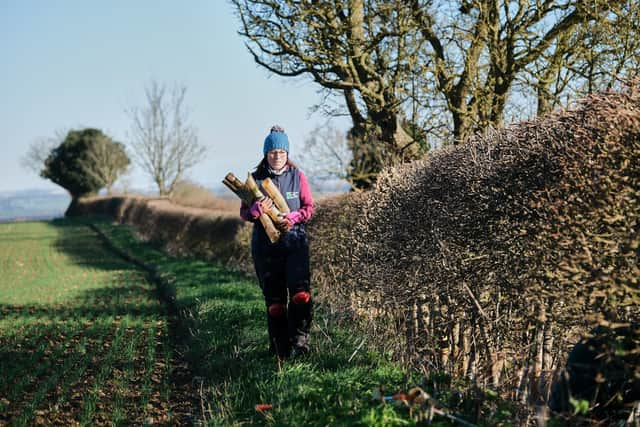

Eleven out of the 12 national park societies, along with Campaign for National Parks and major tree planters such as Woodland Trust, are supporting a campaign led by Friends of the Dales to reduce the use of single use plastic for tree planting guards and have pledged to stop planting with plastic.
As part of its drive, the pressure group has organised several events at privately-owned Dales woodlands, where volunteers have collected thousands of redundant tree guards for onwards recycling.
The group says the Yorkshire Dales National Park alone has an estimated three million of the tubes, a third of which are redundant, littering the landscape.
Writing recently in Country Post, Bruce Mcleod, trustee of Friends of the Dales, said: "The reality is that despite years of campaigning, notable victories and numerous vows to mend one’s ways, the predominant method to protect new trees is to use a toxic tube of polypropylene.
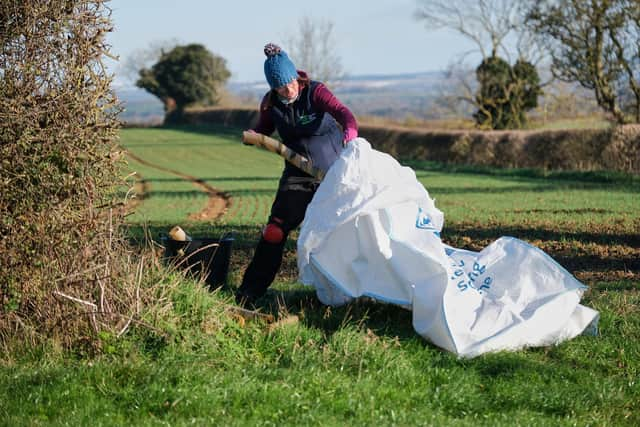
"Despite alternative tree guards on the market - a number using British wool - and widespread public concern about plastic litter, the fossil fuel industry keeps pumping out these plastic guards. In short, the plastics industry, which is a subset of the oil industry, is too powerful.”
To avert pollution across its 79sq mile area, the Howardian Hills National Landscape has been working to create an innovative recovery and recycling option for landowners.
Project officer Francesca Pert said: “The Yorkshire Dales Millennium Trust initially spearheaded the recycling of tree guards, but we have led on hedge spirals due to the amount of hedgerow planting we support. It’s a nationwide problem which is gaining more attention."
National Landscape officers say the importance of hedgerows cannot be overstated. As well as creating shelter for stock against bad weather and preventing soil erosion they are also home to a huge variety of plants and animals.
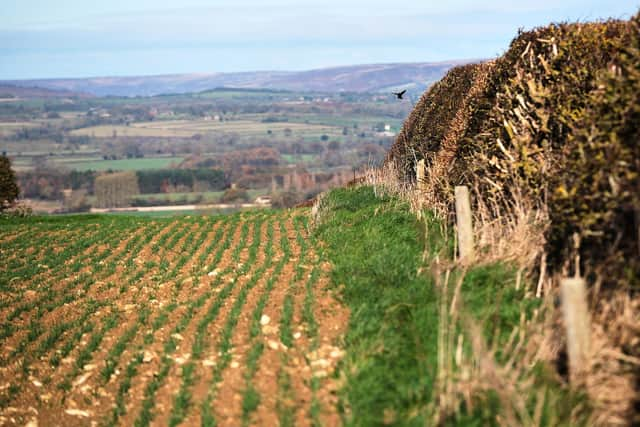
There are 130 Biodiversity Action Plan species closely associated with hedges including lichens, fungi and reptiles. Ms Pert said: "A couple of years ago we linked up with Rainbow Professional, a company based in Hull, who are now able to process what remains of the spirals into new PVC products.
"That’s a first and a big step forward as it gives landowners a solution to the waste created on removal. Of course getting plastics out of the environment is a labour intensive job.
"So we’ve organised a number of working groups using staff and conservation volunteers.
"Their hard graft combined with recycling technology has offered farmers and landowners a way forward. It’s also raising awareness along the way.
"There is still a lot of work to be done, but with every hedge spiral removed we are making a tangible improvement to the environment and recovering precious resources too. PVC can be recycled up to nine times.”
Three task days at Castle Howard saw 7,200 plastic spirals removed, helped by students and staff from Askham Bryan College, Castle Howard, Howardian Hills and Rainbow Professional. A further 200 have been removed from a farm near Terrington.
The latest clear up operation took place in rolling countryside on Caulkley’s Bank, above the villages of Hovingham and Nunnington. Ultimately, longer term solutions could include a move to fully biodegradable hedgerow guards, or where local conditions permit, not using them at all. To that end the Howardian Hills National Landscape is providing grants to pay the cost difference between using standard plastic spirals and more biodegradable versions.