
Heat from HS2 tunnels could be used to warm around 6,000 homes, research finds
Researchers from the University of Leeds have found that heat could be taken from previously planned tunnels on HS2 and used to warm around 5,000 to 6,000 homes.

The study, published in Proceedings of the Institution of Civil Engineers – Civil Engineering, concludes that “energy tunnels” are both technically and economically viable to offer heating and cooling and help meet future energy needs.
With the Government’s recent commitment to Northern Powerhouse Rail (NPR), the paper’s authors say now is the ideal time to consider the technology, so that if the route permits, the process could be built into construction plans.
The system would absorb the natural heat of the earth, as well as heat from trains, equipment and people, transporting it in pipes to be used to warm buildings on the surface.
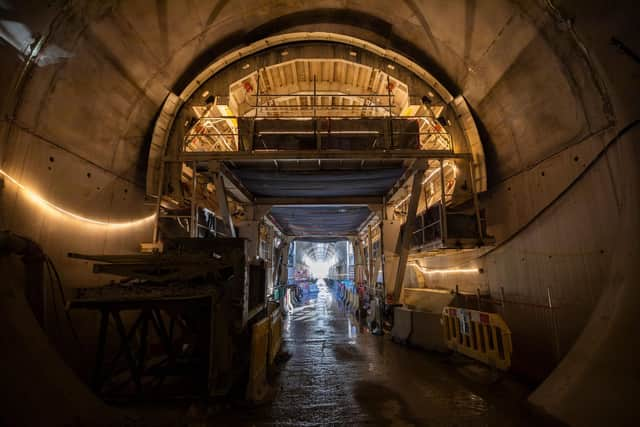

Project lead Fleur Loveridge, professor of geo-energy engineering at the University of Leeds, said: “The idea is that when the tunnels are constructed, some plastic pipes are embedded in the lining of the tunnels, and we can circulate a fluid through those. That would typically be water, or it might be water with a small amount of antifreeze.
“That will allow us to harvest heat from within the tunnel environment and also in the ground surrounding it, so it's basically allows the tunnel to perform as a ground heat exchanger, and when that fluid comes to the surface, we can run it through a heat pump system, which will take the temperature of that fluid up to a temperature which is usable for heating, or potentially down to a temperature which is suitable for cooling buildings.”
The team explored how the system could be used by the railway operator to heat and cool its own buildings, and also identified significant interest from large energy users, including a hospital and local authority located near ventilation shafts on the route, meaning they could connect directly to the system with no need for a heat network.
In addition to reducing reliance on energy imports, the study also showed a carbon saving of between 271 and 490 tonnes per year when compared to using another low carbon alternative, air source heat pumps. When compared to how we currently heat our homes, using gas boilers, the carbon saving is between around 2,000 and 3,500 tonnes per year – equivalent to a small town’s emissions.
Despite the potential benefits of the system, few commercial schemes exist globally, partly due to high initial costs, long payback periods, technical uncertainties, and the need to minimise construction risk and delays.
Ms Loveridge added: “It does obviously cost a little bit more money at the outset, so part of the work we did was to check what returns on investment you would get. But what our analysis showed that in the majority of scenarios we considered, you would get your money back on that investment, so it would be financially worthwhile.
“There are some other barriers to doing it, essentially you need to think about it some way in advance, so you can incorporate the solution into the designs, because it's not what we would typically do at the moment, but all those things are manageable. It's about forward thinking, and thinking about who is willing to invest a small amount of additional capital in return to get that back through heating sales.”
NPR plans include a new line connecting Liverpool and Manchester – on a route via Manchester Airport and Warrington that follows part of the axed HS2 high-speed rail plan.
The investment is likely to include new tunnels, with discussions about station options at Manchester Piccadilly, including one that’s underground, are ongoing.
The Department for Transport has confirmed the Government is reviewing the study’s findings and will consider how they can be incorporated into planning requirements. They will also help to inform detailed design work on NPR - expected later this decade and early in the next.
Consideration of any technology adoption would be balanced against available funding and construction risks.
Ms Loveridge added: “Policy makers need to think seriously about investing in solutions like this, because they bring dual benefits.
“At the moment, we tend to think, ‘okay, we've got a transport project, or we've got an energy project’, but actually we can offer an efficient solution that brings both of those things together. If we just think outside the box a little bit, and that could potentially save money on all sides.”