
How wool is helping to restore Marsden Moor after damaging wildfires

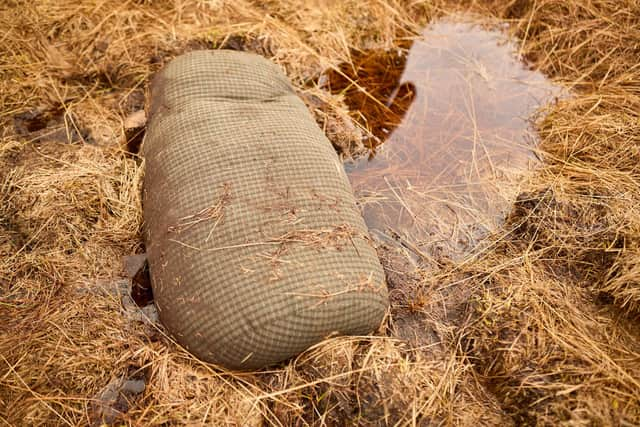
These hardy moors above Marsden have long been linked with its textiles past, and the woollen trade famously forged in the historical mills below. Now, with native seedlings and some tweed-covered pillows, the cycle comes full circle, and logs made from local wool are to help to restore its landscapes.
Parts of the moorland here is degraded and bare, after a fire in 2021.
Drying out, the danger is that tonnes of carbon are then leaked from the exposed peat. But with heavy wool, waterlogged and sodden, these damaged areas can be rewetted at the right pace.
And rather than some kind of "pillow-based flytipping", the National Trust owners have said, the project could revolutionise the way that moorland conservation is carried out.


The National Trust at Marsden Moor has teamed up with the University of Huddersfield and National Trails UK, restoring damaged landscapes along the path of the Pennine Way.
Nicola Redmore, a materials technician at the University of Huddersfield, designed the woollen bolsters, covered in tweed.
The bags are made from 100 per cent recovered materials and stuffed with certified British Wool.
Ms Redmore said she came upon the scheme after volunteering for a brief period with the National Trust.
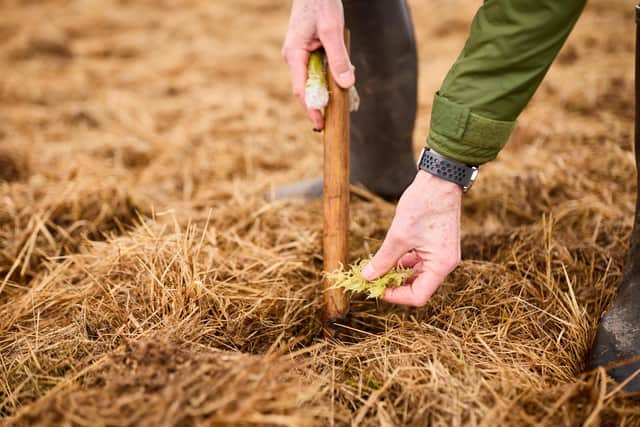
Working on landscape restoration, it gave her some first-hand experience of the kind of work that goes into peatland restoration. From this sprung a novel idea.
“These woolly logs bring together my previous research and an idea to repurpose redundant fabric from local mills," she said. "As well as the opportunity to integrate textiles back into the landscape."
The mill town of Marsden is known for its textile heritage, and its packhorses would have walked some of the earliest routes on the moors to forge the Pennine Way.
Now the route is popular with walkers, who might be among the first to encounter these strange pillows.
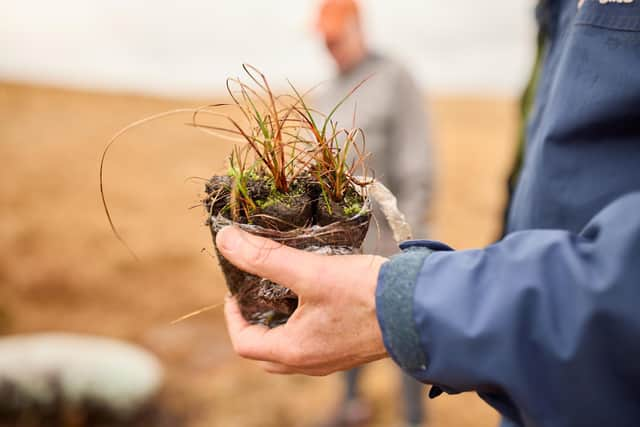
The trial, called Stitching the Landscape, is funded with a grant from National Trails UK. With £7,000 volunteers and staff hope to restore two acres of moorland, cutting back invasive purple moor grass and planting seedlings as well as settling the wool logs.
The usual cost of repairing blanket bog is up to £36,000 per hectare. And while the use of these textured logs isn't new, it's more often coconut coir used rather than local wool.
This project, a first for the National Trust, aims to show that cleaned raw wool stuffed into recycled fabric bags can do the same job as the imported coconut husk.
Ian Dowson, area ranger for Marsden Moor, said it's all part of a plan to restore nature: "Stitching the Landscape tells a new story about how we can use sustainable methods, local materials and innovative techniques to meet this ambition."
And Hannah Brightley, of National Trails UK, said this was exactly the kind of project it was looking to trial, adding: "It will be a visible story of nature recovery along one of Britain’s most iconic walking routes.”