
‘It makes climate change relatable’ York researcher on how evolving seasons challenge our climate understanding
For the past three to four decades, an emerging season across Malaysia, Singapore and Indonesia has seen residents frequently open their doors to a thick, yellow smog.

Caused by the burning of tropical peatland, as well as deforestation, the occurrence has serious consequences for those living through it. Short-term effects see those who experience it dealing with eye and skin irritation, while long-term health implications are still being studied.
The time is known locally as Haze season, and is, in the eyes of a University of York researcher, just one example of how both seasonality, and our understanding of seasons, is changing across the globe.
Dr Felicia Liu has spent a large part of her academic career looking at the Haze season, analysing how it is framed by the media and government.
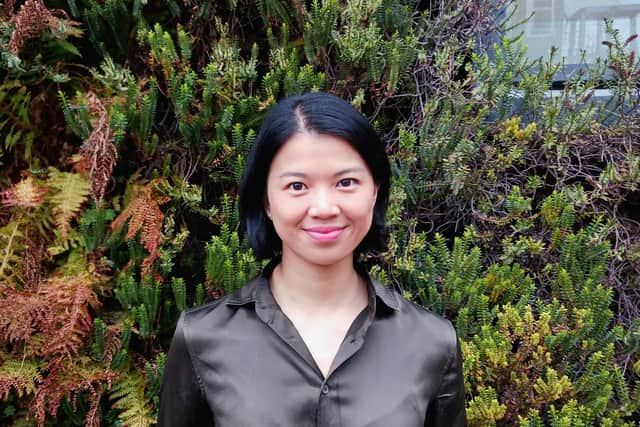

Speaking to The Yorkshire Post, Dr Liu sat down to discuss what future seasonal changes could look like for the UK, as well as how memory and personal experience can play a key role in the wider issues around climate change.
“I think it's premature to say definitely ‘we have a wildfire season’, but this is the sort of risk we might be facing,” says Dr Liu, lecturer in sustainability at the Department of Environment and Geography at the University of York.
“Another thing that we might think about is the loss of certain seasons, for example as a result of sewage pollution. Typically we think of May to September as a time where we can wild swim – as bathing water season – but we could be losing it as a result of water pollution.
“What does that mean for us in terms of what Summers mean any more, and what kind of economic activities are affected by the loss of a bathing water season?”
Though Dr Liu cites London’s ‘pea-souper’ season as a key UK example of changing seasonality, Yorkshire is far from immune.
The RSPB announced last month that Cattle Egrets and Great White Egrets were now being seen more regularly at West Yorkshire’s Fairburn Ings, adding that global warming may have played a part in the shift.
Smaller observations, Dr Liu notes, however, can also play a huge part in shaping our understanding of seasons, and in turn the negative effects of climate change.
“We don’t feel climate change,” she says, “When the IPCC says we need to cap global warming at 1.5 degrees, we don't feel that 1.5 degrees.
“What we feel is shorter winters, Christmas no longer being cosy and crisp, earlier cherry blossoms, different bird songs, and summers becoming so intense that they are no longer enjoyable.
“Those are things that mean different things to different people, but it makes climate change relatable, visible, and it makes it directly relevant to your culture. I think seasons are how we as individuals and as a community relate to environmental change.”
One of the dangers around our collective understanding of seasonality, however, is that shifting or extreme seasons become normalised.
Dr Liu, along with researchers from Kuala Lumpur’s University of Malaya and London School of Economics and Political Science, recently published a paper on how South East Asia’s media and governments have discussed the Haze season.
After analysing around 30,000 newspaper articles, the group’s research found three key storylines in the media: that haze is normal, that haze keeps coming back, and that it will eventually go away.
“We see government bodies, as well as corporate companies that are responsible for Haze, saying ‘it will go away when the rain comes, it's just like any other season, don’t sweat’” says Dr Liu.
“Governments will push back and say, ‘This is a season, we’ve accepted it, this is normal like Winter or Autumn, this is part of life.’
"I think the interesting thing about framing it as a season in that way is the normalisation. You accept it, a little bit like accepting flood season as a part of life in York.”
Though England may be years from experiencing the types of drastic seasonal chenge seen elsewhere, Dr Liu still believes how we see seasons could soon begin to shift.
“Inevitably in England, the overarching trend is that it's getting warmer, summer is getting longer and more intense and dryer,” she says.
"The question is what does that mean in terms of the meaning that we give to summers, the activities we typically engage in, and the memories that we’ve made of that season?”