
Nitrogen can help cleared forests recover twice as quickly, University of Leeds research finds
A team of scientists have conclused what they described as the world’s “largest and longest” experiment to see how nutrients affect forest regrowth in areas cleared for activities such as logging and agriculture.
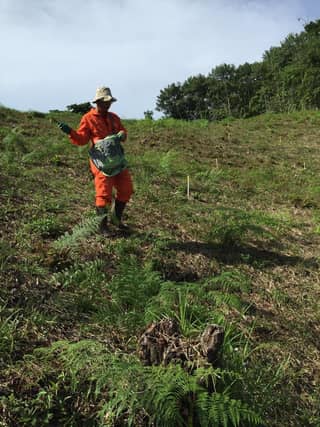


The team, led by the University of Leeds, identified 76 forest plots across Central America – each about one third of the size of a football pitch and of varying ages – and studied the growth and death of trees for up to two decades.
Plots were given experimental treatments of either nitrogen fertiliser, phosphorus fertiliser, nitrogen and phosphorus fertiliser together, or no fertiliser at all.
The team found that tropical forests can recover twice as quickly in the first 10 years after deforestation if they have adequate soil nitrogen, with the levels of nutrients in the soil strongly incfluincing tropical forest regrowth.
Speaking on the project, lead author Wenguang Tang, who carried out the research while studying for his PHD at the University of Leeds, said: “Our study is exciting because it suggests there are ways we can boost the capture and storage of greenhouse gases through reforestation by managing the nutrients available to trees.”
The results of the research, which also involved scientists from the University of Glasgow, the Smithsonian Tropical Research Institute, Yale University, Princeton University, Cornell University, the National University of Singapore, and the Cary Institute of Ecosystem Studies, are published in the journal Nature Communications.