
Semerwater: Yorkshire Dales lake to get clean-up to improve water quality
Water in one of the most outstanding features in the Yorkshire Dales is being targeted in an innovative clean-up project to improve its quality.
Over the years, secluded Semerwater has been an inspiration for poets and artists including the painter JMW Turner.
The lake supports a range of important habitats and wildlife but concerns have been mounting for years about its levels of sediment and phosphates.
The causes are complex but surveys have in particular focused on the legacy of phosphorous washing from surrounding peat moorland into its waters.
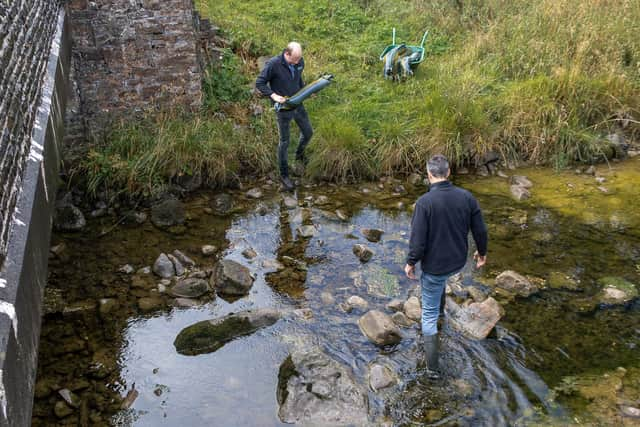

Work now underway aims to capture phosphorus before it enters the lake in a programme which could have implications for similar projects not only in the Dales but across the UK.
The measures aim to lay the foundation for water quality improvements, notably by reducing the damaging impact of algal blooms which suffocate other aquatic life.
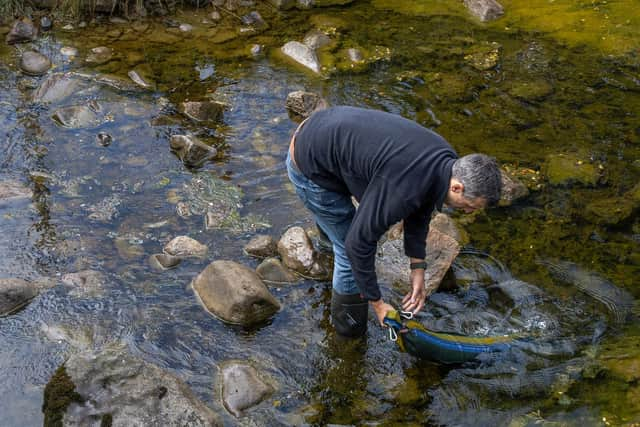
Recovery equipment is being installed at three different strategic locations across the catchment to capture phosphorus to prevent it entering and exiting the lake, with the future aim of recycling and re-using it as crop fertiliser on suitable arable land.
Semerwater lies in Raydale, a small valley linked to Wensleydale, and is the second largest natural freshwater lake in the Dales behind Malham Tarn in Craven.
It emerged after the last glaciers melted and was used by Stone Age hunters attracted by the herds of deer and wild horses which gathered to drink on its shores.
Today, people visit for fishing and a variety of water sports activities and it remains a popular destination for walkers.
The programme is being carried out in a partnership between the national park authority and environmental firm Rookwood, which has developed the technology to remove phosphorus and re-use it.
The three recovery points to capture phosphorus dissolved in water will help give experts a better understanding of nutrient movements across the catchment, indicating where action can have the greatest impact in the first phase of what is a long-term project to improve water quality.
Jane Pearce, chief executive officer at Rookwood, said staff were “incredibly proud” to see the technology being deployed.
“We believe this has the potential to inform future approaches to nutrient management not only in the Yorkshire Dales but across protected landscapes and catchment throughout the UK,” she said.
The project follows intensive surveys of the lake completed last year which discovered aquatic plants were less abundant and diverse than two decades ago.
More than 10ft of sediment was found accumulated on the bedrock which reflected the local history of lead mining, as well as periods of nuclear bomb testing, and the Chernobyl disaster in 1986.
Much of the grassland around the lake was now marsh or bog and was no longer species rich although a colony of mudwort on its shores was described as one of the finest examples in the UK.
Mark Corner, member champion for the natural environment at the national park authority, said the latest project demonstrated the importance of bringing together innovation and practical action to tackle complex environmental challenges.
“Semerwater is one of the Dales’s most distinctive and valued natural features, supporting wildlife, local communities and visitors alike,” he said.
“We look forward to seeing how the evidence gathered helps inform future action.”