
The hidden menace polluting Yorkshire's rivers which every dog owner should know about
Campaigners are seeking to raise the profile of a source of pollution unwittingly being introduced to rivers and lakes. Stuart Minting reports.

While water firms and farmers have often been the focus of pollution criticism, another interest group is, often inadvertently, seriously impacting on the health of the vast majority Yorkshire’s becks, rivers and lakes.
Dog owners are being put on notice about poisons in spot-on flea treatments seven years after the Environment Agency revealed the chemical fipronil was in 99 per cent of samples it took across 20 English rivers.
Another insecticides deadly to wildlife found in dog treatments, imidacloprid, was found in at least two-thirds of the samples.


Despite being banned for agricultural use nearly ten years ago, the two pesticides are still authorised for use in pet medicines.
It’s believed washing pets after treatment flushes the pesticides into sewers, before it is regularly discharged into rivers.
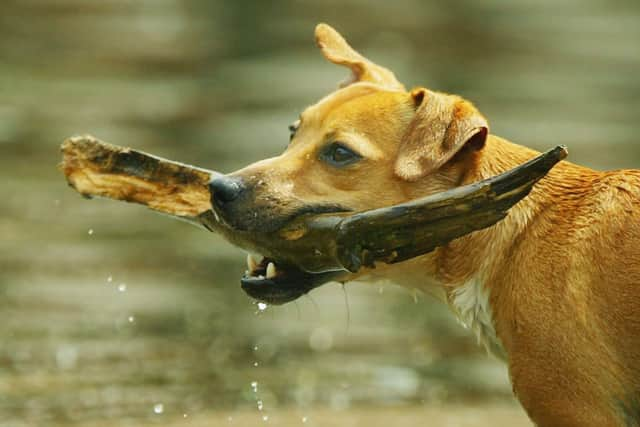
Another pollution route for the chemicals is through dogs swimming in rivers and lakes.
The pesticides are thought to be having a significant impact on the invertebrates living in and around watercourses, as well as birds and mammals.
Last year the agency announced levels of the two chemicals had risen "way above the predicted no effect concentration” and placed them as top of its list of priority concerns.
In July, the government unveiled a strategy to reduce levels of flea and tick treatments in the environment while protecting animal welfare, including commissioning research to better understand this issue.
Professor of ecology Jonathan Grey, a member of the Yorkshire Dales National Park’s biodiversity forum, said if a dog that has had flea treatment three days beforehand takes a dip in a river it could wipe out all the food for all the birds and creatures at the base of the food web.
As Professor in Practice with The Wild Trout Trust, Prof Grey said he found the dog pollution issue alarming.
He said: “You can go to any river and find really high damaging concentrations of all sorts of chemicals.
"There is a huge variety of chemicals that we’re finding in our water system that haven’t been monitored before and we really don’t know what their environmental impact is.
“My worry from a Dales perspective, but this applies anywhere, is that we know spot on treatments for dogs where you dab a little oil on the back of their collar is incredibly toxic.
"With one of those treatments you could remove every single invertebrate out of 25 Olympic swimming pools of water.”
Campaign group River Action says rivers in national parks are, contrary to expectations, the most heavily polluted compared with urban rivers when it comes to human pharmaceutical
Prof Grey said: “The thing that really strikes me is we have got tonnes of well-meaning people walking their dogs along rivers and perhaps inadvertently poisoning stretches of rivers that theoretically should be pristine, because they are above all the influence of sewage treatment works and combined sewer overflows.
"We can’t blame the utility companies for this, it’s way above their influence in most of these cases, and higher up in the Dales the rivers are smaller so the likelihood of damage is greater.”
In July, a University of York study into “forever chemicals” in UK rivers found some of the highest levels ever recorded globally, with Trifluoroacetic acid, a chemical used in numerous household items, found in in 98 per cent of 54 sites tested nationwide.
Rivers in North Yorkshire were found to be among the worst hit.
Prof Grey said despite the impact of the pesticides there remained a lack of public awareness about pollution sources such as pet flea treatment.
He said: “A lot of people don’t, anglers and shooters that I talk to have no idea how easy it is to transmit into the environment.
"These things are generally put out as very effective pesticides and a lot of the pharmaceutical companies are promoting a preventative measure rather than a reactive one.”
Some leading veterinary organisations have advocated approaching spot-on treatments for dogs on a need or risk basis rather than a monthly one, as well as the use of less environmentally damaging treatments.
Prof Grey said: "When I got a puppy two years ago they tried to sign me up to a monthly flea treatment which was an ingested one rather than a spot on one, but there are still plenty of these spot on treatments being promoted. For the most part they are completely unnecessary.
"If your dog contracts fleas then treat it, but to pump these chemicals out on a monthly basis is perhaps dubious. We’re not saying dogs shouldn’t ever go and enjoy the water, but there are times when you might want to think about not allowing your dog to do it.”