
‘Trouble ahead’ for council backed household waste incinerator warns environmental protest group
An environmental group which organised public protests and meetings over a proposed household waste incinerator has warned of “trouble ahead” for the project.
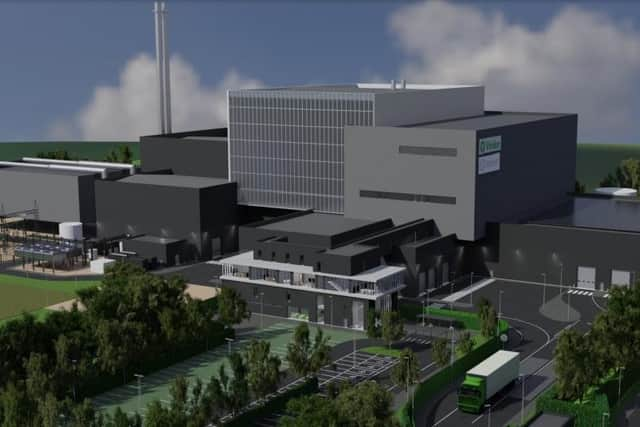
It was confirmed last week that contracts with a value of £2bn had been signed by several North-East councils and operator Viridor enabling the Tees Valley Energy Recovery Facility (TVERF) to be delivered.
Stop Incineration North East (SINE) said there was an “ever worsening over capacity” of incinerators already on Teesside.
It said it feared already significant health problems affecting residents in Grangetown, where the plant will be sited on land at Teesworks, and nearby South Bank would be exacerbated.

The group also predicted that, given Government policy to roll out weekly food waste collections and simplify household recycling efforts, “feedstock” – the material from black bag bin waste to be burnt – may be in short supply.
In a statement SINE said: “SINE maintains that burning waste is a climate and environmental disaster and economically unsustainable.
“Incineration has also been described as a ‘leakage from the circular economy’ and a practice that looks set to be increasingly expensive, thanks to the inclusion of incineration in the UK’s Emissions Trading Scheme, with costs expected to be borne by ratepayers across the North-East.”
It added: “There are better ways to invest in public services and better ways to manage the things people throw away.
“Our best hope is that future administrations do whatever it takes to wean us off incineration and find ways to exit this unwanted and unfavourable waste contract before it is allowed to make matters worse.
“SINE encourages communities across the North-East to come together, remaining committed to limiting the damage and continuing to ask questions about our failing waste system.”
Previous statements issued on behalf of the partnership of local councils involved have referred to the facility being more sustainable and lower-carbon solution than landfill with a requirement that its operation is also permitted and monitored by the Environment Agency in order to adhere to strict regulations.
It has also been described as a “safe, secure” solution to disposing of waste that can’t be recycled, with the energy created from the process going to the National Grid.
A spokeswoman on behalf of the project declined to comment on the SINE communication.