
Wild animals are facing bleak winter
The co-founder of an animal rescue centre says many of Yorkshire’s wild creatures are facing a particularly bleak winter following the region’s driest spring in 132 years, followed by a very dry summer.

Penny Hunt, who helped establish Craven Wildlife Rescue in 2019, said many animals have been left facing a battle for survival due to a shortage of food, while others’ body clocks had been upset.
Some of the creatures that have been most affected by the dry conditions are hedgehogs and owls, with the centre caring for more than double the number of tawny owls this year than it did in 2024.
Penny said: “We’ve had a lot of very dehydrated animals and a lot of the animals that would be eaten by owls, such as voles, haven’t survived the drought, so we get more injured owls.
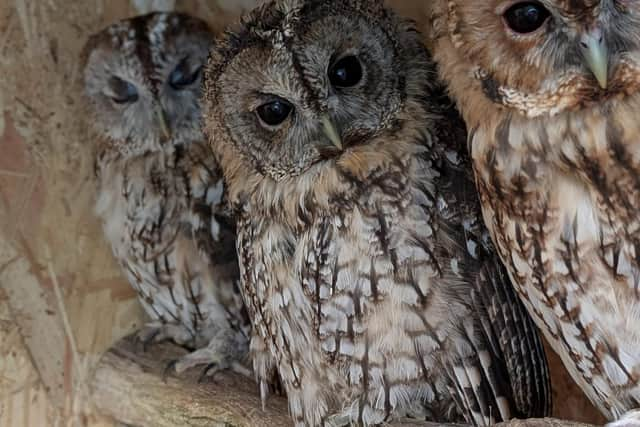

"Barn owls have been out in the day – if it’s been raining at night they can’t fly – and they get a lot of car accidents and emaciated tawny owls because their food source has gone.
“We have got hedgehogs hibernating now and that shouldn’t happen until mid-November. The likelihood is that we’ll have some hedgehogs dying during hibernation because they’ve not stored up enough fat.”
Penny said while hedgehogs needed to weigh over 650 grams to hibernate successfully, the centre kept hold of them until they reached 750 grams as it has been proved they lose about 100 grams when they outside.
She said: “If you see a hedgehog out in the day it’s got something wrong with it. Rather than put it under a bush phone a rescue immediately. If you want to help hedgehogs survive this winter put out some kitten kibble, which has a high meat content and is small enough for them to eat. As soon as you put it out you’ll get hedgehogs in the garden, they’re that desperate for food and they’ve got a really good sense of smell.”

Increasingly recognised as one of Yorkshire’s leading wildlife rescues, the charity has developed rapidly since its launch when people looked after animals in their homes.
The rescue group took over a base 18 months ago in the fomer primary school at Horton-in-Ribblesdale, but it has emerged the site could be sold by the Diocese of Leeds to an alternative buyer.
Penny said: “As we have grown quite a lot in the past year we’re planning further growth. We may end up in a position to buy our current base and if we can’t we’ll be looking for land that we can build on.
“We achieve a huge amount in terms of animal care every single week,” said Penny. “We’ve worked hard to develop our animal care facilities within the rescue hospital and expanded the network of agencies, mentors and experts that we work with. There is a pressing need for us to expand our facilities, whether at our current site or at a new site, and there is a huge opportunity for us to expand our outreach and education activities.”
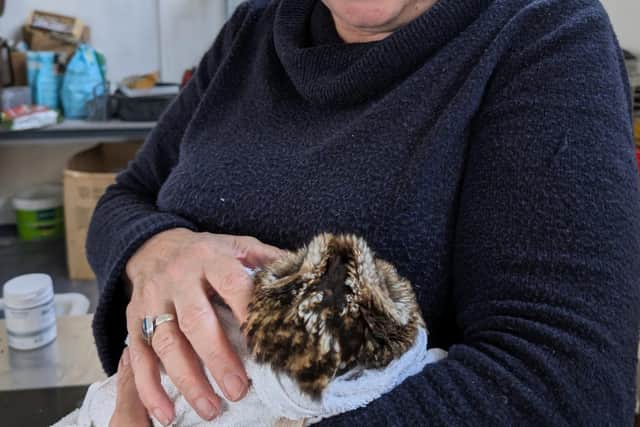
The charity has expanded its operations to care for nearly 500 animals a year.
Penny said: “Most of the animals that we have in are red-listed, we have lots of hedgehogs – our highest at one time has been 84 this year – rabbits, hares, owls and we take in lots of raptors, such as kestrels and buzzard.
"Last night a great skua arrived, a red-listed seabird from the north of Scotland, that was in a fence in Austwick.
“We have so many animals that come through that are endangered. Hedgehogs are the most in trouble animal that we’ve got. We spend a lot of our time training our volunteers how to deal with hedgehogs, they go out to other centres and do medical training. The whole reason for our existence is to try and conserve these animals that are struggling with climate change and what humans are doing to the environment.”
With growing numbers of animals that need help to survive, the organisation is looking to appoint three additional trustees with experience in areas including veterinary practice or animal care, vents organisation and fundraising, business and legal, architecture and technology to help it achieve its medium and long-term ambitions.
She said: "We rent what is quite a derelict building which has lots of black mold, no heating, no hot water. It’s freezing cold and damp and we don’t want to do too many winters like that for the sake of our 30 volunteers. It’s not good for their health and it’s not great for the animals.”
Meanwhile, the charity is in talks with North Yorkshire Council about buying a parcel of land in the Settle area to build a wildlife hospital.
For details, email [email protected] before October 31.