
Yorkshire woodlands face increased pressure after hottest summer on record
The pressure on Yorkshire’s already struggling woodland habitats has been compounded in recent months, after the UK saw the driest spring and summer seasons for hundreds of years, leading to widespread droughts.

Yorkshire Wildlife Trust said it had noticed the direct impacts from the drought on its woodland reserves, including entirely dried-out wet woodlands and leaves turning autumnal early due to stress.
The group said it had also seen ‘limb drop’ in Yorkshire woodlands, as trees lose perfectly healthy branches to reduce their drain on resources.
The trust said the hot weather had become an “additional burden” for Yorkshire’s woodlands, which are already under tremendous pressure.
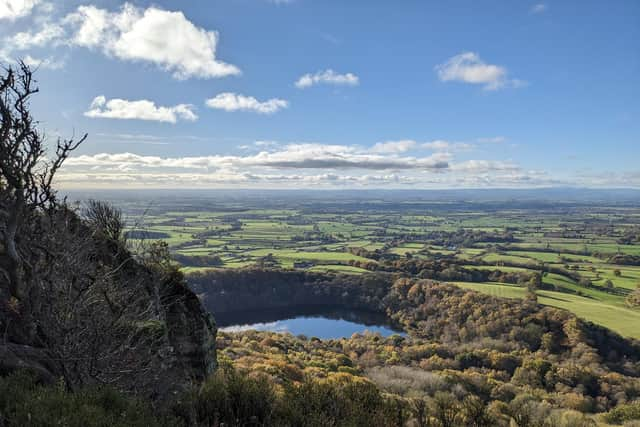

Dave Powell, living landscapes officer for the Vale of York, said: “The unpredictability of our weather over the past few years has given wildlife far less opportunity to bounce back from periods of more extreme weather.
“Yorkshire’s woodlands are already struggling from lack of mixed and older habitat, disease, and minimal management – and they are just too scattered and small to successfully support our wildlife.”
According to research from Cambridge University and Forestry England, the UK has just 50 years to prevent woodland ecosystem collapse – meaning that without intervention, woodlands will no longer be able to support the range of species including birds, mammals and insects essential to their ongoing survival.
The continued loss of ancient and mature woodland is also thought to be a key factor in the declining numbers of many woodland wildlife species – one in ten of which are said to be at risk of extinction.
Mr Powell added: “The trust’s woodlands cover an area nearly twice the size of Sherwood Forest and are home to rare species like lesser-spotted woodpeckers, Nathusius’ pipistrelle bats and pied flycatchers, bluebells and stunning autumn colours. Oak trees alone support 2,300 species.
“But they are at risk from a changing climate, land use change and disease like ash dieback, and require constant care to keep them as healthy habitat and beautiful places to visit.”
Mr Powell’s comments come after the Met Office confirmed at the end of last month that summer 2025 had officially been the hottest on record.
This came despite the UK experiencing wet and windy conditions in the final days of the meteorological summer, marking a major change from two seasons of droughts and soaring temperatures.
Provisional statistics released by the Met Office at the end of August showed that the mean temperature across the UK was 16.10C during the summer.
The Met Office and Environment Agency also warned earlier this week that drought conditions seen earlier this year could continue into winter, despite a high chance of a wetter-than-usual autumn and increased flood risks. The groups said that despite a wetter and windier outlook for the next three months, the effects of this year’s dry and hot weather – which led several regions to declare drought status and introduce hosepipe bans over the summer – may not be reversed by winter.
Mr Powell also noted the importance of wooded spaces for mental health and wellbeing, and called for a widening of efforts to protect such areas.
According to The Woodland Trust, 90 per cent of people experience the wellbeing benefits from spending some time in woodlands.
Mr Powell added, “Our woodlands are steeped in the history of our land.
“They are home to ancient trees and ancient techniques that go back centuries, they fill our countryside and cities with colour and birdsong, and there is something enduringly constant about them and their quiet stateliness we cannot afford to lose.
“Tackling the continuous encroachment of invasive species like Himalayan balsam, absorbing the impact of ash dieback disease, and undertaking traditional management practices like coppicing and veteranising are very expensive and time-consuming tasks – and if we are to help Yorkshire’s woodlands sink their roots for the future, we need support.”
Ash dieback is a fungus which first originated in Asia.
Though the fungus causes little damage to its native hosts abroad, its introduction into Europe has ‘devastated’ European ash, according to The Woodland Trust.
Though trees are often able to fight back in singular cases, year-on-year infections can eventually kill them.