
Evolution: Chris Packham on his new BBC show seen as 21st century Life On Earth
Chris Packham fronts a major new BBC series that traces the stories of some of our favourite animals. Is the show another Life On Earth? Yolanthe Fawehinmi finds out.
One of the “greatest joys” of Chris Packham’s job is learning new things about the place we call home.
In a new five-part BBC Two series called Evolution, the 65-year-old naturalist and Springwatch TV presenter tells the extraordinary story of how life on Earth has changed over more than four billion years.
Using cutting‑edge science and immersive visual effects, Packham explores the pivotal evolutionary breakthroughs that have shaped every living thing today.
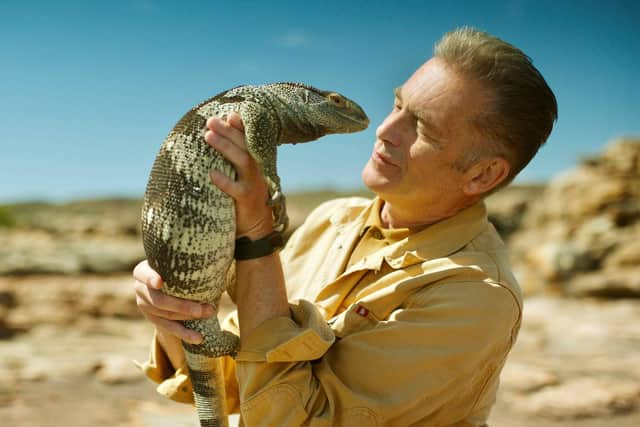

Rather than telling a simple chronological history, each episode traces the deep evolutionary journey of one modern animal, including the horse, elephant, ostrich, bat, and dolphin, revealing how survival, chance, innovation and partnership have driven life’s astonishing diversity.
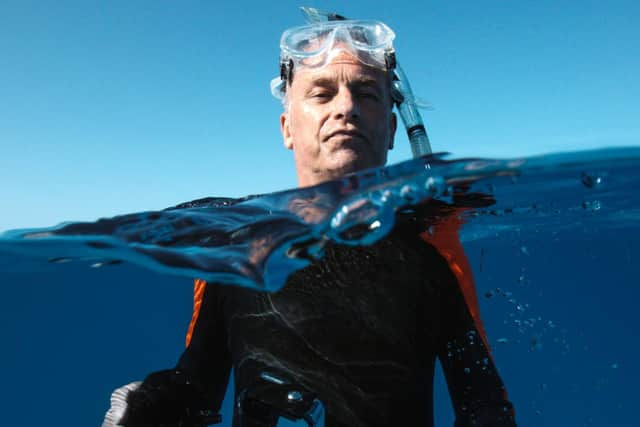
Each episode was filmed in one location, ranging from Borneo and the Bahamas to Kenya and the UK.
It could draw comparisons to Sir David Attenborough’s 1979 series Life On Earth, which similarly traced the evolution of life on Earth – but Packham’s show uses up-to-date, modern science.
What does Packham make of the comparison?
“I’d say it’s a more modern narrative structure. Also, we’re catering for an audience that we know we need to surprise, and what we want to do is feed them short snippets, which are basically entry information into a bigger story.
“We do want people to go down the pub and say, ‘Do you know what, I just watched this programme, and you won’t believe it’.
“Those are the 20-second things that get people to prick up their ears, and I don’t think Life On Earth is like that. But I like Life On Earth, because I can still read an encyclopedia, but most people don’t read them.”
Of course, creating shows of this kind are highly dependent on the conditions of the wherever they are filming.
Packham says: “The single location [for each episode] really helps. I’d argue that the logistics are the foundation that gives you a chance of actually telling the story.
"Ultimately, the only thing that you can’t plan is the weather. Everyone always thinks the animals aren’t going to show up; invariably, if you’re planning it right, the animals do show up.
“You’ve just got to be constantly flexible with the weather. Sometimes we filmed in the rain, so the series is visually diverse. If everything had a shot in the boring sunshine, it would be dull. So, having a bit of bad weather and grey skies is good, but there’s a time and a place, and that can be hard.”
It allows him to keep learning, too, which is “the greatest joy of my job,” he says.
"I get to work with people who know more about a subject than I do, and their job, because we’ve asked them to come along, is to tell the team and me everything they know about it in 30 seconds.
“My joy is that I attend the University of Zoology every single day while I’m working, and I get to meet the scientists.
“The other thing is, this is updated information, so we constantly look at the latest science. There are challenges with that, though, because sometimes it’s not published, and therefore, they won’t let us talk about it.
“And if there was a dispute, because there might be two groups of scientists with different theories, that gives us challenges when we want to represent them.
“The caveats sometimes make me uncomfortable because I just want to say it as it is, but we don’t know it as it is, and that’s an important part of science.”
There were definitely parts of filming which made Packham emotional.
"There’s a bit with an ostrich when it was hatching out of an egg. When you’re peering into it, it’s not even in the world yet, and you’ve had a sneak preview into a life which is going to unfold, and I like that.
“It’s just this little thing moving, and that was really very emotional, that formation of new life, and it’s also that cusp, it’s been locked in there, it’s pretty well developed.
“When an ostrich hatches, they’re precocial species, so they’re out and on their feet within a matter of minutes. That was amazing.
“And some of the places you go to are breathtaking. But for me, seeing the velvet worm in one of the programmes was incredible. I’d seen photographs of those since I was a child; I’d never seen one. They’re hard to find, fragile little things, and so I was very excited. I had to fight to keep it in.”
How does this series challenge, or embrace, other beliefs about the beginning of the world?
Packham says: “I think we start quite pragmatically. In a way, we built the groundwork of our previous studies about the history of the Earth, but we don’t deal with creationism.
“We deal with everything from a scientific point of view, evidence-based science, which is why sometimes we have to be ambiguous.
“The key thing is that we’ve developed – we learn now through technology a lot more quickly about life, and that’s why it’s not a gratuitous thing to follow up from Life On Earth, because we have at our disposal an enormous amount more knowledge than we had when that series was made.
“When I was a kid, [the] T. Rex was a child-dragging, idiotic lumbering monster, and now we know that it could run fast, had a tremendous sense of smell, and could probably communicate using infrasound, and we’re beginning to get an understanding of what colour it was, I’d never imagined that in the Sixties. So natural science moves very rapidly.”
Evolution started on Monday on BBC Two and can be viewed on BBC iPlayer.