
Foot and Mouth crisis: 25 years on from devastating time for Yorkshire farmers
Few things bring a tear to the eye of a hardened Yorkshire dairy farmer. Even fewer when it is 25 years later. It might be a quarter of a century down the line, yet the devastation, decimation and heartbreak caused by the 2001 Foot-and-mouth outbreak is still raw in this region, where more than 130 farms were affected.
On February 19, 2021 a case of Foot-and-mouth was detected in an abattoir in Essex with several more cases announced in the following days. Four days later, the then Ministry of Agriculture Fisheries and Food (MAFF), announced movement restrictions within five miles of the infected area.
It was too late.
By the beginning of March 2001, Foot-and-mouth had spread down to Cornwall, up the country as far as Scotland and across to the Lake District and Cumbria, which was also particularly affected.
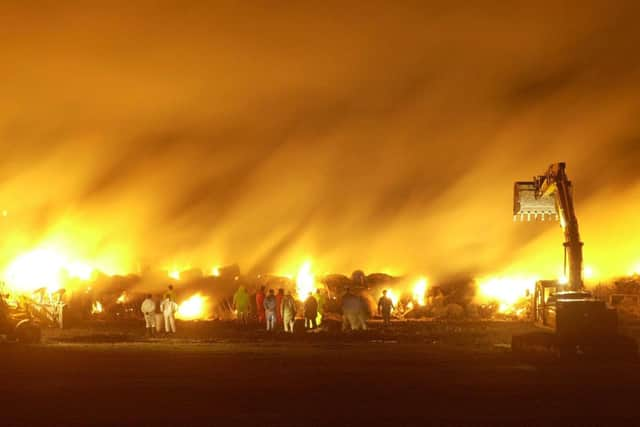

More than six million cows and sheep were slaughtered.
Some did not even have Foot-and-mouth (presented by loss of appetite, lameness, blisters in the mouth and lesions on feet) but a mass cull was deemed the only way to prevent further spread. Cattle, healthy or not, within two miles of a known case were also slaughtered
At the height of the outbreak, between 80,000 and 90,000 farm animals were being culled each week and incinerated in mass pyres. Smoke drifted across fields and valleys. The early Spring breeze was tarnished by the smell of burning flesh and fleeces.
The silence in an already peaceful countryside became almost deafening. No animals, no tractor movements and already isolated communities completely cut off.
Foot-and-mouth changed farming, and farmers, forever. Some never recovered their businesses and some never recovered themselves.
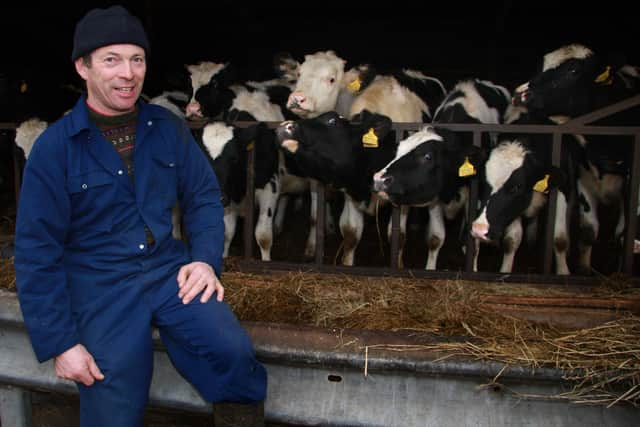
Tom Cummins, a dairy farmer at Stainsacre, near Whitby, had got married two days before the first case was detected. He was on honeymoon when he got a phone-call telling him he needed to come home as his 400 cattle, and 150 on the farm next door, were going to be culled.
He said: “We came back home to find ourselves and a neighbouring farm saying ‘what are we going to do’. We were next to an active case.
“They were culling wholesale, it was on the news every day. The cows were not showing symptoms and we were running around with our heads in our hands saying ‘how could this be’.
“On the Monday morning they were supposed to appear (and cull) but nobody turned up. By Monday lunchtime we were contacting one another and our vet.
“He rang the DEFRA vet and her answer was ‘we are killing too many in Cumbria, we will not come to Whitby this week’ and that was the last I heard of it.”
Others nearby were not so lucky.
Adrian Cornforth’s family farm is in East Barnby, a hamlet five miles north of Whitby. Within a day 130 calves had been slaughtered. He says he couldn’t watch then and even now, it is clearly an emotive subject.
“We could have contested the herd were nowhere near them (affected animals).” But, they were scared of looking “silly” by arguing the case.
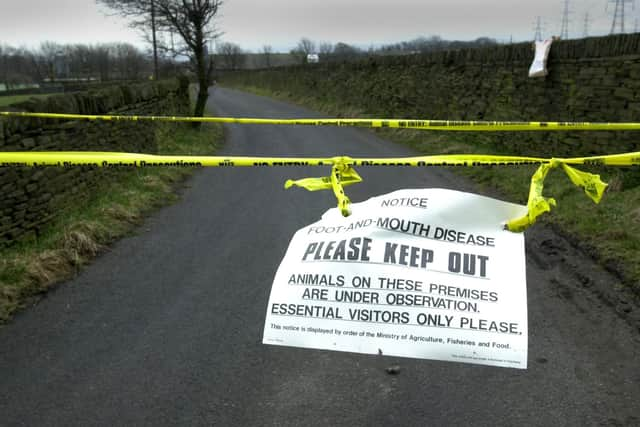
Heavy restrictions were placed on farmers. No visitors past the farm gates, no livestock in or out, disinfection of footwear and vehicle wheels.
It created division and suspicion amongst what is known to be a tight-knit community.
Mr Cummins added: “We had a tin for the postman to leave mail in and had chains across the gate. We didn’t go out, we stayed home because we were scared of spreading it around and we were at risk as well. We stopped family and visitors coming.
“Everybody was restricted and it was like ‘1984’ or ‘Big Brother is watching you’. At the time we got carried along with it, you were suspicious of everyone, who was moving around, who was doing all of this.”
John Gatenby’s family has farmed Littlethorpe Farm at Rudston, near Bridlington for more than a hundred years.
There was no culling in East Yorkshire but while Littlethorpe Farm was placed in lockdown, farms across the road were allowed to move four months before them.
Movement restrictions also meant a dumbed down funeral for John’s father William, who was well-known in the industry. Mr Gatenby senior was a founder member of the National Agricultural Advisory Service (NAAS), later the Agricultural Development Advisory Service (ADAS).
Mr Gatenby recalled: “We had a very tough decision. Do we have a small service for him and a service of remembrance later - or nothing at all. We had a small service but farmers were encouraged not to attend.”
The Gatenby family never did hold a remembrance service. By the time restrictions had been lifted and the farming community was allowed to meet again - he was planning his mother’s funeral by then.
Stephen Dennis, a regional manager for the Farming Community Network (FCN) had been working for the organisation, then called the Farming Crisis Network, for six years when the outbreak occurred.
The FCN and other organisations rallied with volunteers making phone calls to check in and update isolated farmers while food parcels and shopping were dropped off at farm gates. The impact on mental health was not realised as much then as it would be now, says Mr Dennis.
Farmers who directly lost cattle were compensated but those who still suffered through loss of business were not.
Country shows up and down the UK - the Great Yorkshire Show being one of them - were cancelled, horse racing events were cancelled, even the TT motorcycle races were cancelled that year and the General Election postponed.
It is estimated the cost to the UK of Foot-and-mouth in 2001 was £8bn and £1.34bn was paid in compensation to farmers.
Mr Dennis added: “There was fear, there was tremendous pressure to live through. At that time it was not as well understood the mental health implications it had.
“People living on their own didn’t see anybody for three or four months. Then old breeding lines, herds and flocks had to be disposed of. Not just your own, but grandparents and great grandparents before that. It is a long line and was about more than money.”
ENDS>>>>