
Gardening: Flower that produces some tall stories
The French love their fields of sunflowers, and the British are starting to appreciate the beauty of this very striking flower. Occasionally, it’s possible to find such a field in Britain, but we are far more likely to grow them as individuals, often vying with the neighbours to see who can cultivate the tallest.
Normally, a healthy, happy, common sunflower may reach a height of perhaps 10ft, but someone in Wigan managed to cultivate a 26ft specimen. This year, I grew just two sunflowers – and both topped out at 14ft. Now the birds are waiting for the seeds to mature sufficiently to provide them with some nutrition.
But you don’t have to be competitive to grace the garden with Helianthus because even one single flower in one single pot should be simple to grow and provide a talking-point without anyone having to bend over backwards to see the bloom.
Most varieties are annual sunflowers which may self-germinate from dropped seeds if you leave the heads on the plants throughout the winter, but it’s easier to sow fresh seed in spring, either directly into the ground where they are meant to grow, or into pots.
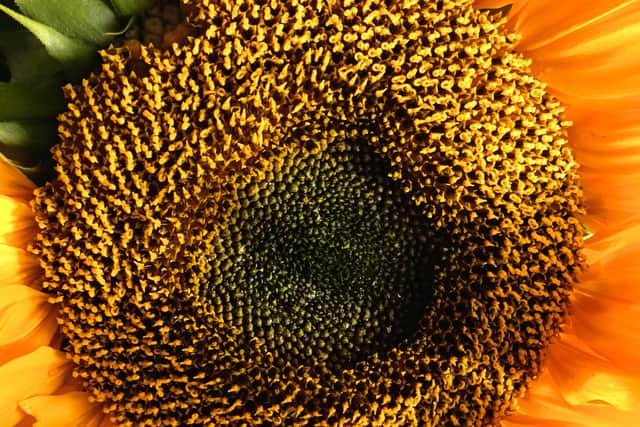

Remember – these are sunflowers and they love the sun, so choose the sunniest site.
If it’s to be straight into the garden, rake the soil to a fine tilth and make drills 12mm deep. Leave 10cm between each seed. Water them in. As they grow, thin them out to about 45cm apart, leaving the strongest, tallest plants.
Then it’s basically a case of keeping them watered and watching them grow. In pots, add fertilizer every couple of weeks.
Deadhead flowers when they start to fade, or when they are damaged but before they produce seeds. The large outer petals are beloved of bees, so Helianthus are worth growing just for that.
Viburnum (pic of same) xxxxxxx
Viburnum opulus isbseen occasionally in gardens where it more often than not forms part of a mixed hedge.
Occasionally, if may be grown as a specimen shrub but it can be unreliable, even downright sulky, so there are definitely grounds for giving it a wide berth if you want something consistently floriferous.
Once it was a lot more common, grown for beautiful, pom-pom-like white flowers and autumnal waxy, red berries which look a bit like red currants. The plant’s leaves resemble those of a maple, but there the similarity ends.
It’s a very accommodating shrub; it doesn’t mind even moist, moderately alkaline soils. In fact, it will tolerate most soil types, but give it a well-cultivated soil rich in humus, and it will put on a first-rate show before it finally sheds its leaves and becomes nothing more than a pile of brown twigs.
The acidic fruit is edible in small quantities, but it can be used to make jelly. It is, however, mildly toxic – so perhaps that’s why birds leave it alone unless there is absolutely nothing else on the dining table.
Viburnum opulus has a multitude of names, including Water Elder, European Cranberrybush, Cramp Bark (for its medicinal qualities), Snowball Tree and Guelder Rose. The latter appears to have originated because a popular cultivar originated in the Dutch province of Gelderland.
It can get a bit twiggy, and if left unpruned will spread to become a healthy 10 foot tall and equally as wide, and it can throw out more growth via lengthy underground roots, so it pays to keep it in shape by cutting it back after it’s flowered. Then, of course, you forfeit the berries for that year – although the birds probably won’t mind.
Ash (two pix of same) xxxxxx
A few years ago, ash dieback reared its ugly head, but it was only the latest in a long line of threats to our ancient trees; there are at least 15 known diseases and pests that pose an immediate threat – oak, beech and Scots pine are all under attack.
There are trees in this country that are more than 1,000 years old; their loss would just be devastating, not only for the landscape but also for the environment.
So, ash dieback, Chalara fraxinea, has taken a heavy toll of the nation’s ash population. To see if a tree is suffering from the disease, look at a young branch and scratch off a little of the bark; if it’s green underneath, the tree is health; if it’s brown, it’s not.
And watch out for wilting on the leaves, which may become blackened but still stay on the branch, diamond-shape lesions on the trunk or a balding crown.
The disease is spread by spores from the fruiting bodies of the fungus produced on fallen ash leaves. These airborne spores can disperse naturally via wind over tens of kilometres.
Young trees are particularly vulnerable and die quickly once they succumb. Older trees can be slowly killed by a yearly cycle of infection. Spread of the disease in the UK is most likely to be as a result of the planting of infected nursery stock and wood but wind-borne distribution of the fungal spores also occurs.
This summer, however, many ash trees seem to have thrived – loads of leaves and, plenty of those instantly recognisable ash ‘keys’ which make the tree so easy to identify.