
Gardening: One of Britain’s best-loved, most common and most neglected houseplants - the peace lily
MOST people eventually get tired of winter – all the snow, ice and grey skies – so that’s why many consider gardening indoors.
And when it comes to houseplants, there are several which every home seems to grow – basically, because they are easy to cultivate.
Even if you aren’t a brilliant gardener, there are some plants which will still thrive with only a modicum of care. And one of the easiest to grow is Spathiphyllum, the peace lily.
It’s one of Britain’s best-loved and most common of houseplants but it’s also one of the most neglected, left to fend for itself in places where most plants would simply refuse to grow.
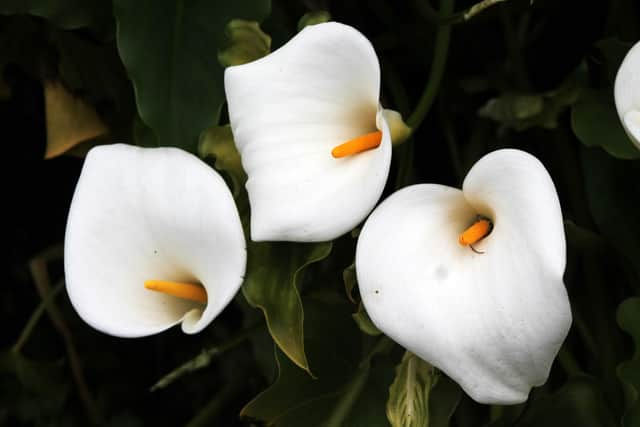

Ideally, it likes a spot where it can receive plenty of natural light, a moist atmosphere and a minimum temperature of 60deg F, but it’s a natural-born survivor so can be found in the most unlikely of places.
Spathiphyllum comes from South America, so here it’s a long way from home. Perhaps we should make it more welcome – give it the right growing conditions and look out for red spider mite or leaves which shrivel and drop off.
Hot, dry air is responsible for the both problems, so mist the foliage in summer with tepid water and stand the plant on a dish of moist gravel to keep the air moist.
In spring, repot and replace the compost. If necessary, split the large rootball, clean off the rhizomes and give them their own individual pots...several perfect little plants can be obtained from just one parent.
When the long-lived flower(s) start to look past their best, cut them off as close to the base as possible.
Spathiphyllum is more than just a plant – it helps to clean indoor air of many environmental contaminants, so it’s certainly worth growing in the average home.
Spider
Next on the list is the poor spider plant, many of which are destined to linger, unloved, ignored, in dry and dusty corners of English homes while gaudier, blowsier blooming plants are given pride of place and smothered with tender, loving care.
Tradescantias (spider plants, wandering jews etc) must accept some of the blame for their predicament – they are hardy, uncomplaining and thus are used to fill a spot where many plants would go to die.
But there is no reason to weep for this family of perennial wildflowers more at home in their native New World where they are normally found spreading at ground level in outdoor beds and borders.
And one variety that definitely needs no sympathy is Tradescantia pallida ‘Purpurea’, which is, surprise, surprise a purple-leaved form of spiderwort.
It’s a common outdoor edging plant in many a Mediterranean country where the sun shines most days but in the UK it’s an indoor plant best grown in bright light all year round to encourage its leaf colour. Tradescantia pallida likes a temperature of between 65-80°F.
Some direct sun is fine, but to avoid scorching the foliage, keep the plant(s) shaded from strong summer sun, particularly if ‘Purpurea’ is in a conservatory where glass can magnify the threat. The plant will tolerate less light, but the leaves will grow to be more green than purple.
Pinching off new stem tips should help promote branching and keep Tradescantia pallida compact. Repot it in spring by using a container just slightly larger.
Water thoroughly, but then allow the top inch of compost to dry out before watering again.
Feed monthly in spring and summer with a balanced, diluted liquid fertilizer and your little purple spider plant should be quite content.
Aloe
JUST about everyone has heard of – if not had cause to use - Aloe vera, the plant used in a multitude of everyday products, from dishwashing liquid to yoghurt.
Whoever first realised that this short-stemmed shrubby aloe could be so beneficial to mankind, was a genius. He or she probably never made any money from their discovery, but they catapulted the plant into a super star of the horticultural world.
In the UK, this is a houseplant, a conservatory dweller, although it can be taken outdoors to enjoy the summer and the chance to luxuriate in the light. It is also slow to flower (the blooms, when they do appear, are yellow), so patience is a virtue.
But Aloe vera is not the only aloe which has made its home in the UK. Aristaloe aristata is the Lace Aloe, whose dark green leaves (speckled with white bumps) are wide at the bottom and taper into a sharper point at the top. The orangey flowers are thrust up on long, thin stems and can hang around for many weeks.
Unlike those magnificent agaves that die after flowering, aloes will continue to grow after blooming. You can remove the flower stem or leave it to dry.
While the plant needs regular watering, remember that A aristata is a succulent and is drought tolerant, so allow the top half-inch of soil to dry between watering. In the winter, the plant only needs enough water to keep the soil moist.
The Lace Aloe needs repotting on a regular basis – persuade it to leave its existing container and then remove any dead or damaged outer leaves and perhaps trim the roots.