
Good news as puffins return to Yorkshire but lets hope for better weather - Roger Ratcliffe
The cute, comical-looking puffin vies with our familiar garden robin for title of the UK’s most-loved bird, so many readers will be excited to know that puffins - after disappearing from their nesting cliffs at Flamborough, Bempton and Filey late last summer - have once more been seen on the Yorkshire coast.
So far this year their numbers are a tiny fraction of the 3,000 or so birds counted on land and sea there when the last survey was carried out.
Since leaving Yorkshire waters in August the majority have flown far into the North Atlantic to spend the winter and are not expected to return en masse until March.
But some have already been spotted by vigilant seawatchers at the clifftop Flamborough Bird Observatory.
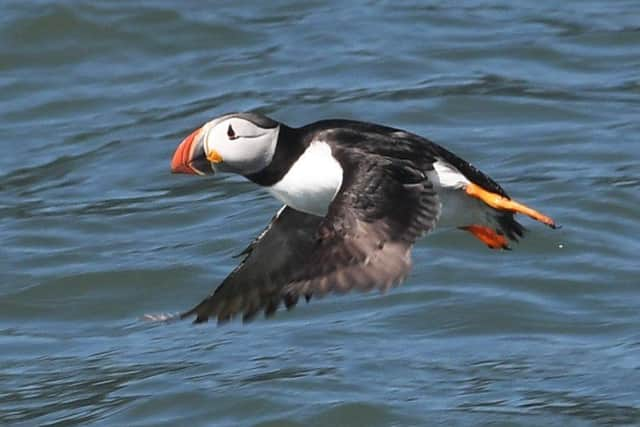

First sighting of the year was on January 5 when two puffins were seen flying up the coast, followed four days later by a single bird off the chalk headland.
Okay, just as one swallow doesn’t make a summer, one puffin doesn’t indicate the arrival of calm seas and balmy seaside days, but it’s heartening to know they are on their way.
After breeding, most puffins counted in what’s known as the Flamborough and Filey Special Protection Area head into the Atlantic as far as the Newfoundland and Greenland coasts.
Others move into the upper reaches of the North Sea, or fly south into the Bay of Biscay and seas around the Canary Islands.
In these waters they may encounter neighbours from their Yorkshire nesting sites. Some of the 13,000 gannets from Bempton and Flamborough also spend their winters there.
Gannets can still be seen along the Yorkshire coast at any time in winter, but in autumn seawatchers observe numbers varying between a few birds and over a thousand a day moving south towards the English Channel and onwards to the Atlantic.
Two other species breeding in the vertical city of Bempton’s chalk cliffs - species of auk like guillemots and razorbills - can still be seen offshore from October to March whenever there are stormy conditions in the North Sea, where many spend the winter.
John Mather, in his The Birds of Yorkshire, reports that a prolonged period of gales in February 1983 prevented them from fishing and thousands of birds, mainly razorbills, perished along the east coast of Britain.
“The Yorkshire beaches were monitored by several people,” he went on, “and the number of dead razorbills was well in excess of 1,000”.
Birds continued to be washed ashore for several more days. Interestingly, some them had been ringed as chicks not at the Flamborough and Bempton colonies but at colonies in the Hebrides and on islands off the north of Scotland.
More recently, puffins have been victims in these so-called seabird “wrecks”. During the early spring of 2013 over 200 emaciated birds were found dead between Scarborough and Withernsea, and when the breeding season got underway it was estimated that ten per cent of the Yorkshire population had perished.
So it’s good news the puffins are returning, but let us hope for good North Sea weather.