
Goole 200: Volunteers embroider history of port to celebrate bicentenary
A dozen women have the history of Goole all stitched up.

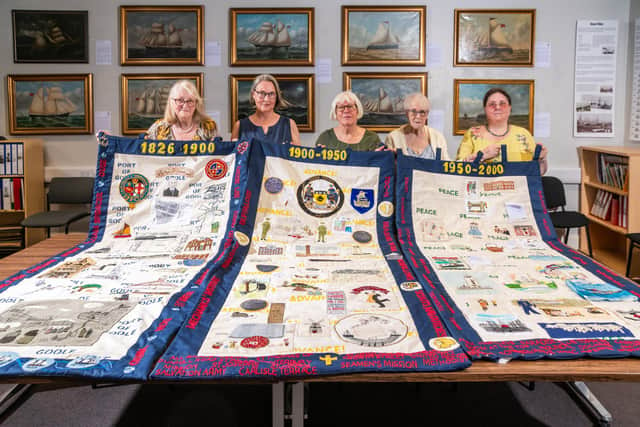
Goole Library and Museum Embroiderers group are finishing off the loose ends on an artwork, about the town, which celebrates its bicentenary this weekend.
The panels start with Goole's beginnings in 1826, when it was just a tiny, rural village.
Then the Aire and Calder Navigation Company cut a canal from the Yorkshire coalfields to the River Ouse to export coal and built the town’s docks, workers' houses, and the famous Lowther Hotel.

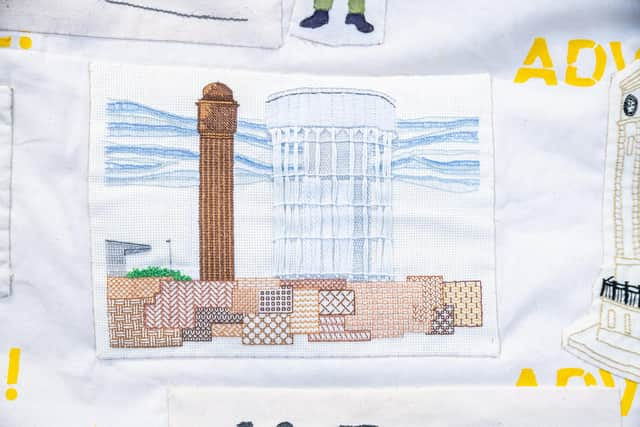
The hotel features as does the famous “Salt and Pepper Pots” which are a Grade II-listed water towers and a much loved feature of the town’s skyline.
The final panel, which is still work in progress, brings history up to date adding new facilities like the Siemens Rail Village, where next generation underground tube trains are being assembled.
“We're putting what Goole is (around the edge) hardworking, resilient, resourceful, that sort of thing, and across the bottom. “And likes a good laugh and a good moan,” said the group's leader Jill Hall, a retired textiles teacher.
“We've all enjoyed it. Some of the group are very experienced embroiderers and some haven't done anything since they left school, but you really wouldn't notice that on the finished piece."
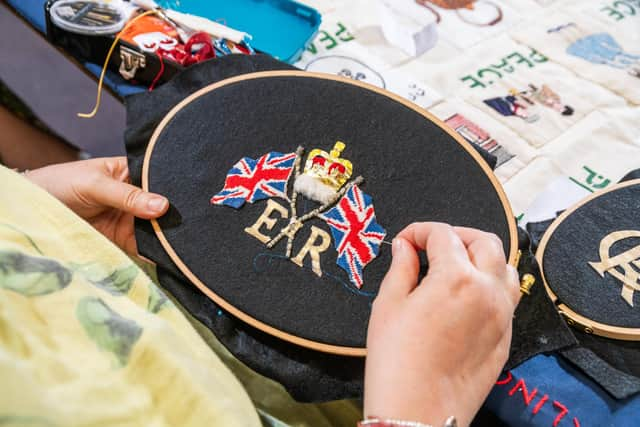
Each panel measures about 6.5ft (2m) long and 3ft wide. It doesn’t follow an overarching design, with each contributor free to create their own distinctive work. For those who don't know Goole well, there’s a lot to discover. Angela Meneight points out that Goole is the country's most inland port, although not half as busy as it was in its heyday.
She says the town gets unduly criticised adding: “We want to show Goole in a good light and let people know what fantastic buildings and facilities we have."
The artwork will be free to see when it goes on permanent display in the museum.
The group’s next job will have something in common with the Bayeux Tapestry, which covers the years 1064 to 1066, and is on display in the British Museum.
They will be recreating the Harrowing of the North, a series of brutal military campaigns waged by William the Conqueror, in the winter of 1069 to 1070, aimed at suppressing Anglo-Saxon and Danish rebellions and starving out insurgents in Northern England.
"It is bound to have Bayeux stitch because it's a Saxon laid embroidery stitch, which is very economical with wool and covers areas quickly," said Jill.
Goole’s official birthday is next Monday, and to mark the occasion organisers have planned an action-packed weekend of events.
Highlights include a Waterways Heritage Festival, guided walking tours and a family-friendly treasure hunt. On Saturday a flotilla will navigate the Knottingley to Goole Canal, making its way through South Dock Bridge, around the docks and back again, in a nod to what happened when the port and town offically opened in 1826.
An exhibition celebrating the life and work of Goole-born marine artist Reuben Chappell (1870-1940) launches at the museum on Saturday.