
Gordon Buchanan brings Lions and Tigers and Bears show to Harrogate Theatre, Hull City Hall and Leeds City Varieties
Gordon Buchanan has spent a life in the wild, filming some of the world’s most astonishing species. He talks to John Blow before making appearances in Yorkshire.

Do you remember your first time on an aeroplane? Flying, perhaps, to a fortnight in the Costa del Sol, maybe Paris or Amsterdam over a long weekend. For 17-year-old Gordon Buchanan it was Sierra Leone, bound for a year-and-a-half in the Gola Rainforest.
That sort of trip has become pretty standard for the wildlife documentarian in the years since but back in his teens, you can imagine, West Africa would have seemed an impossibly long way from home on the Isle of Mull.
It came about after his mentor Nick Gordon plucked the young man from a more pedestrian existence.
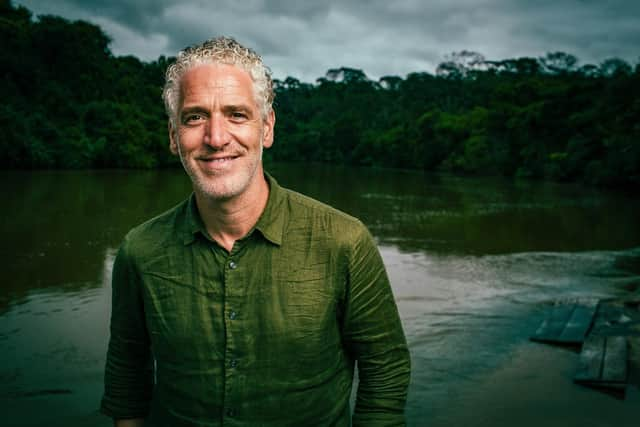

"Nick's wife owned a restaurant and I used to work for her, just washing pots and pans at about 15 and 16,” says Gordon, now 53 and living in Glasgow.
"I got to know what Nick did for a living. He was a wildlife cameraman and I thought, at that age, that just sounded like the best job on Earth. And then when he came back from one of his foreign travels, gallivanting wherever he was, I went to meet him just looking for some advice, initially. But then we got on well and then he was looking for an assistant, and fairly quickly, out of the blue, he asked me if I would fancy being his assistant.
"He said: ‘You'll have to leave school’. And I said: ‘That's not that's not a problem at all, I mentally checked out a long time ago’. So yeah, when I was 17, I just packed in school and off I went to Sierra Leone and spent a year and a half there, working as a wildlife cameraman's assistant.”
He admits now that often he was “desperately homesick” and, settling into his tent, there was “many a night I cried myself to sleep because I was just missing everyone and everything so much”.
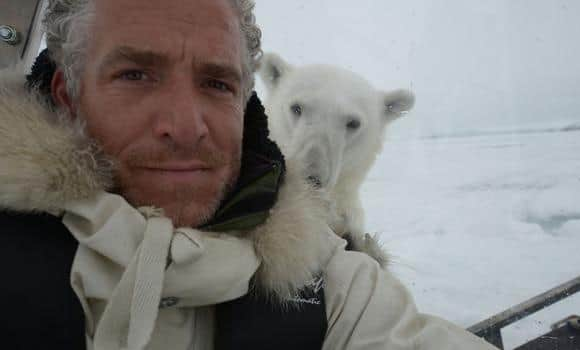
But it didn’t put him off a life of adventure, and like his late mentor, Gordon himself has carved out a career in wildlife filmmaking, coming face to face with some of the world’s most awe-inspiring but feared species.
After he began in the late 1980s, Gordon went on to work on the Big Cat Diary series as well as the long-running expedition show Lost Land Of The… for the BBC.
The Family and Me documentaries, another of his many TV adventures, began in 2010, and he was part of the team for Our Changing Planet, a seven-year diary charting the fight to save the planet’s ecosystems.
Most recently, he’s been seen tracking lions, leopards and cheetahs in Botswana for the BBC series Big Cats 24/7, with series two coming later this year. His autobiography, In The Hide, was released last year.
Naturally, a life at close quarters with ferocious animals garners a few anecdotes, so he is also back on the road in the UK over the coming weeks presenting his show, Lions and Tigers and Bears with Gordon Buchanan.
There have been some hairy moments – it is worth searching online for a clip from The Polar Bear Family And Me in which he faces a polar bear behind a transparent box in the wild – but for Gordon, predators eyeing him up isn’t so scary as the prospect of scooters taking him out in the street back in Scotland.
“I think always with most wild animals, it's about actually letting them decide what they're comfortable with. Most animals aren't out to get us,” he says.
“The majority of them are just quite happy to ignore us but there are a few that, on occasion, we are on their menu, and polar bears are one of them. Being close to polar bears is something that makes me feel very nervous, even if there is half an inch of bulletproof Perspex between me and it.”
However, “the thing that I've learned over the years is not all lions are the same, not all leopards are, not all bears are the same. You have to treat them as individuals and they all have a different view of you.
"It's quite a rush to be able to spend time really close to huge lions with nothing between you and them, no doors on the vehicle, no roof on the vehicle, and have one of the biggest animals and predators on the planet just stand just a couple of metres from you.
“I suppose it might look reckless but if you know what you're doing, it is much safer. I'm more nervous, generally, crossing the road near my house, even when it’s on a green man, just because I think someone's going to come along on a delivery bike or an E-bike or a scooter and run me over. Sitting beside a pride of lions with no door in the vehicle, that doesn't bother me.”
Leopards might be his pick of the bunch. “Their adaptability is incredible because you find leopards living all across the world from snowy forests of Russia right down into the human landscape in Mumbai, these urban leopards all across Africa and into the Middle East. I think for the beauty, the power, their ability to adapt, leopards are hard to beat. They're one of the most successful big cats on the planet.”
As is inevitable with figures who spend their lives monitoring the natural world, their enthusiasm is tempered with concern for the future. Population growth might be his chief concern.
"If you want to put the plight of the planet and plight of the species and the loss of habitat on one primary cause… it’s human pressure, and it's just the pressure from there being so many of us.
“There was a time in the past when human beings didn't impact the planet, but because of our oversized brains and fairly feeble bodies, we had to find a way to actually make life easier for ourselves. We just resulted in being, say, one of the most intelligent animals on the planet but we have this level of intelligence that has resulted in us being able to occupy every continent on Earth. We've been able to explore from the highest mountains, the depths of the ocean.
"It’s an incredible achievement, what we've done with science and exploration, but because there are so many of us, we're putting more demands on the natural world than ever before and you see it worldwide. You see it in the Amazon, you see it in the Arctic with climate change.
“We're living as if we have infinite resources and, on this planet, we don't have infinite resources.
“I think that's something that causes me the greatest concern, is that if populations continue to rise, we just put more and more demands on what's left of the wild and there's a lot less left of the wild than there was when I was born.”
There is an irony to this human achievement too, he suggests.
“We have created things and a way of living that is simplified to make our lives easier, but actually what we've done is make our lives much more complicated and less happy.”
Lions and Tigers and Bears with Gordon Buchanan comes to Harrogate Theatre on Sunday, February 22; Hull City Hall on Monday, February 23; and Leeds City Varieties on Tuesday, February 24. gordon-buchanan.co.uk