
Great Heck train crash: Worst rail disaster of the 21st century remembered 25 years on
Twenty five years have passed since the worst rail disaster of the 21st century, but for those whose lives were shattered some memories will never fade.
Mary Dunn’s husband Steve was the locomotive driver, who died when a high-speed InterCity 225 train was derailed by a Landrover, into the path of his oncoming freight train on February 28 2001.
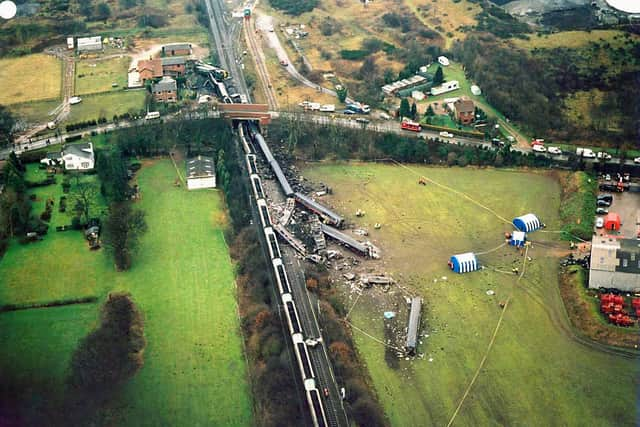
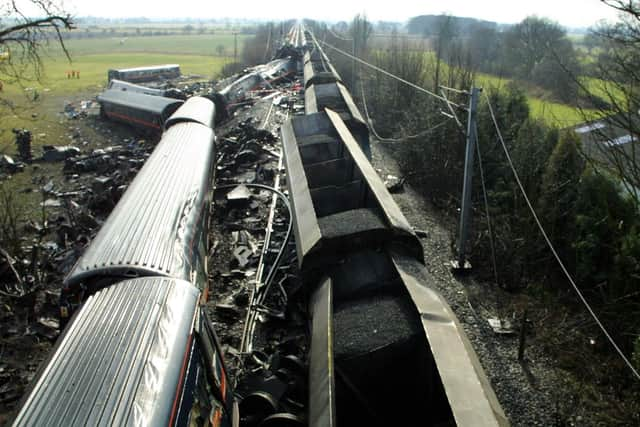
At an estimated closing speed of 142 mph, it was the highest-speed railway incident that has occurred in the UK, leaving ten dead and 82 injured.
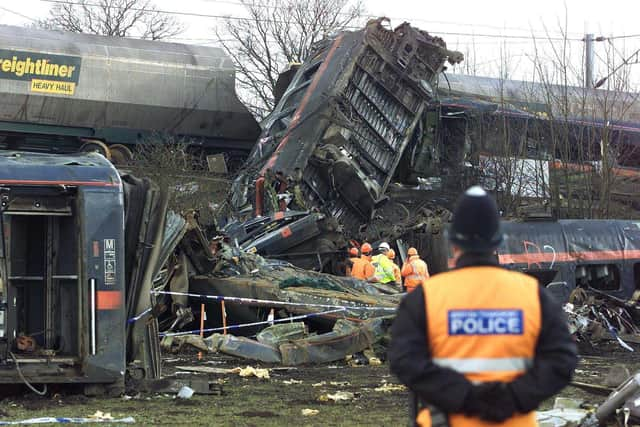
“My first impression was that it looked as if a giant had kicked a child’s train set and stamped on it”, she says, recalling the vast debris field with the mangled carriages of the passenger train, and the freight train overturned in someone’s garden in Great Heck, a small village near Selby. “When I look back, I can still see it and feel it. It was freezing cold, bleak, it was incredible really to see how close Steve was to the houses.
“A few weeks ago there were the two awful railway incidents in Spain. You think it’s all that long ago, but you get a jolt when you least expect it. I got a message from an ex colleague of Steve’s asking was I OK?
“It’s always going to be there, it’s a big part of my life, my boys lost their Dad that day.”
Andrew and James, were 13 and nine respectively. She recalls how James, who’d always been interested in railways from being very young, soon worked out how the crash had happened, showing people using his two model trains. He is now a train driver - as is his wife.
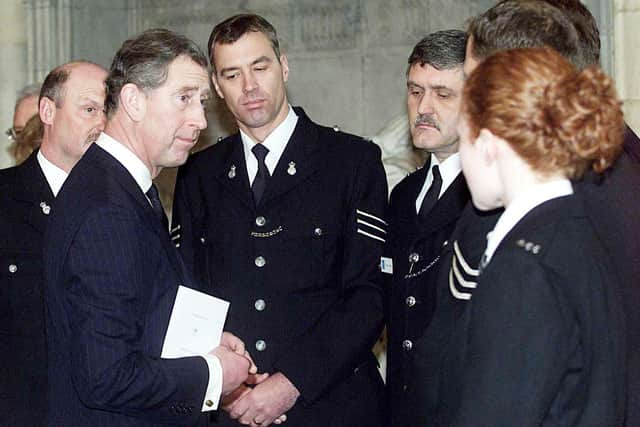
Andrew will be accompanying his mother, who remarried, to a memorial service at Selby Abbey today.
“People think you’ve moved on, or got over it, but you never do”, she says, likening dealing with the trauma to trying to stuff a duvet in a cupboard.
“If you take it out, fold it up, it’s still the same size and you can shut the door - but sometimes the door opens and it falls out.”
Both she and Steve were members of the Institute of Advanced Motorists. “It’s a supreme irony that he was killed in a train crash when it was a road incident caused by negligent driving.”

One of her ways of coping with the aftermath is not ever naming the driver of the Landrover, Gary Hart, by name.
Hart, who had had little sleep the night before, denied falling asleep at the wheel, but was given a five-year jail sentence after being found guilty of 10 charges of causing death by dangerous driving.
“My children have a life sentence of not having a Dad, he robbed us of so many things, but if I get bitter and twisted all I’m going to do is damage myself. He doesn’t worry about it.
“There was no evidence of remorse through the legal case. That might be how he is dealing with it.
“If I don’t acknowledge him as a person I can blot him out.”
She wants to focus on the memory of Steve who “absolutely lived for trains”, and who she believes “would not have been unhappy being killed at work - his worry would have been what would happen to me afterwards.
“At the time there had been a spate of railway accidents, quite often it was someone he knew or knew of. The fact it was a record-breaking crash in terms of the combined speed, I think he would have been proud of that.
“If he was going to go, he might as well go with a bang.”
Joanne Weddle-Wheatley finds it hard to believe she’s now older than her boyfriend John Weddle was in 2001, such are the tricks that time plays. Sometimes the day of the crash seems like yesterday.
Eighteen years her senior, John was the driver of the InterCity 225, which hit Hart’s Landrover.
There are still so many “what ifs”. She would have been on the train doing her catering job, had she not had to go for a medical. John wasn’t so lucky.
They met when she was working for the National Rail Inquiries call centre and she’d walk by him on the platform where he was having a cigarette with his workmates.
There’s now a plaque on the wall remembering the disaster that wiped out the three GNER colleagues that day.
“We got engaged in the May of 2000. We were talking about getting married the following May, “ she said.
She speaks highly of John as an extremely proficient train driver, with an “amazing” work ethic and a dry sense of humour.
“The irony of it was that there was a 25 mph speed restriction on the mainline at Temple Hirst that had been lifted that morning.
“Had it still been in place the accident wouldn’t have happened. I’m speculating but he probably thought ‘I’ve hit a Landrover, I’m still standing up’ but once he saw the lights of the freight train in the distance he would have known he was in desperate trouble.
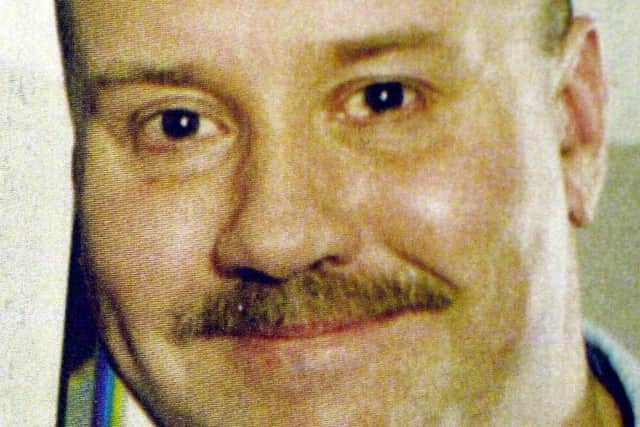
“I really believe with his work ethic, his passengers and crew would have been the first point of his thoughts, trying to get that train as safe as possible. “
For the first time she has chosen to speak about Hart, who was calling the emergency services when the crash happened.
“It would have helped if he’d been honest. I can’t actually remember him admitting he fell asleep, that’s what got a lot of people’s backs up.”
She remembers him in court as a small “mutant vulnerable” figure.
She says over time her feeling of pity has lessened when she thinks of the lives the victims lost through their untimely deaths.
As well as the families of those who died there were countless others who were injured or involved in some way. Hart was released in 2004.
“He (Hart) is probably driving again, working again, he had an opportunity to do what these 10 men didn’t.
“Move on, have grandkids as these 10 men should have been experiencing.
“There’s a lot more bitterness as time goes on. I was 29, John was 47. I’m now older than when he died.
“Nothing could ever prepare you for the absolute turmoil that presented after such a trauma - moving forward has been challenging to say the least.”
Carrying on working for the railway after the crash was cut short due to the trauma caused by John’s death and she admits that John’s death and its aftermath took her to dark places. But the link with the railways has not been severed.
Joanne married two years ago to a train driver and she is able to travel on the train. She laughs when asked about whether she worries about it happening again and says: “I always think lightning can’t strike twice.”