
'Hidden gem' to become Yorkshire's latest 'area of outstanding natural beauty'

A "HIDDEN gem" landscape of gently rolling chalk hills, panoramic views, and steep-sided valleys should soon become Yorkshire’s third Area of Outstanding Natural Beauty.
In an important milestone in what has been a lengthy process, Natural England has finally published the final boundaries of the new Yorkshire Wolds Area of Outstanding Natural Beauty (AONB).
It has asked for final comments to be in by March 6 before the proposals are submitted to Defra Secretary Emma Reynolds for sign off.
The AONB takes in 463 square kilometres of North Yorkshire and the East Riding, and covers an arc starting just above Market Weighton and stretching as far as the North Sea coast at Flamborough Head.
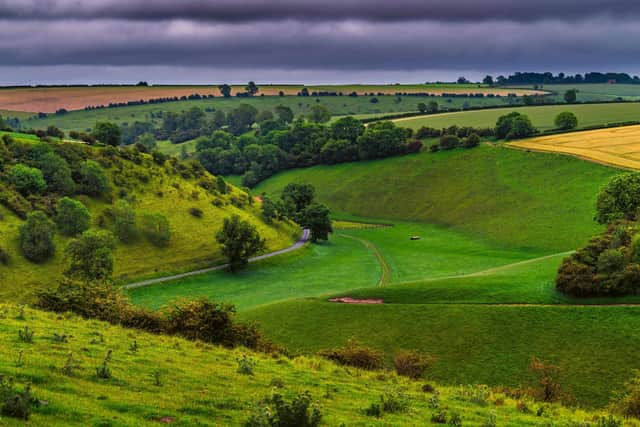

It skirts round towns including Driffield, despite its title as the “capital of the Wolds”, and industrialised areas of the countryside, including pig farms, the huge Fridaythorpe feed mill, and land with wind turbines. The vast majority is inland (96 per cent) with a separate area around Flamborough’s coastline.
One of the least visited parts of Yorkshire, fans of the Wolds include David Hockney, who painted hundreds of landscapes when he lived in Bridlington. AONB status should help attract more visitors to the area.
Natural England said its consultation in autumn 2024 received 251 responses, the majority of which were supportive, although some did voice concerns.
Conservative Wolds Weighton councillor Leo Hammond said: “The key benefit is protecting from over development because this is a statutory planning consideration which is really positive. It helps not only maintain our precious countryside, like rights of way – there is funding – but gives us a platform to remind people how to behave around agricultural land and animals.”
The status will mean stricter controls on alterations, extensions, and outbuildings to ensure development conserves and enhances the landscape.
Independent councillor Mark Blakeston, who founded the Wold Rangers Way, a trail of six walks centred around Driffield, said he felt “conflicted” because AONB status is “taking some of the decision-making process out of landowners and farmers and making that whole process more bureaucratic – when it’s overly bureaucratic in the first place”.
CLA Director North Harriet Ranson also warned of a “real risk of planning decisions being restrictive to prioritise environmental considerations above economic growth in the area.”
She said they’d continue to lobby to make it easier for farm buildings to be converted into residential dwellings in protected areas like AONBs and National Parks.
Natural England said farmers in AONBs have increased access to support and funding via the Farming Protected Landscapes Scheme.
Created by the National Parks and Access to the Countryside Act of 1949, AONBs represent 18 per cent of the finest countryside in England and Wales and are designated because of their flora, fauna, historical and cultural associations as well as scenic views.