
How David Bruce's time at Theakston Brewery was pivotal in his journey as entrepreneur
David Bruce defied the naysayers by getting his brewing empire under way in 1979, but his time in Yorkshire was pivotal. As he releases his memoir, he talks to John Blow.

Offered the chance to take on a damp, stinking, dilapidated pub with a dead rat inside, most of us would probably say thanks but no thanks.
David Bruce spotted something. He turned it into his first boozer – an inaugural venture on an entrepreneurial journey which has given him major status in the brewing industry, and earned him a few quid too.
Not bad, he reckons, for someone who left school with little direction. And, as he likes to remind people, he doesn’t even have a maths O-level. "But neither has Richard Branson, so I don't really mind too much,” says David.
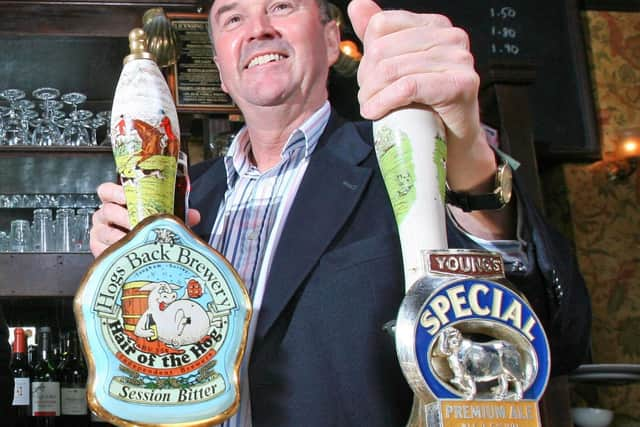

He was born in 1948 in Shimla, India, where his father was in the British Army, but they later moved to Surrey. When his friends went off to university, he realised that he needed a trade and there were two management training courses for which he applied. One was with Courage, the beer brewers, and the other was oil company Shell.
“I decided – it didn’t take much deciding – that pubs and breweries would be much more fun than oil refineries and petrol stations and here we are now, about 58 years later or something. I spent my whole life in pubs and breweries around the world.
“The point I always like to make is: just because you were useless at school, it doesn't mean you're always going to be useless later on.”
David spent three years brewing with Courage. Then, one summer he was staying with his uncle who was a GP in Hutton-le-Hole, North Yorkshire, and heard that Paul Theakston – who later founded Black Sheep – had taken over the running of the eponymous brewery in Masham after the death of his father, Frank.
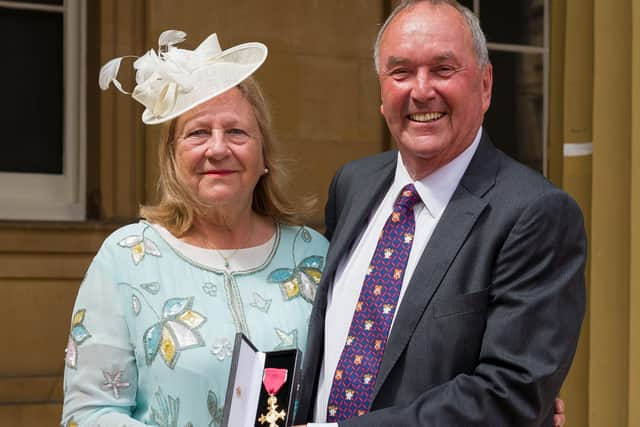
David, who lives in Berkshire with his wife Louise, says: “At that stage, I was 21 and I went over to see him and said ‘are you looking for any help’, basically, because I got fed up working for a big brewery, even then and we got on like a house on fire.”
They still do, having enjoyed a few pints together recently at the Tan Hill Inn, Britain’s highest pub, at Richmond.
David joined Theakston in 1969 as brewer and sales manager. “I'd be in five days a week, but only three of them were spent brewing because we weren't brewing enough beer in those days,” he says.
The tale of his days there is one contained in his recently published memoir, Firkin Saga: Brewing up entrepreneurial adventures and pioneering tales with the Prince of Ales.
However, his time at Theakston was an important moment in his career not just because of the experience itself, but also the manner of his leaving.
“About that time the Campaign for Real Ale was really getting a big interest in cask conditioned or traditional beer, and suddenly I had to stop brewing only three days a week and started brewing five days a week because we were selling so much beer. So I then asked the chairman, Michael, if I could have shares in Theakston's brewery,” says David.
“But Michael said, no, you cannot have shares in Theaktson’s Brewery because you are not called Theakston. So that, to me, was a red rag to a bull.”
It was then that he decided to leave and pursue his own ventures. “If I'd ended up having shares in Theakston’s, I would have probably never gone off and started my own brewery,” he says.
On a run one day some years later, in the Elephant and Castle area of London, he noticed an old pub.
David says: "It was closed down, abandoned, boarded up, nobody wanted it, so I made enquiries, and I went down into the cellar with the landlord who owned a freehold with the City of London Corporation,” he says.
“It really was a moment of, I don't know, divine inspiration or something. All the lead had been ripped off the roof. The place was awash, all three or four floors were just sodden, and there was a dead rat in a food cabinet and a dead cat under a bench, and the whole thing stank and was wet and horrible, and the electricity had been cut off.
"But we each had a torch and we flashed it round this cellar – an enormous cellar with good ceiling height – and that's when I had my flash of inspiration. ‘My goodness, this cellar is big enough to put a brewery in’. And that was the beginning of my entrepreneurial career.”
He came up with a business plan but, he says, an analyst told him ‘this project has absolutely no chance of succeeding, I suggest you abandon it immediately’. “That was from the top brewing guy in the world. Well, I didn't listen to him, thank God.”
And in 1979, David opened London’s first pub in a century to brew its own beer – The Goose & Firkin – under the Bruce’s Brewery company. A good number more opened over the next decade until he sold in 1988 for £6.6m to the company which became Allied Domecq International.
In the years after, David co-founded and invested in several craft breweries across the globe, including Brooklyn Brewery, The Paris Real Ale Brewery and The Frog & Rosbif pubs, but also a number of pub companies in the UK, as well as developing the Slug & Lettuce chain of bars.
He also created The Bruce Trust and The Bruce Foundation to provide canal and motorhome holidays for disabled, disadvantaged, or elderly, and in 2021 was awarded an OBE for his services to charity.
Though David acklowledges his luck, it hasn’t always been easy. "Everything’s been a battle,” he says. “Being a pioneer or a maverick or a provocateur, I don't know what you want to call it – if you do something different – bureaucracy and the lowlifes generally try to stifle enterprise, and I absolutely stick to my guns on that one.”
Firkin Saga: Brewing up entrepreneurial adventures and pioneering tales with the Prince of Ales by David Bruce is out now.