
How some of Britain's smallest and most loved birds survive the winter
Some of our commonest animals can also be the most fun to observe. There is something perky and cheerful about the way a wren moves that makes it hard not to feel an injection of optimism after you’ve seen one.
I suspect this is because of the sheer energy and enthusiasm they need to put into everything they do if they are going to survive.
Being small means that you get cold easily and need a lot of fuel to keep going.
In winter that isn’t a simple thing to achieve.
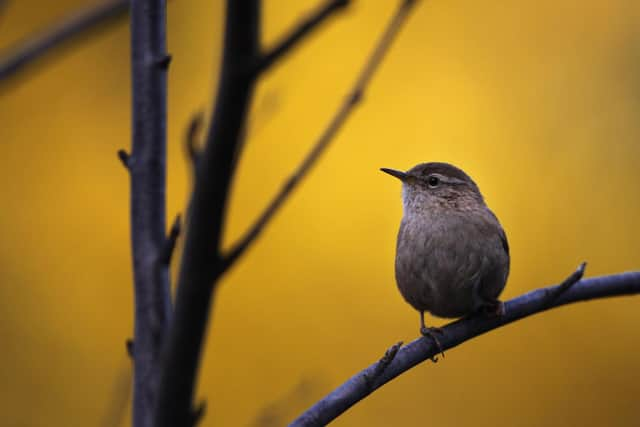

There are only so many hours of daylight and cold ground needs covering quickly if every morsel that opportunity sends your way is to be gobbled up in time to get through the night.
Most of what they survive on consists of small insects which are trying to hide away from predatory eyes.
Which is why wrens are often found exploring tiny cracks and crevices as they attempt to winkle out creatures that have hunkered down for winter.
They will also go for berries or seeds if a tasty spider or beetle is hard to come by.
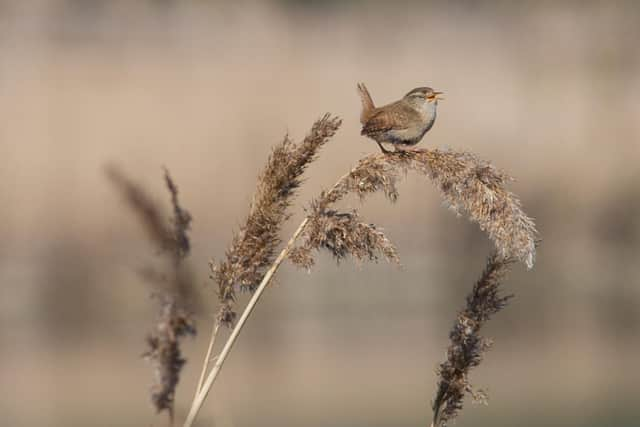
If you want to feed them then go for anything that is very high protein.
Or simply don’t tidy up fallen apples, as wrens particularly like searching around on the ground for grubs that are eating their way through soft over ripe fruit.
Like all birds they can be predated by cats, but it takes a quick moggy to catch one as they are constantly on the move and rarely stay in one place long enough to get stalked.
It is, however, the long cold winter nights that cause the greatest loss of life.
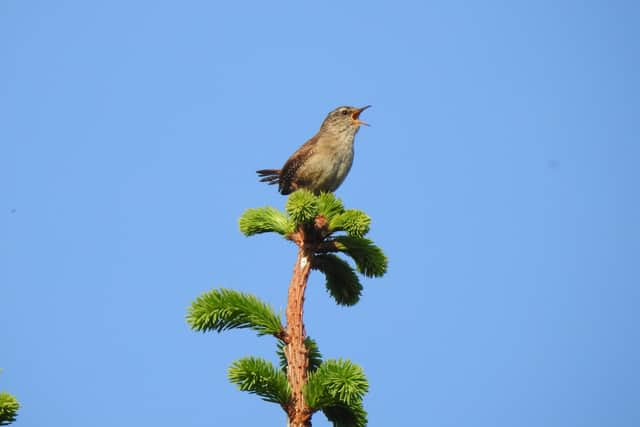
That also gives rise to one of the more fascinating aspects of their behaviour.
They group together in huddles at the end of a winter day to share overnight warmth.
This massively increases their chances of survival. It is common to find ten birds tightly packed together and a group as large as 40 has been seen.
Birds that will co-operate readily when times are hard don’t take the same attitude when spring comes round and breeding territories need to be established.
Male birds fight with determination to establish their territory and the competition can start up in late winter if conditions are right.
Several different nests are begun because the females tend to prefer a partner who is offering a range of sites that she can choose from.
Once she has decided on the right partner with the right nest, it is often improved by the addition of nice soft feathers.
A clutch of typically five or six eggs can then be safely laid.
The female mostly stays on the nest whilst the male works flat out on feeding her and the offspring.
Sometimes he will be trying to keep two partners supplied at the same time and once the nestlings hatch there is a high likelihood that he will head off searching for new opportunities rather than stick around for the rest of the hard work.
There are often two or three different broods raised in one summer which means that two birds can often be producing 20 children each year.
At a rate like that mathematics would suggest that the world could be full of wrens very quickly but being small also means that there are a lot of bigger things around that like to eat you and are quite good at making a meal of a naïve young bird.
Wrens need all their fecundity to replace the losses.
Despite the precariousness of their existence they continue to be one of the most successful birds we have.
They are amongst the commonest of British birds and can be found almost anywhere in Yorkshire.
They prefer to live near deciduous trees but won’t be put off by a conifer wood if that is all that is available and love those dry stone walls that snake across the Dales because of the wonderful crevices that can be found between even the most skilfully laid stonework.
What they don’t like is what no wild animal likes.
Which is lifeless soil. In every teaspoon of earth there are billions of small creatures some of which grow up to be excellent bird food and all of which get eaten by something bigger in a hugely complex food chain.
A quick spray with a weed killer can easily kill off a lot of that vibrant diversity in the soil. So if you want to enjoy seeing wrens and other wonderful British birds then your best chance of doing so is in a garden where nothing has been sprayed for several years.
Which is an excellent excuse for being lazy and saving money. Two of the other great pleasures in life!
sdasas