
Humber producing talents Lucy Meer and Hollie Bryan on BAFTA-nominated The Ceremony and film industry challenges
Producing talents from the Humber helped Yorkshire film The Ceremony win critical acclaim. John Blow hears more.

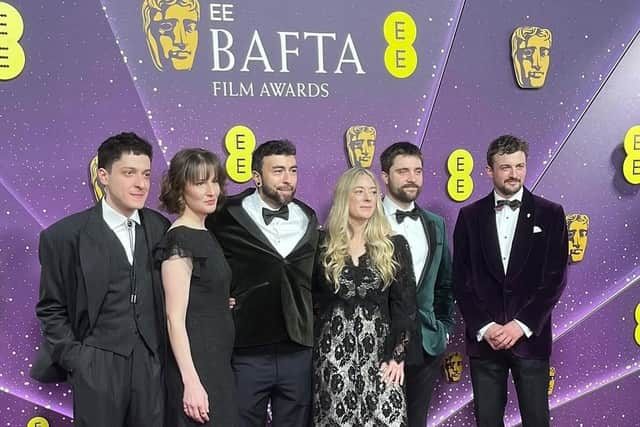
Alongside Bradford-born director Jack King, she and fellow producer, Cosmosquare Films’ Hollie Bryan, who grew up in Grimsby, were nominated for the independent film which was made on a small budget – although it lost out to Akinola Davies Jr’s My Father’s Shadow (a film for which Lucy is full of praise).
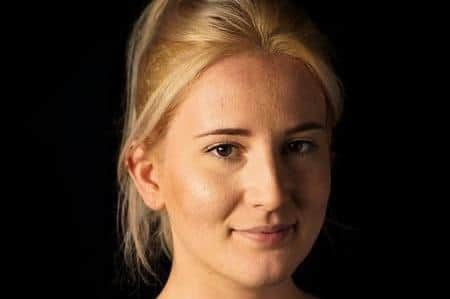
Lucy runs Hull-based Strive Films, a company she set up “to make films that I wanted to see, whether they were just ones that I really would enjoy, or if they were films that I felt weren’t being made at that time”.
Now in her mid-30s, she got into the industry when she became a producer’s assistant to Sally Hibbin, who has worked on a number of films with director Ken Loach.

After a later stint with Warp Films in Sheffield, she set up Strive in 2017. Since then, projects she has produced include the Sky Arts comedy short Liam Williams’ Valentine, the Bafta long-listed National Film and Television School film Mary Anning, and Jack King’s previous short film Predators.
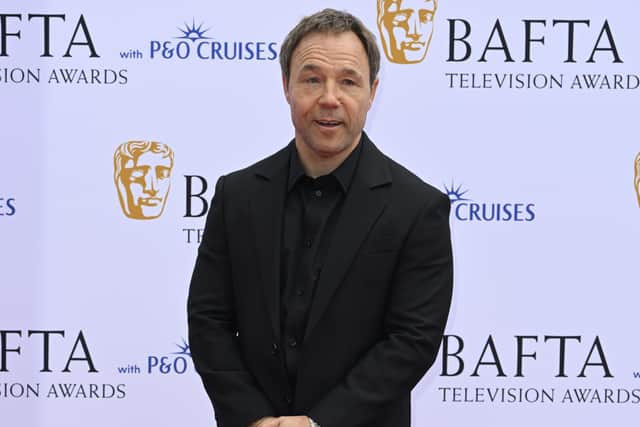
In 2020 she produced the short Pop, a story about an ex-convict bonding with a boy directed by Margo Roe and starring Stephen Graham, an actor who left a big impression on a young Lucy after his role in the Screen Yorkshire-backed original This Is England feature, one of her favourite films.
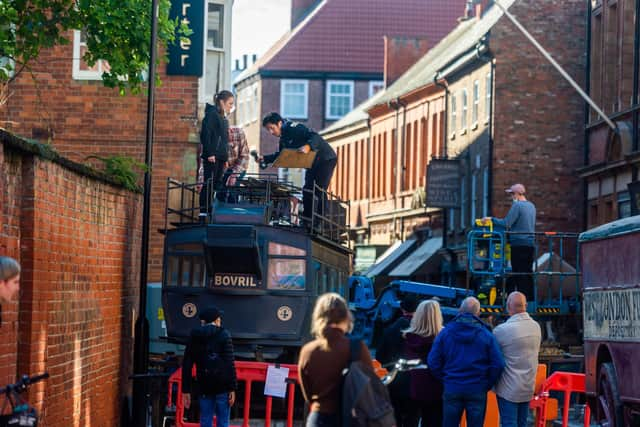
Indeed, Hull itself has hosted high profile productions in recent years, with the Old Town appearing in The Personal History of David Copperfield in 2019 and Enola Holmes 2, starring Millie Bobby Brown, in 2022, as well as Netflix series The Crown. And of course, comedian Lucy Beaumont’s Hullraisers on C4.
Meanwhile, in 2024, Hull City Council backed plans to establish the city’s first purpose-built film production complex – a £3m development at Priory Park industrial estate led by another independent company Northern Films.
However, Lucy reports that her own experience of making independent projects has been a struggle of late.
She describes a dip in interest since a boom in commissioning during the Covid-19 period. At that time, she says, “it felt like you could be a bit more regional because everybody was working from the same level as us.
“Unfortunately, it has kind of crept back central to London. I think it’s a lot harder again to get in the door when everybody’s working on different levels. If you’re in London, you can go to the meetings easier. You can socialise easier. It’s a lot harder up north.
“And I’d probably say with the way that the industry is at the minute, over the last kind of year or so, or longer, that’s only got harder, really.”
Mother-of-two Lucy is celebrating her recent success but also sees a “general downturn in the industry”, she says.
“The budgets are smaller. There’s less money to go around, particularly for film. There’s just not as much opportunity out there as there potentially was. I think we’re in a real kind of bust moment. So there’s less chance to really be able to build opportunities for yourself and do more with film. I think you can see that quite a lot of the minute, people from pretty established companies around Yorkshire are taking on employed roles with Netflix or things like that.
“You see names that I used to see as independent producers are now working with big companies. And I think that tells you a lot. If those people are really struggling, for us really small companies, it’s next to impossible really, I think, at the minute. Not to say that you can’t – obviously I’ve just come back from Baftas.”
Hollie, who now lives in Bradford, agrees that it is still challenging for producers outside of London. “I think The Ceremony was a response to that,” she says.

“It can feel like you’re working twice as hard to get half as far, and often we lose writers and directors to bigger production companies with a presence in the capital. I think both myself and Jack were passionate about showing you don’t need all the bells and whistles to tell a good story, that you can produce a film captivating for audiences on a more economic budget.”
A lot of challenges obviously come down to access to finance, she says, as companies can longer benefit from the Creative Europe MEDIA Programme connected to the European Union.
She says: “But ultimately you need a film that costs less than you make when it’s seen – when you’re working on a first and second feature that is especially difficult. Seeing The Ceremony sit alongside multi-million pound films at the Baftas felt like a massive achievement, and hopefully a bit of a statement.”
The film – which is available to rent on various platforms – is described as a morality tale of two workers at a hand car wash in Bradford who, after the tragic death of one of their co-workers, a young undocumented asylum seeker, make a fateful decision to give him a dignified burial in the hills. The two central roles of Christi and Yusuf were played by Romanian actor Tudor Cucu Dumitrescu and Erdal Yildiz, a German performer of Kurdish heritage.
The film was “really tiny production” on a “shoestring budget,” says Lucy.
However, it went down a storm at the Edinburgh Film Festival in 2024, when the public voted for it to win the inaugural Sean Connery Prize for Feature Filmmaking Excellence.
It was an accolade “we were all just so shocked by,” says Lucy, “because I think we’d spent the day before talking about how public votes, they never go to these kinds of films. It’s always very popular films. And obviously we ate our words entirely,” she says.
“Then it had a gala screening in Bradford, because Bradford 2025 supported it, and then at the beginning of this year, suddenly it’s longlisted for a Bafta. And you’re like, well, that must be a mistake, that can’t be right. And then for it to be nominated, you’re like, all right, something’s definitely gone on here. It deserves it, absolutely – it’s amazing – but you kind of don’t quite believe it.”
Having a big success like that is “a bit of a double-edged sword”, says Lucy.
“It’s amazing that it’s done so well and it makes you really just sort of go: right, OK, this is worth it. This is amazing. I got so much free Champagne at the Baftas. It’s great,” she jokes. “But then, on the other hand, you’re like, realistically, my economic position hasn’t changed. The industry hasn’t changed. We shot that film three or four years ago now,” she says.
“You do have to steel yourself a little bit, that it’s not a ‘you’ve made it’ moment. It’s a lovely celebration in the midst of a lot of hard work, kind of hoping that all the big bucks offers will come in after that. But I’ve not had any of their emails yet.”