
'I went to the University of Bradford's Peace Studies school and turned what I know into novels'
Bingley author Christine Cubitt talks to John Blow about how studying at Bradford’s Peace Studies school informed her novels.

The University of Bradford’s Peace Studies school was the first of its kind and remains a leading centre for conflict resolution half a century into its work. It has been fertile ground for those who want to make the world a better place, but not all of them share their knowledge in the form of novels.
Christine Cubitt, from Bingley, is doing just that. Writing had long been an ambition but first, she raised her sons James, Rob and Edward. In 1999, she embarked on a degree to study social sciences with politics through the Open University. She went on to the University of Bradford’s Department of Peace Studies, earning a Masters in international politics and security studies, then a research Masters in research methods, peace studies and international politics, and finally, a PhD in Peacebuilding, focused on Africa, in 2010.
The subject of her PhD was no coincidence, having spent time in the continent aged 11 when her father was an engineer in Sierra Leone, which is the setting of her debut novel, Fly Catcher, published in 2021.
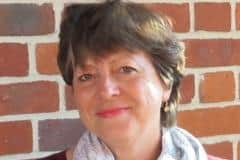

"I just have this draw to Africa - West Africa, in particular, possibly because of my travels with my father,” says Christine, who writes as PC Cubitt. “He was in Nigeria for a bit as well, when I was a lot younger. It feels like my spiritual home, really, I think we all have a place like that.”
She has previous experience of publishing, having created a magazine for boys some 25 years ago, but with desire to write more seriously didn’t have the right subject matter until she had her degrees, so set about penning novels.
“The academic papers that I was writing and publishing were great. I mean, they were received very well, but it was just a very narrow reading market, if you like, of who was getting access to what I was trying to say. So I thought, well, why don't I move into fiction and see if I can get to a bigger audience?”
Her first book, a political thriller, was about about a researcher, Karen Hamm, challenging corruption in Sierra Leone and was longlisted for the Bridport Prize for new novels. Her latest, The Blue Alley, was published earlier this year and is a follow up about ‘modern slavery’ – not that it has ever gone away, stresses Christine - in which Hamm observes a man passing a bribe at passport control while accompanying two children on a flight to Amsterdam.
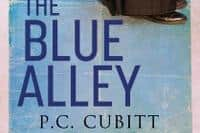
Christine, 67, says: "I've written it from two points of view. One is from the woman who is trying to find these childre and the second point of view is the one of the children. What I've really tried to do, and hope to do, which I also did in the first novel, is to bring the story of that child into the main narrative so that we don't see her as this victim, which of course she is, (but) I'm trying to show the amount of agency that she has herself, and how she has her own plans, how she's going to take the opportunity when it comes to her, how she's been trying to escape and use her situation to her best advantage.”
Christine’s husband David and her sons are, of course, proud of her foray into fiction.
"My youngest said that he's learned never to be amazed by what his mother does,” she says, “which I'll take as quite a compliment”.
The Blue Alley, by P C Cubitt, is out now.