
Ian Gillan's Deep Purple go back to 1970s sound on latest album
Ian Gillan, singer with the classic line-up of the British rock band, Deep Purple, talks about reviving their signature organ and guitar sound after six decades.
Having began life as an ethereal heavy psychedelic band in 1968, before going on to pioneer hard rock and later toy with heavy metal, Deep Purple have lived multiple lives during their six decades as a band.
But now the group are returning to the 1970s sound of what is known as Deep Purple mark two, created by singer Ian Gillan, guitarist Ritchie Blackmore, drummer Ian Paice, organist Jon Lord, and bass player Roger Glover.
The line-up made Deep Purple a household name around the world for their heavy, organ-infiltrated sound on the studio albums Deep Purple In Rock (1970), Fireball (1971) and Machine Head (1972), as well as the seminal live album Made In Japan (1972).
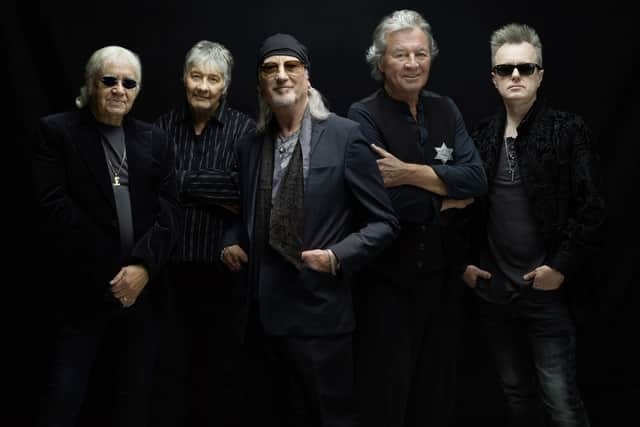

In recent years, the band has polished up its sound since the days of the wild swirling organ and pounding beat of Highway Star and Black Night, and the gritty, distorted guitar of Smoke On The Water, Fireball and Strange Kind Of Woman, but now on their upcoming album Splat! they are preparing to go back to the future.
“It’s human nature,” Gillan explains of the band’s return to the sound of the ’70s.
“It’s human chemistry, we have new guitar player and everything clicked again, and it wasn’t a question of ability, and we never planned it, because we never sit down and plan anything before we make a record, and we always distinctly try and avoid fashion.
“We’ve done that since day one, it’s been the golden rule for us, but Simon (McBride, the band’s current guitarist) is British, and Steve Morse (the band’s previous guitarist) was American, and he grew up with what you might call American southern rock, which is brilliant, but to a certain extent a little more languid in nature than the energy of British rock.
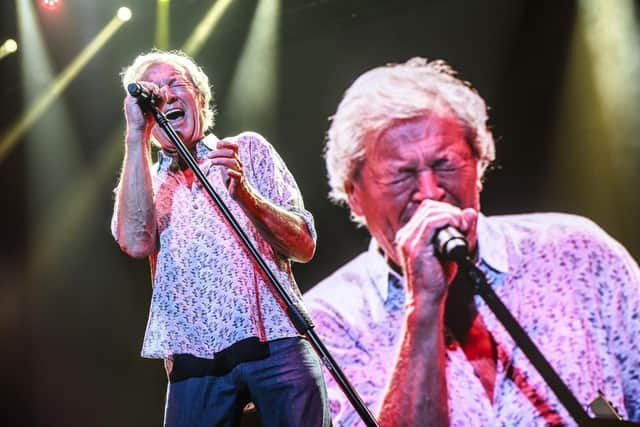
“And so when that came back again, everything clicked, and because it gives you the energy at the top end, and that stretches things out, so you’ve got all the space in between for texture and dynamics, and humour, which is very important in the band.”
Deep Purple’s 1970s period went on to influence a plethora of bands, and apparently even Japan’s drumming prime minister Sanae Takaichi, who reportedly told Paice “you are my god” when meeting him in April this year, having been a fan since buying Machine Head when she was at school.
Paice explains: “It’d been a couple days, and then we got there to the event, she said like to meet, and she was a big fan when she was a kid at university, college, whatever you want to call it, she was in her band.
“First of all, she was playing piano or keyboards, then she went on to drums, and she listened to a lot of the stuff I did and liked it.
“So when she got a chance to meet me and the rest of the guys, she used her position as prime minister to ask us to come.
“We had a wonderful time with her, she obviously had a very good time, they’d set aside 10 minutes for things, she stayed for half an hour, and she was a smashing woman, very, very smart, you know, tiny, very smart.
“I enjoyed meeting her a lot, she gave me a pair of drumsticks and a hi-hat, and I gave her a snare drum.”
But according to Paice, Ms Takaichi, who was reportedly in a Deep Purple cover band during her youth, is “a better politician than she is a drummer”.
Deep Purple were credited with forming a heavier style of rock music during the 1970s alongside Led Zeppelin and Black Sabbath, for whom Gillan took on singing duties following the departure of his friend Ozzy Osbourne’s replacement Ronnie James Dio in 1983
“When I was there was the longest party I ever went to, it lasted a whole year,” Gillan laughs, before becoming emotional about his late friend Osbourne, who died in July last year.
“I loved Ozzy, we got on great and I’ve got some wonderful stories of Ozzy.
He adds that “as he was soaring off into space and he reached escape velocity, I had a big smile on my face, you know, ‘on your way mate, it’s been great’.
“He always made me smile, the thing about Ozzy that made him one of the great, great stars of all time was his vulnerability.
“He didn’t try and shield himself, like so many rock stars, or stars in any form, that try and build this fortress around them to protect their weaknesses, to just show only the strength and only the beauty, and only the power, and only the success.
“Ozzy showed everything, all his problems and everything were laid out in front of you, and we all fell in love with him.
“I think he was such a wonderful human being, and we all wish we had met him, because he touched so many people, brilliant guy, brilliant and simple, and effortless too, he was just a shambles, and we loved him for it.”
One thing Osbourne and Gillan never had to contend with in the 1970s was artificial intelligence (AI), which is fast becoming a hot topic in the music industry, but Gillan remains unbothered that the technology might replace human art.
“I don’t see how you can deny technology, (but) it doesn’t interest me,” Gillan asserts.
“Because my feeling about anything artistic is the beginnings of it should be organic, the development of it and production values, that can be technical, and we’ve always benefited from advances in technology, whether it’s in the film business, or in music or whatever it is.”
Deep Purple released Splat! on July 3, with a UK tour set to see them perform at Manchester’s AO Arena on November 22, with tickets on sale now. Ian Gillan’s own Talking Gib’rish speaking tour will stop at York Barbican on May 6 and Sheffield City Hall on May 27 next year.