
Incredible Bronze Age find discovered by metal detectorist in Grassington river

An incredible find from a metal detectorist in Grassington is to shed new light on a rich history from 4,000 years ago.
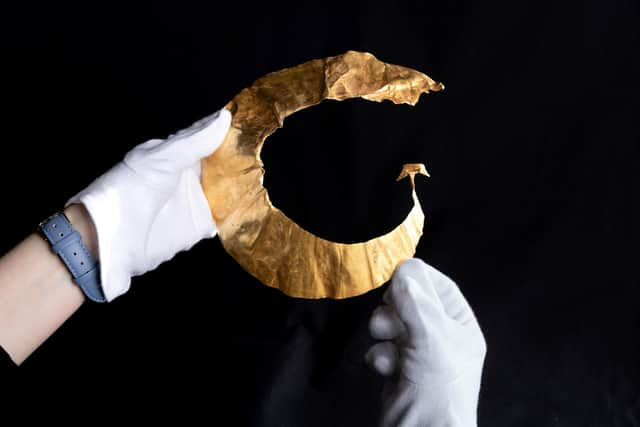
The large crescent-shaped collar, known as a gold lunula, is among the finest of its kind in the North and was discovered in a stream in 2023.
Now, acquired by Craven Museum amid a flurry of funding bids, it becomes the centrepiece of its Bronze Age collection.
This is a "spectacular" find, say experts, which is proving nationally significant to shed new light on the people who once lived in the county
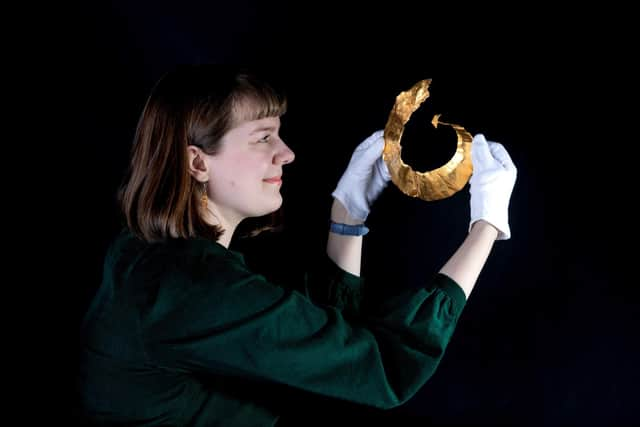

Curator Charlotte Craig said this is only the second lunula of its kind found in Yorkshire, and the only one now on permanent display in the North.
"Gold lunula are very rare finds in England, and so this adds greatly to our pool of knowledge about Bronze Age goldworking and the networks of culture and trade that must have existed," she said.
The museum, at Skipton Town Hall, is operated by North Yorkshire Council (NYC). Coun Simon Myers, executive member for arts and culture, said this was a "real coup".
“I think all will find this lunula both beautiful and thought provoking, speaking as it does to the extent of cross-cultural connections and trade some 4,500 years ago," he said.
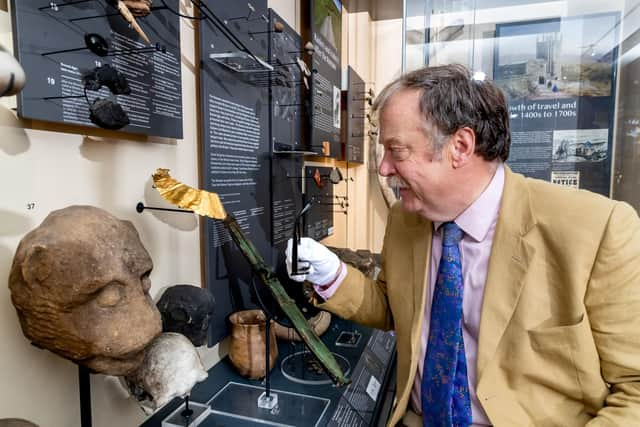
Lunulae are some of the earliest and most impressive examples of goldworkers’ craft, dating to about 2000 BC. With no gold in North Yorkshire the material is thought to have come from Cornwall, Wales or Ireland.
While the Grassington area is well known for its Iron and Bronze Age sites, nothing of this kind has been found which so clearly points to the wealth and status of these communities.
Bids were backed by expert Dr Deborah Hallam, and with funding secured from the Arts Council England/V&A Purchase Grant Fund, Art Fund and the Friends of Craven Museum.
Ms Craig said: “When the gold lunula first arrived at the museum I was struck by how beautiful it was and how the people who made and used it must have been so sophisticated and well-connected.
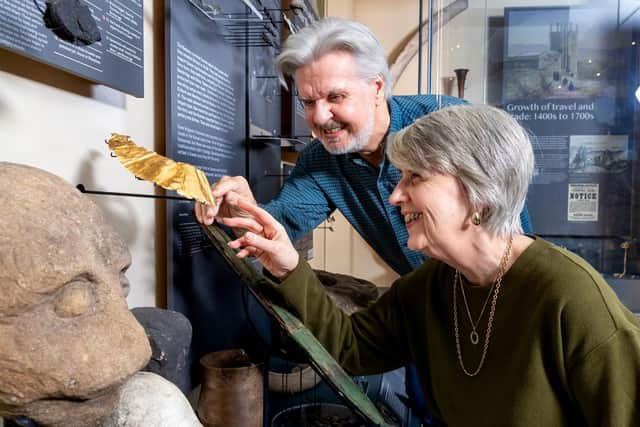
“I felt such a connection to those people who lived here more than 4,000 years ago and how they must have felt about an item that was so important to them.
“It was hard to take my eyes off it – I’m sure it must have had a similar magnetic quality at the time.”
Dr Neil Wilkin, European Bronze Age curator at the British Museum, said he was delighted that the Craven Museum had acquired the piece.
He said: “The display of the lunula at the Craven Museum will allow its fascinating story to be told in its local setting.
“The British Museum is looking forward to collaborating with curators at the Craven Museum and local archaeologists to help reveal more about this spectacular find and the reasons why such a prized object was given up 4,000 years ago.”
For more on the Craven Museum visit skiptontownhall.co.uk/craven-museum.