
'This world was too cruel for her’: Mother’s heartbreak as inquest rules Sophie Lambert took her own life
The death of a young woman who drowned in the River Nidd after years of severe mental health struggles was the result of a lifelong battle with trauma, a coroner has ruled.

Sophie Lambert, 22, from Knaresborough, had battled long-standing and severe mental health issues stemming from traumatic experiences during her teenage years.
Described as “plainly difficult to live with and difficult to treat,” Sophie’s difficult struggles were at the heart of her tragic death, coroner Catherine Cundy said.
During the inquest at Northallerton Coroners Court, on Thursday (Nov 28), the coroner outlined Sophie’s background, noting she had a “normal and happy childhood until she was about 14.”
However, significant events during her adolescence led to complex post-traumatic stress disorder (PTSD) and an emotionally unstable personality disorder.
“These are contractible mental health problems rooted in trauma and which are not easily amenable to treatment,” Ms Cundy said.


The court heard Sophie had been referred to Child and Adolescent Mental Health Services (CAMHS) at 14, with her first of many psychiatric hospital admissions taking place the following year.
Over the course of her life, Sophie was detained approximately 30 times under Section 136 of the Mental Health Act.
“She would repeatedly go missing from home, often to locations such as railway tracks, bridges, and viaducts, and be found harming herself,” the coroner said.
The lat 12 months of Sophie’s life were marked by a distressing cycle of psychosis, self-harm, and psychiatric hospital admissions, with stays typically lasting four to six weeks.
Ms. Cundy noted a “three-year period between 2019 and 2022 when Sophie was not admitted to hospital,” attributing this to the close support of her mother, Michelle Robinson. However, in the year leading to her death, Sophie’s distress escalated.
She turned to illicit substances to manage her symptoms, further complicating her mental health challenges.
“Sophie had long-standing and intractable mental health problems stemming from traumatic events in her life, which were plainly difficult to live with and difficult to treat,” Ms. Cundy said.
Her last admission was in early 2023, first to Foss Park Hospital in York and later to Cross Lane Hospital in Scarborough.
The court heard that Sophie’s lack of trust in others, particularly medical professionals, prevented her from engaging with the therapeutic support that could have helped her.
“The only real hope of breaking that cycle of admissions was for Sophie to engage in trauma intervention,” Ms. Cundy said.
However, her “lack of trust in people, sadly borne from experience, and her consequent inability to engage with others” stood in the way.
On 23 March 2023, Sophie was discharged from Cross Lane Hospital, despite distressing behaviour in the days leading up to her release.
A taxi had been arranged to take her home, but she left the hospital grounds on foot.
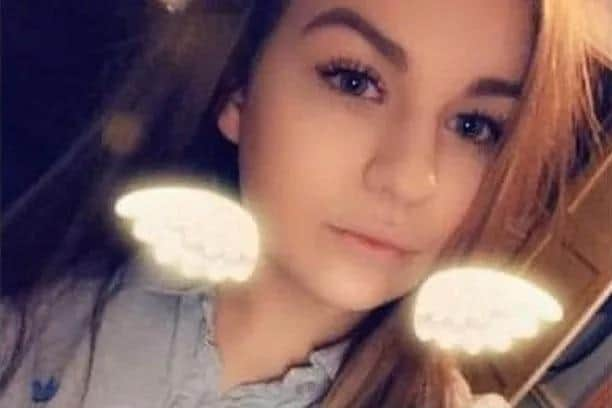
Later that day, police found her in a distressed state at Peasholm Park in Scarborough, where she was detained under the Mental Health Act.
In June 2023, Sophie’s step-grandmother raised concerns for her welfare after receiving a distressed phone call from her.
Days later, Sophie’s body was found submerged in the River Nidd.
The post-mortem report confirmed drowning as the cause of death, with cocaine intoxication listed as a significant contributing factor.
Toxicology revealed a level of cocaine “that can be associated with fatality in itself,” the coroner added.
After reviewing the evidence, Ms. Cundy concluded that Sophie had entered the river “of her own volition” and ruled her death a suicide.
“I do conclude that Sophie certainly intended to take her own life by entering the river,” Ms. Cundy said.
When the coroner spoke of Sophie taking her own life, Ms Robinson said: “It was always Sophie's intention.
“Her end goal, it doesn't matter what meeting it was in, Sophie's end goal was to end her life because she said that this world was too cruel for her to be here - she made that clear".
The inquest also highlighted missed opportunities within mental health services.
Ms. Cundy noted that while Sophie had been offered standard treatment, including inpatient admissions and therapeutic interventions, her inability to engage with these services left her vulnerable.
When life is difficult, Samaritans are here – day or night, 365 days a year.
You can call them for free on 116 123, email them at [email protected], or visit samaritans.org to find your nearest branch.