
Interior Design Masters: "Collaborating with John Lewis has really opened up my eyes", says Wakefield-born winner
From designing a youth hostel bedroom and space at Battersea Dogs and Cats Home to a whole holiday cottage in Wales, over the last eight weeks, John Cooper has faced every creative challenge thrown his way over the past eight weeks.

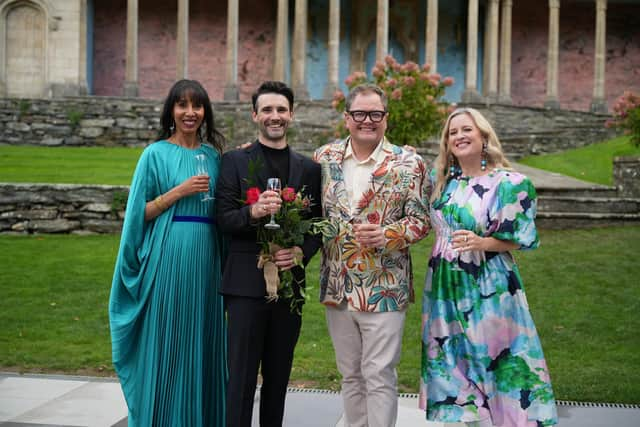
Now, the Wakefield-born teacher with a self-described “graphic bohemian” style has been crowned the winner of series six of BBC’s Interior Design Masters, hosted by comedian Alan Carr.
The programme – judged by interiors guru Michelle Ogundehin and famous guest judges — followed 10 novice designers looking for their big break in the world of commercial interior design.
Working individually and in teams, the aspiring designers were given free rein to redesign spaces in line with the client's brief, and each week an unlucky designer was sent home.

“Leading up to the final, I hadn’t ever dared think that I might actually win,” says John, 46, who says he was encouraged to apply for the programme by his wife, Agatha. “But when I did I felt this amazing sense of accomplishment and happiness.”
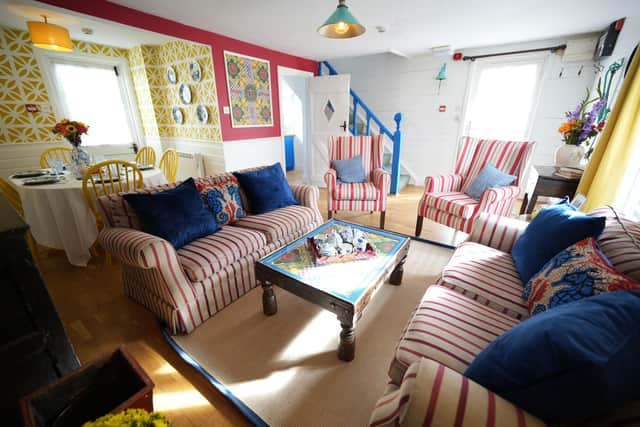
The final episode saw contestants take on the task of redesigning holiday cottages in the picturesque village of Portmeirion, North Wales.
John’s Mediterranean-inspired makeover stood out, impressing head judge Michelle Ogundehin and guest judge Sophie Robinson with its bold use of colour and pattern to create a destination feel.
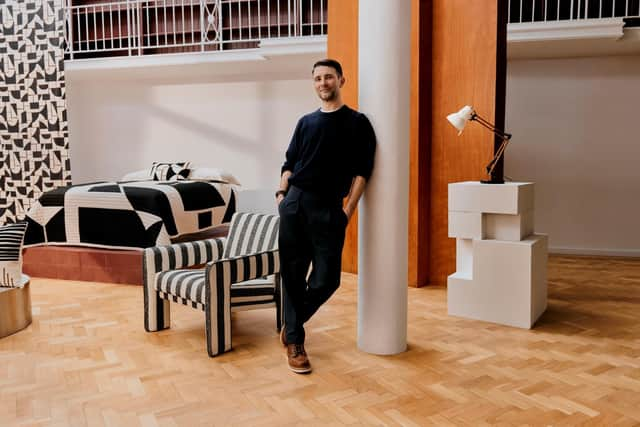
As part of his prize, John has launched his own homeware collection in collaboration with the John Lewis in-house design team. The exclusive range — including chairs, cushions, lamps, bed linen, candles, and towels — is now available online and in John Lewis stores nationwide.
The inspiration for the collection stems from one of his standout early designs on the show — an office container transformation in episode two. His monochrome palette and clever use of mixed materials earned praise from the judges and set the tone for the collection’s aesthetic.
"It’s something quite different for John Lewis,” says John. “It’s very graphic. It’s almost monochrome, although there’s a third colour in there, but it’s also super textural. You could have one of these products as a talking point in a room, or layer them up to create more of a scheme within a space.”
John, who is married with two children and now lives in Stockport, has plans to redesign his living room at home to showcase the range. “I want to show how it works in an everyday family setting,” he says.
His journey on the show was far from smooth. He found himself in the bottom three on three separate occasions, but also soared to the top with a standout transformation of a stationery shop in Rye.
Throughout it all, he says feedback from the judges was invaluable.
“I would tell myself it’s not something to fear or worry about. It’s an opportunity to learn where you’ve gone wrong and how to get it right the next time,” he says.
“As a teacher, I’m not shy to giving feedback and I know how I would like my students to respond when I give them feedback.”
Balancing a full time job with Interior Design Masters, which was filmed last summer, was another challenge. “My work were really supportive in letting me do the show,” says John.

“We agreed that I would take unpaid leave for the filming weeks but I would work during the prep weeks. For me, that was the hardest thing to deal with in the whole thing.
"I’d work during the day, then I’d get home, I’d design, I’d go shopping, I‘d put my kids to bed and then I’d get back to more designing and online shopping in some cases.
"Early on I did find that challenging. Knowing that some of the other designers weren’t working and had a lot more freedom and time to go and source things was hard.”
After 19 years in the classroom, John is preparing to leave his teaching role in July to focus on launching his own interior design business.
"I’ve started lining up jobs already for some projects, which is exciting,” he says. “The experience of collaborating with John Lewis has really opened up my eyes to the idea of creating homewares as well, which previously wasn’t on my radar, so I’d like to do more of that too.”
Back at school, his pupils have responded with enthusiasm. “My form had been asking me what I was doing when I had the time off but I couldn’t tell them,” he says. “Then one day I put the trailer on in form time and the kids who knew the programme were instantly excited.”
He adds: “Loads of kids at school are now following it and it’s nice that it’s reached some of the kids who might struggle with behaviour. They’re coming up to me and saying they’ve watched it and being supportive, which is really lovely.”
Reflecting on how the experience has influenced his design approach, John says his style has evolved since filming the series.
"When you’re exposed to working with other designers, like I was on the show, you see things and wonder what it would be like to put your twist on that and it expands your repertoire,” he says.
"I always wanted things to be just so and quite refined but actually a little bit of roughness, like natural timber, has been a nice development,” he adds.