
Knaresborough: Residents plan castle protest over neglect of ancient monument

Knaresborough residents will be out demonstrating at the town’s castle next Saturday to call on the authorities to take better care of the ancient ruins.
Liz Baxandall and Kathy Allday say Knaresborough Castle, which was built by a Norman baron, around 1100, on a rocky promontory high above the river Nidd, has been neglected for years by successive councils.
Ultimately they fear that if the decline continues the picturesque ruins, which have been popular with visitors for centuries, could be forced to close – which would be “disastrous” for the town.
They have started a petition, which has so far got more than 300 signatories, to North Yorkshire Council, which is responsible for its maintenance, to stop the deterioration of the castle.
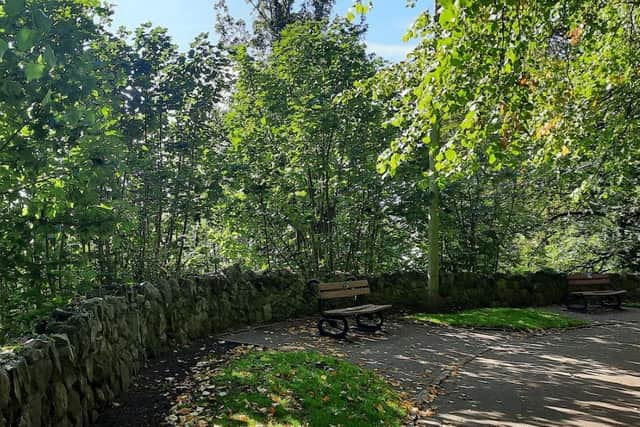

They said: “Years of neglect has left the castle in a very poor state of repair with weeds growing out of and on top of walls obscuring historic features and damaging masonry.
"Uncontrolled growth of trees (predominantly sycamores) are also ruining the view of the moat and gorge for visitors.”
On September 27 Knaresborough’s Town Crier will join campaigners at Knaresborough Castle Keep at 11am. Mrs Allday said money from the castle estate including the car park was supposed to be ringfenced for its upkeep.
She said: “It should be put in a pot to maintain the castle and the grounds – that’s the legal requirement.
"It is not transparent what happens to the money. We have been given obscure answers.
"I know the council is in dire financial straits. They’ve inherited the estate in poor condition.
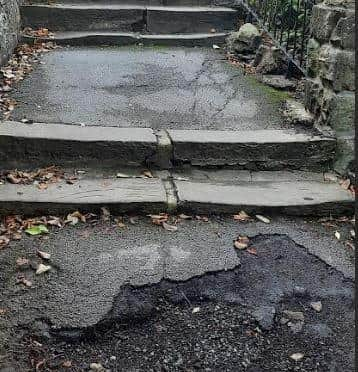
"The steps and paths, I believe, haven’t been touched in 100 years.”
The castle, which is owned by the Duchy of Lancaster, was captured by Parliamentarian forces in the English Civil War in 1644.
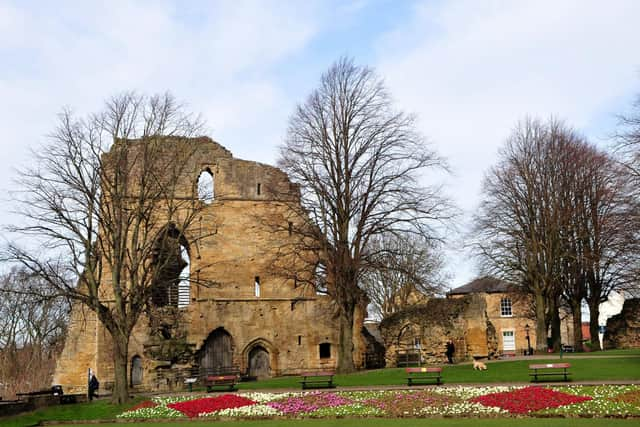
It was largely destroyed four years later, following an order that all Royalist castles should be prevented from being used again, a process known as sleighting.
Some parts were preserved, like the Courthouse and the Keep, which served as a prison, after locals petitioned the government.
Its dramatic setting and picturesque ruins became popular with visitors seeking the fashionable ideal of a romantic landscape in the 18th century.
Among them was the famous landscape painters J M W Turner who visited Knaresborough on his sketching tour of the north of England in 1797 and again in 1816.