
Langdale Moor fires: Call for disposable barbecues to be banned in North Yorkshire

Major decisions over battling wildfires shouldn't be taken through the "lens of affordability", regional leaders warn, in the wake of last summer’s devastation at Langdale Moor, in North Yorkshire.
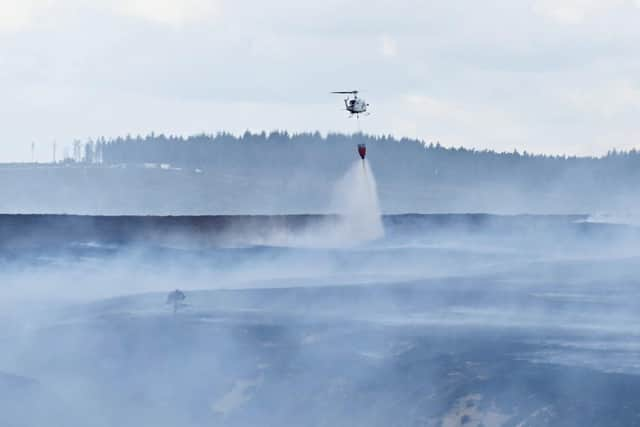
A blaze that broke out near RAF Fylingdales swept through more than 20km of forest and moorland, leaving a "charred" landscape of peat beds that could take centuries to recover.
The blaze, believed to have been started by someone cooking using a naked flame, was deemed the "most extensive and devastating" ever recorded in North Yorkshire.
Now assurances are sought by the North Yorkshire Mayor's office over communities affected and the wider impact on the region's tourism economy.

And calls are building for "responsible retailing", with a ban on the sale of disposable barbecues in the county.
Jo Coles, deputy mayor for policing, fire and crime, confirmed letters have been sent to all supermarkets serving North Yorkshire, with several already agreeing.
"It's not worth the risk to our countryside," she said. "People should recognise that in a region like North Yorkshire, this is just responsible retailing.
"It is a huge drain on the resources of this public service if it causes wildfires.
"We shouldn't need legislation to do this," she added. "The risk is we have more and more of these incidents, and we need to do everything we can to prevent wildfires."
A series of reports were published this week by North Yorkshire Fire and Rescue Service (NYFRS), and the York and North Yorkshire Local Resilience Forum (YNYLRF).
These set out a series of recommendations around building better resilience, improving communications, and lessons for the future around wildfire response.
Reflecting on what happened, reports praised both the "fearless bravery" of crews in battling the blaze, and the commitment of experienced farmers, landowners and gamekeepers in stepping in with expert help.
But it should serve as a "stark" call on wildfire resilience, said North Yorkshire Mayor David Skaith, warning “we cannot rely on goodwill alone”, as he called for better preparedness.
Now, in "constructive" feedback to the forum in wake of the findings, the Mayor's office has sought further assurances over action and an understanding of the scale of impact economically.
There are calls for automatic support for areas affected by wildfires, as there is for flooding, along with compensation available for businesses affected economically.
Financial support came through the Government's Bellwin scheme to fund helicopters, for example, to battle the blaze, but wasn't triggered automatically as it would be for flooding.
Ms Coles said it shouldn't be the case that services are "scurrying" to sort support "while fires are actually burning".
She said: "We shouldn't ever be having to look at those decisions through the lens of affordability. We should always be looking at what is in the bigger, national interest."
And when it comes to understanding the scale of economic impact, the Mayor's office has also called for this to be explored further.
"This was the bank holiday weekend and all parts of the coast would have been at their peak business, with tourists enjoying the beautiful coast and the countryside," she said.
"Actually all those businesses would have been affected as well and we don't yet have an accurate picture as to how they were affected.
"We ought to ensure that any businesses affected by an environmental event, whether it's flooding or wildfire, are not making decisions based on economics," she added.
Some £3.2m in Defra funding has since been agreed towards recovery of the moors, and minimising future risk with mitigation measures such as heather and fuel management.
Further work is ongoing around landscape management, water sources, and partnerships with landowners and gamekeepers, who helped in last year’s firefighting efforts.
Lessons must be learned from Langdale, said Ms Cole, in supporting rural fire services.
"It's absolutely beautiful up there, but it's devastating to see kilometre after kilometre of charred moorland all caused by one incident,” she added.
It is thought it will be centuries before the moors recover.