
Mary Finnigan on teenage years in Heptonstall, Zina Rachevsky, Tibetan Buddhism and living with David Bowie
Mary Finnigan has written a book about the remarkable heiress and Tibetan Buddhist nun Zina Rachevsky which has been 56 years in the making. The author talks to John Blow.

Long before Mary Finnigan was making her name in national newspapers, living with a pre-fame David Bowie or exploring Buddhism in Nepal, she was yomping in Yorkshire.
Born in Manchester shortly before the Second World War, Mary and her family moved to Slack Top, Heptonstall, near Hebden Bridge, in the 1950s.
“It was where I spent my teenage years larking about in the countryside because we could walk down into Hardcastle Crags from our paddock at Slack,” says Mary, now in her late 80s and living in south Devon.
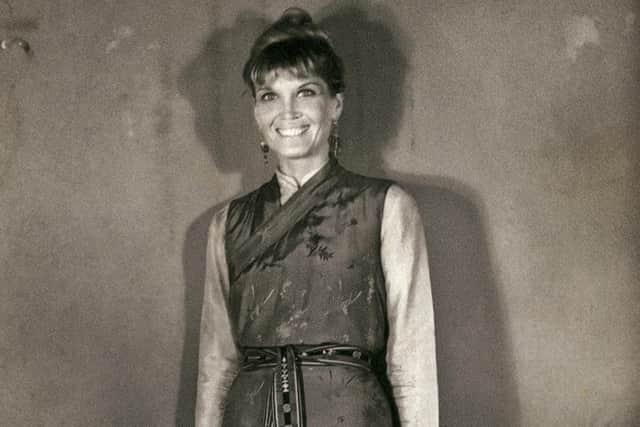

In the early 1960s she moved to London and became a fashion writer for the Daily Mirror, later working as a feature writer on the Daily Sketch and Daily Express and as a freelance worker for the Sunday Times and the Guardian.
In 1969, Bowie lodged with her in Beckenham in the south of the capital, which is the subject of her first book, Psychedelic Suburbia, published in 2016. She has also appeared in documentaries about the late superstar.
What was he like? “Oh dear, how many times have I heard that one?” she says cheerfully. “He was very selfish. Surprise, surprise. Very self-assured. Very talented and amazingly hardworking. Flat broke when he lived with me in Beckenham, and we started a folk club at a pub in Beckenham High Street, which morphed into an arts lab and became absolutely super wildly successful. We turned the back room of a pub into a psychedelic happening with light shows and incense and all sorts of things and it became a hub, really, in south London for the psychedelic youth era. It was 1969.
“Space Oddity was released around about that time and it went into the charts, and David and his first wife Angie moved out of my flat and found their own place just up the road, and we were friends for about three years until the Ziggy thing took off big time.”
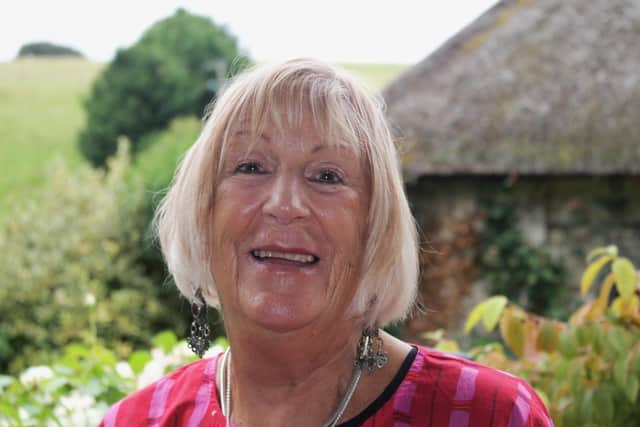
Bowie introduced her Tibetan Buddhism and in 1970 she found herself in Nepal at what she describes as “a sort of embryonic dharma centre outside Kathmandu” run by another big personality.
Zina Rachevsky was a high society heiress who became a Tibetan nun after an intense life including an abusive childhood, modelling, Hollywood, addiction and movie star lovers such as French actor Henri Vidal.
Her father was an aristocratic fugitive from the Bolshevik revolution in Russia who ended up in Paris, where he met and married the daughter of an immensely rich American businessman.
Zina was their only child and went on to have three husbands and two children of her own. She became a nun in 1969, founding a meditation centre that evolved into a Tibetan Buddhist organisation with followers worldwide, but mysteriously died in retreat and amid much rumour in 1973, aged just 43.
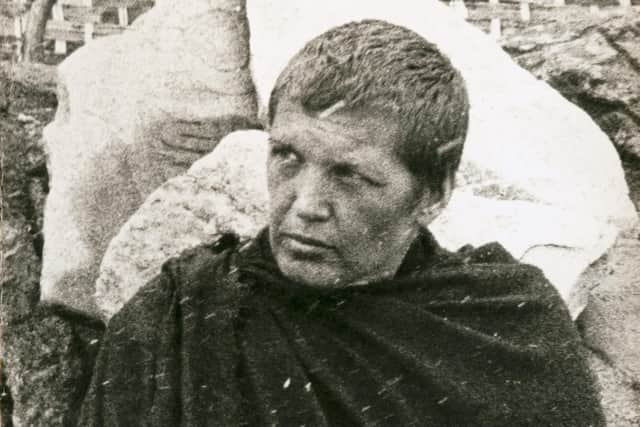
During their time together, Mary became friends with Zina, who gave the author a typescript copy of her extensive memoir.
Mary says: “I was kind of puzzled by her. I mean, she was mesmerizing. She had very powerful charisma and even as a nun swathed in maroon robes, she was absolutely drop dead beautiful – shaved head and robes, not at all flattering, but she was still gorgeous. And she had a very very powerful personality, and I really liked her. A lot of people didn't. She was very disruptive, she was very passionate and very loud. And she had absolutely no moral compass. She would do whatever it took to satisfy what she needed and what her sense of direction was. So she was a very paradoxical, multifaceted character and the more I learned about her from other people, and the more I read the memoir, the more I realised that this was something really quite extraordinary and unique. Eventually I got around to writing the book, but it took me a very long time to do it. It had a long period of gestation, if you like.”
After Zina gave Mary the memoir – which was incredibly difficult to decipher, she says – it wasn’t until 1994 that she spent six months interviewing people who knew her after a wealthy friend offered her an around-the-world airline ticket.
“This was a kind of rite of passage when my youngest kid left home to go to university, and I had an empty nest syndrome, and I was very restless. I wanted to do something, go somewhere, and he offered me this, he offered his credit card, and I said: ‘Well, I'd love to do it, but I can't just travel for the sake of it. That's not where I'm at anymore’.
"I thought, there's all these people that Zina knew around the world. I'll go on this sort of Zina fact finding interview pilgrimage.”
It was only in September this year that Zina: The Woman Who Changed Worlds, Mary’s third book, was finally published, after Psychedelic Suburbia: David Bowie and the Beckenham Arts Lab came out a decade ago, then Sex and Violence in Tibetan Buddhism: The Rise and Fall of Sogyal Rinpoche (with Rob Hogendoorn) was released in 2019.
“I really think that the first two books were like, you learn how to write books by writing books, and I don't think I could have done Zina earlier than that. I really don't because I had to have a certain level of learned skill before I could put that book together.
“It was a very complex operation, a mixture of personal experience, other people's experience and her memoir.”
It was only following a successful career in print and broadcast journalism, including roles with Visnews, Independent Radio News, LBC, Thames News, TV-am and the BBC, that Mary turned to writing books with the support of her husband Chris Gilchrist.
Mary agrees that she has led quite a life herself. “There's been some serious downs but there's been some very good ups as well,” she says. “I’m in a relatively tranquil state out in the country with my husband and taking it a little bit easier than I have done in the past, not a lot.”
Zina: The Woman Who Changed Worlds, published by Jorvik Press, is available now.