
Millions of tonnes of waste could be dumped in ex-quarry wildlife site near Yorkshire village

Nearly 3m tonnes of building waste could be dumped in a former quarry, near a Yorkshire village, which has become a wildlife site.
Plans have been submitted by fast-growing construction firm Ashcourt, which provides building, highways and demolition services, among others, to drain the partially-flooded quarry at Melton Bottom, in East Yorkshire.
The former quarry, close to the Yorkshire Wolds Way national trail, would be infilled over eight years with “inert” waste, which can include rubble, brick, chalk, ceramics, and tile, trucked to the site by up to 60 HGVs a day. Since being abandoned, the undisturbed site has gone back to nature, and consists of woodland, dense scrub, grassland, open water, and exposed chalk cliffs.
The Melton Clay Pit Local Wildlife Site provides a habitat for 21 birds species, with dozens more coming in the winter and is one of the East Riding's 600 designated local wildlife sites.
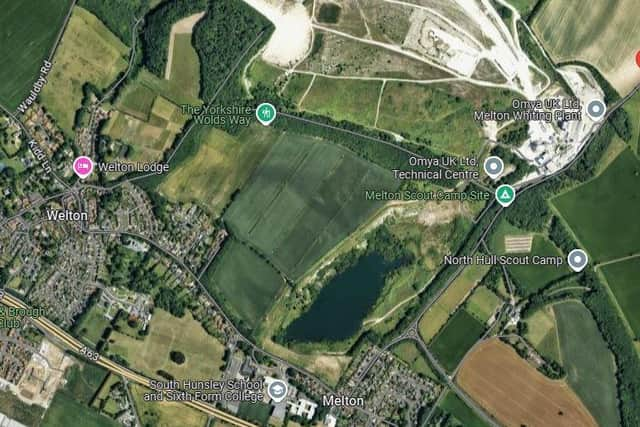

Documents online state that landowner Omya UK Ltd, which has a massive chalk quarry nearby, has agreed terms with Foster Street Ltd (Ashcourt) to make the planning application.
The proposals claim that infilling is needed to stabilise the quarry "because the northwestern quarry face has been unstable and slipping for some years".
It adds: "Should the face be left as it is, it would continue to slip and fall into the lake below not only displacing a significant volume of water which could, potentially, flood the houses and buildings to the south but presenting an unacceptable geotechnical hazard."
The quarry would be dewatered over a period of two years and a new junction constructed off Melton Bottom Road.
A development pad would also be created for a weighbridge, wheel wash and site offices. A noise bund would be built on the southern boundary nearest the village.
The documents state: "The proposal includes the importation of up to 2,715,000 tonnes of inert construction and demolition material for infilling over a period of 8.2 years. The direction of infilling would be from the southwest to the northeast, starting at the deepest parts of the void."
The quarry is part of a special site of scientific interest for its geology, which includes a dark, carbon-rich clay layer known as the Black Band.
However the proposals state that this is "stratigraphically above the geology within the site" and wouldn't be impacted.
Ecological surveys have shown the presence of seven species of bats, as well as the presence of 21 bird species and 48 in the winter, including nine on the “red” list of threatened species.
Once the quarry has been infilled developers say they will create a smaller lake and the land would be "restored to calcareous grassland, open mosaic habitat with additional tree planting".
It adds: “A 30-year aftercare scheme is proposed to manage the habitats created and ensure that good quality, self-maintaining habitats thrive after restoration operations at the site cease”.