
Music Leeds Us: Leeds City Museum exhibition tells the story of city through its sounds
Sam Shakerley Reed heads to the Music Leeds Us exhibition taking place at Leeds City Museum – to find out more about how sound shaped a city.
Music history is often told through headline acts, chart success and global tours. But an exhibition at Leeds City Museum suggests the city’s story is different - not built on megastars, but on a community of musicians, venues and institutions that have quietly shaped one of the UK’s most distinctive music scenes.
The Music Leeds Us exhibition, running until the end of June, aims to celebrate 60 years of this scene. In collaboration with Leeds Conservatoire it highlights some of the well-known, and less well-known aspects of Leeds’ musical heritage.
Leeds City Museum’s Community Engagement Manager, Esther Amis-Hughes, explained that the exhibition grew from the Leeds Conservatoire - celebrating its 60th year in 2025 – wanting to tell its story.

She said: “I am a massive music fan and a musician that has lived in Leeds and has worked in a museum for 20 years. I can’t believe that we opened an exhibition probably 90 per cent of which I didn’t know anything about.
“I think at the last count around about 900 objects were loaned, which is tremendous, because it means that in a story about music in Leeds, the official Museum of Leeds was missing at least 900 objects.
“I don’t think we could have fit more in, but we could have borrowed more. That’s why the title is Music Leeds Us, because it’s about those people and their stories.”
Behind many of these stories sits Leeds Conservatoire. On its role within the city, the Conservatoire’s principal, Professor Joe Wilson, said: “Since it opened in 1965 Leeds Conservatoire (formerly Leeds College of Music) has been a pioneer, helping shape and support the musical landscape in Leeds and beyond.
“This includes offering the first jazz degree in Europe, fearlessly expanding its curriculum and becoming the first conservatoire to offer degrees in music production and popular music.”
Esther agreed: “You do see this trend of things that are being taught at the Conservatoire, those acts emerging in the Leeds scene in the years that followed.
“I think they play a really important part in the ecosystem of Leeds music.”
The range of alumni tells its own story - from Louis Clark, who orchestrated for Electric Light Orchestra, to Phil Taylor behind the drum kit for Motörhead. Most recently, English Teacher won the Mercury Prize in 2024, suggesting the Conservatoire’s influence is anything but historical.
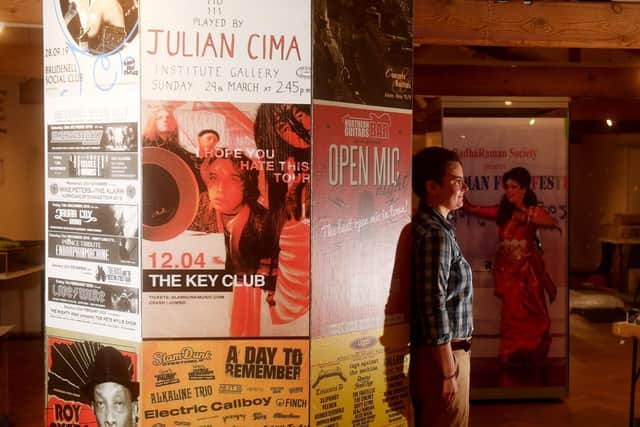
That history is laid out in the exhibition itself, with a detailed timeline running the length of one wall.
Esther named a Sex Pistols gig in December 1976 at the Leeds Polytechnic - now Leeds Beckett University – as something of a watershed moment for Leeds’ emerging punk scene and later goth scene. The gig has gone down in infamy as a part of the Anarchy in the UK Tour. With support from The Clash, it was also the first time God Save the Queen was played live.
She said: “At that gig there appears to have been a collection of people who then went away and formed all of the punk acts that made Leeds - Gang of Four, Mekons.
“These bands were quite unique. They weren’t really Sex Pistols-y. They weren’t really Clash-y. They were a real ‘Leeds scene’.
“The decision for them to stay in Leeds and do their own thing is what I think led to the early days of goth music. So I think you can point to that as a really defining moment.”
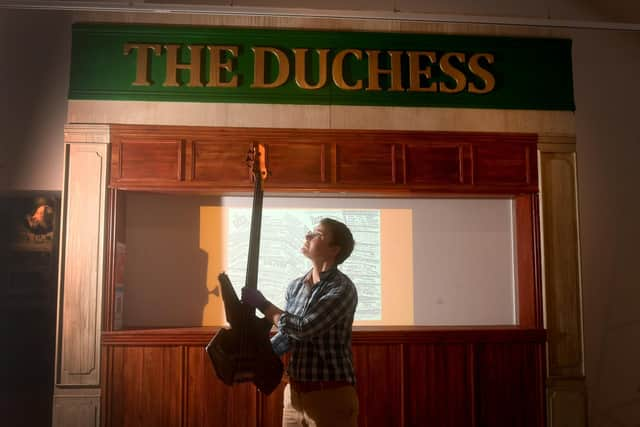
Elsewhere, perhaps the most exciting section of the exhibition is the recreation of The Duchess. Before its closure in 2000, the venue on Vicar Lane hosted international superstars such as Oasis and Nirvana - rumour has it that Kurt Cobain had a kip on one of the sofas before the latter’s gig in 1989.
Originally commissioned for the Compass Festival in 2021 and installed in Kirkgate Market, the model has found a temporary home as the exhibition’s focal point.
But by the time The Duchess closed its doors, a new scene had taken hold. With the emergence of club culture in the 1990s, ravers had brought the party indoors. New venues surfaced, and with them came some of the most distinctive club nights in the country.
Perhaps the most significant was Vague, later Speedqueen, founded by Suzy Mason. Launched in 1993, it became one of the first purpose-built safe spaces for club-goers of all backgrounds. Its written ‘statement of intent’, displayed in the exhibition, took a stand against sexism, racism, homophobia, ageism and ableism.
Exhibition Curator, Michelle Regan, said: “It wasn’t just a club night. It was a community. They had a space in the city centre where people could drop in during the day, they could come for a cup of tea, they could have a chat, they could also get help making their outfits for Saturday night.
“The city, coming out of the 80s and all of that - it was in a bad place. A lot of gay-bashing, disability-bashing, all of it, whereas they were very clear on, everybody’s welcome unless you’re a d***. It became a special place.”
The club nights ran until the late-2000s, and even contributed to NATO peace-keeping efforts. In 2002, Suzy and the Speedqueen team were invited by the British Army to support stabilisation forces following the Bosnian War - running school discos, club nights and workshops in camps for displaced youths.
Stories like these begin to explain Leeds’ place within the wider UK music history, yet it remains a city often overlooked.
Michelle said: “I certainly think the exhibition shows that Leeds has played a much bigger role than it’s given credit for.
“I think why it’s potentially overlooked is that we haven’t shouted about it, we haven’t positioned ourselves in the same way like Manchester and London.
“A lot of what happens here is more grassroots, more community, more DIY and perhaps that’s not always as visible nationally.”
Esther echoed this view, suggesting Leeds’ independence may also be its strength: “Some of the artists that have come out of Leeds have obviously had international success. Famously, Gang of Four influenced Nirvana and Red Hot Chili Peppers.
“But I think there’s something a little bit different about Leeds, which is to do with the way it views itself and the way it doesn’t want to conform to a single stereotype.
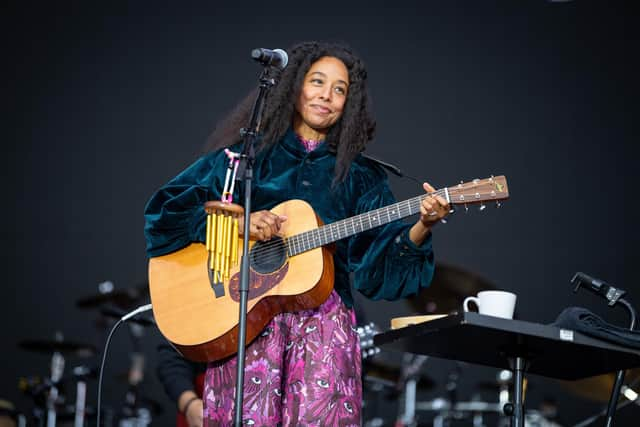
“Without that, you don’t get artists like Corinne Bailey Rae, who can move between genres so smoothly because they’ve experienced it all here and there’s no need for them to stick to one single genre.
“This kind of genre-bending is really unique to Leeds.”
When Suzy Mason took Speedqueen to Bosnia in 2002 she wasn’t thinking about Leeds’ place in music history. She was just doing what the Leeds scene had always done - making space where there wasn’t any.
That instinct is what has defined this city’s music for decades.
The exhibition runs until the end of June. But if the last 60 years are anything to go by, the story is far from over.