
A dangerous legacy of cynicism has been left behind by the behaviour of politicians during lockdown - Andy Brown
Sometimes issues can only be fixed with serious money because a grinding struggle to pay the bills is the central issue behind the multiple problems the person is facing. At other times what is needed is the support of the local community.
The time, care and consideration of friends, neighbours, relatives and volunteers makes a huge difference to lives.
At the start of the Covid crisis many of the professional advisers and senior politicians who were involved in the urgent discussions about how to prevent a total breakdown of medical care spoke amongst themselves of how hard it would be to persuade the public to enter a lockdown. They worried about how badly we would all behave and how short a time we’d put up with the necessary restrictions.
What actually happened was very different. The vast majority of the public behaved impeccably and huge efforts were made to support local people who needed help. In my own village we put out a request for volunteers and a call for those who needed help to ask for support. We got inundated with offers to help and remarkably few requests to receive it.
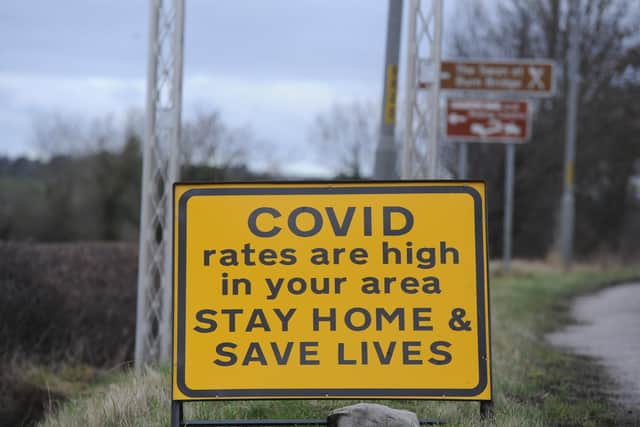

Friends and neighbours had quickly sorted out informal support for those they knew and our army of volunteers were quick to sort out the rest. Within days people were delivering prescriptions, picking up groceries, and organising a morning paper round delivery.
The local community were also very good at sticking to the rules. Conversations took place but they were from a good five yards away and did a lot to keep up morale but nothing to spread disease. People came together in many locations to self-organise morale boosting events like musical performances just prior to the weekly applause for the brilliant work of the NHS, care and retail workers.
So those decision makers didn’t need to worry about local British communities staying strong and behaving well. Unfortunately the reverse wasn’t the case.
It turned out that the people who couldn’t be trusted to keep to the rules were the ones above us who were making them. Too many of the people who were supposed to serve us had become so convinced of their own searing genius that they decided the rules didn’t apply to people like them. Dominic Cummings and his drive to Barnard Castle typified the behaviour of those in the inner circle of decision making. We ended up with two Prime Ministers who had been fined for breaking laws they had rightly told us were of critical importance.
The legacy of the cynicism that this contrasting behaviour has created is dangerous. It isn’t true that all politicians are the same. I’ve met people from many political parties who put hours of thankless work to sort out a problem for a local person with no intention of publicising that work. It isn’t true that all civil servants are lazy people who just want a nice pension at the cost of the rest of us. I’ve worked with ones who put in long hours to come up with well thought out solutions to difficult problems and were incredibly knowledgeable about their work.
It also isn’t true that public services like the NHS are falling apart and can’t be trusted to do anything well. Go to a hospital for a routine and predictable procedure and the service level is often impressively efficient. I went recently on an outpatient visit. We arrived at the appointed time. Within five minutes we were called in. Within ten minutes the job was done. As we were leaving the next patient was going in. There was no queue and we were out within the hour.
Unfortunately, not everything works so well. Going to A&E can be a very different experience, so can trying to get an appointment with the local GP.
The clue to fixing these problems is not to introduce yet another top down re-organisation of the NHS. Nor is it to farm out more parts of the service to supposedly better organised private providers. The predictable easy to run bits of the NHS that could be contracted out are mostly already functioning well.
What is needed is to respect and restore those strong community links. It saves time and improves diagnosis when the same GP sees the same patient. Given the amount of advanced notice we are currently expected to give most privately run GP services before we are allowed to see an actual doctor that ought to become standard practice and it is hard to see why it would cost more.
Similarly it would ease the pressure on A&E units if each GP surgery could offer a drop in service to treat things like simple cuts and bruises quickly via a local community nurse.
In an age of online technology local connections and personal experience matters. We owe the wonderful staff who work in the NHS every bit as much respect now as we did during Covid. Our politicians owe it to the communities who got us through Covid to build on their strengths and provide genuinely local services. Instead of hoping that farming out yet more of our health care budget to hedge funds will improve things.
Andy Brown is the Green Party councillor for Aire Valley in North Yorkshire.