
A tourism tax could put off much needed visitors from coming to Yorkshire - Andrew Vine
Easter has fired the starting gun on Yorkshire’s peak months for tourism. From now until the end of the summer school holidays in September, the businesses which rely on visitors will hope for a bumper season.

Let’s all hope they get it. Tourism is one of our most important regional industries, and it hasn’t had the easiest of times in recent years, even though Yorkshire remains one of the most popular destinations in Britain.
Life has been made harder by the government’s increases in employer national insurance, VAT and business rates. They have been passed on to customers who are facing higher costs for accommodation, the effects of which are already being felt.
The owner of a number of holiday flats in Whitby told me that bookings are suffering as prices have risen. Instead of people staying for a week, they are cutting back to three or four nights.
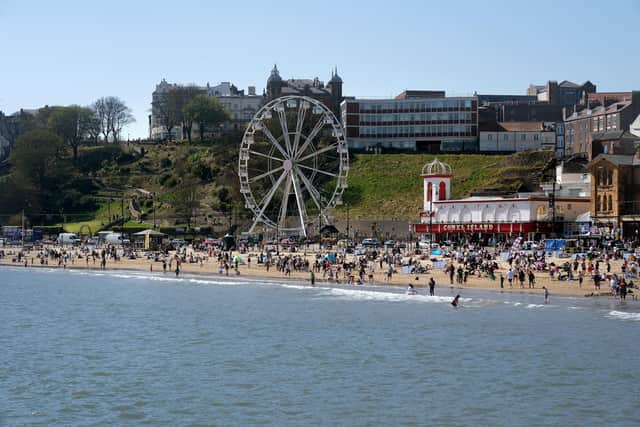

That’s no surprise. Anyone who works in Yorkshire’s tourism industry knows that a lot of the people who pack the hotspots like Scarborough, Whitby and the Dales during the summer are on pretty tight budgets.
Price rises hurt and discourage them from spending money on taking a break, especially at a point when costs of everything from food to fuel to heating are increasing sharply because of the turmoil in the Middle East.
So it is understandable that there is a degree of trepidation among those dependent on visitors about the probable introduction of a tourism tax, even though we are not likely to see it this year.
Elected mayors are being given the power to impose a visitor levy, and York and North Yorkshire’s, David Skaith, is in favour, describing it a few weeks ago as a “game-changing opportunity”.
Given tourism is worth £4bn to his patch, which takes in the seaside and our two national parks, the numbers of its visitors affected by the tax would be far higher than anywhere else in Yorkshire.
Tourism businesses’ concerns about the introduction of the new tax were shown by a survey carried out by North Yorkshire Council. Of the 277 responses, 71 per cent were opposed to the idea, with only 18 per cent in support.
These regional worries are reflected nationally, with the trade body UK Hospitality warning that up to 33,000 jobs could be lost in tourism if a five per cent tax was levied on accommodation.
Yorkshire’s mayors need to think long and hard before effectively pushing the costs of going on holiday even higher,
The arguments that a tourism tax would raise funds to improve infrastructure such as transport and promote tourism are valid, but any benefits could be undermined if visitors cannot afford to stay overnight.
Supporters of the levy usually point to Manchester as an example of it working well. Since being introduced in 2023, it has raised about £2.8m, with no downturn in overnight stays.
But Manchester is very different from the tourism magnets of North Yorkshire. For a start, a lot of the overnight stays in the city are for business, not leisure, and the additional costs of a tax can be chalked up as legitimate expenses.
And Manchester does not have its own tourism market on the doorstep, unlike Yorkshire, the very nature of which will mean its residents being hit with the tax.
Families from, say, Blackburn or Preston don’t go for a week to Manchester in the school holidays in the way that their counterparts from, say, Leeds or Sheffield go to Scarborough or Filey.
A tourism tax to stay in these beloved seaside towns is going to feel grossly unfair to the visitors from within Yorkshire who provide so much of their income every summer.
To ask people from one part of the county they call home – and where they already pay ever-higher council taxes – to stump up an additional premium to visit another part of it just feels wrong.
The owner of accommodation I was talking to gets at least half her bookings from within Yorkshire, and anything that increases prices even further will undermine that, because a lot of her customers are not affluent and even a few pounds extra per night is likely to make the difference between them booking or not.
Those guests may opt for a week of day trips to different towns along the coast instead, which would not only hit the incomes of owners of self-catering hotels and guest houses, but have the knock-on effect of reducing evening trade at restaurants and pubs as well.
If the economy was booming and people had plenty of money in their pockets, visitors might take a new tax in their stride.
But with households under financial pressure and tourist businesses already losing trade because of rising costs, it carries the risk of doing more harm than good to one of our most valuable industries.