
Abolition or reform of the House of Lords would be even more welcome than assisted dying - David Behrens
A ping on my phone from the NHS alerts me to the news that this is Dying Matters Awareness Week – an opportunity, apparently, to encourage open conversations about death and bereavement in the hope of breaking down taboos.

It’s hard to keep track of these ‘special’ days and weeks because most are just back-of-a-fag-packet imaginings by public relations people with something to sell. National Bubble Wrap Appreciation Day falls on the last Monday in January and National Doughnut Week is next month. Anyone looking forward to that last one should welcome a conversation about dying.
But this week’s exercise is timely and welcome. It’s just a shame no-one told the House of Lords about it – because only a few days earlier its unelected members scuppered legislation that would finally have enshrined our right to discuss the subject without inhibition.
For some of those peers, this insurrection was a last hoorah: the debate was ‘timed out’ on the very day the remaining hereditary dukes and earls – those who inherited their titles through their families – were de-robed. Most such peerages were abolished 27 years ago but in a compromise deal with the Conservatives, 92 stayed on until last week.
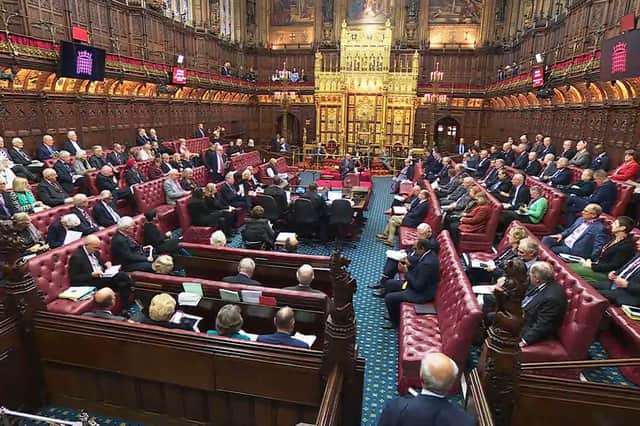

“They did no harm and provided historical perspective, so this just feels wrong,” bleated one of them, Thomas Galloway Dunlop du Roy de Blicquy Galbraith, 2nd Baron Strathclyde, as they hauled him over the Woolsack and out of the door.
Not doing any harm is a low bar. It’s the very least you should expect of a parliamentarian. Yet even in that modest assessment Lord Strathclyde was hopelessly off the mark, because hereditary peers were guilty of collusion in a wholly undemocratic filibuster that saw the assisted dying legislation mired in 1,200 procedural amendments.
But in overturning the wishes of MPs, the Lords may have signed their own death warrant.
The extent to which they are out of step is laid bare in the latest polling. Around two-thirds of us want assisted dying to be made legal in the next five years for terminally ill adults, and up to 80 per cent want it to be available on the NHS.
The reasons are practical as well as ethical. Most supporters think the overall cost to the health service would go down, not up. And an overwhelming number believes assisted dying is a kindness that would ease pain and preserve dignity.
That was also the view of a majority of MPs who voted, free of party constraints, to send the Bill to the Lords for scrutiny and ascent into law. Instead, the Upper House obsessed over patients who might be pressured to end their lives by scheming relatives concerned about their inheritance. That at least was something the hereditary peers could identify with.
The Chamber was also swayed by the bench of 26 bishops whose involvement in passing laws is a further anachronism. Chief among them, of course, is the Archbishop of Canterbury Sarah Mullally, who said the legislation was “unworkable and unsafe” and proposed instead better palliative care.
She used to be a nurse so she does have experience of the subject at hand. And she’s right that safeguards must be built in. Indeed, it was the Lords’ job to do exactly that. But instead it abdicated the responsibility and sacrificed individual freedom on the altar of divine providence.
Dame Sarah’s argument is that legalised dying will place implicit pressure on people to end their lives to avoid being a burden to family or the state. But that’s deeply subjective. One might equally say it empowers people with the freedom to avoid doing those things.
It’s certainly a choice I would want, but I’m not constrained by religion. If I was, I would be unable to escape the presumption that God must really want families to suffer. Well, what other conclusion can you draw from the theological browbeating of the Bench of Bishops?
Perhaps that sounds blasphemous but it’s one of the taboos that Dying Matters Awareness Week is supposed to break down. And if we really are going to have an open conversation about death and bereavement, it’s the central question we need to confront.
The House of Lords could have done a great deal to lift the fog from the debate. But by placing itself above public opinion it has made its own future as contentious as the law it sought to block.
According to one poll, only 14 per cent of us take a positive view of the Lords, even in its newly reduced state – and that makes its abolition or reform even more welcome than assisted dying. One way or another, it will be only a matter of time before the public has its way.