
Addressing inequalities at school is even more important post-Covid - Matt Bromley
At a recent Westminster roundtable on raising attainment in schools, I argued that Ministers need to put their money where their mouths are when it comes to improving young people’s life chances.
They need to abolish the two-child benefit cap, ensure the recent expansion of free school meals provision is re-coupled with Pupil Premium funding, and properly invest in the Best Start programme to ensure it emulates the earlier success of Sure Start.
Currently, disadvantaged children – whether that be those living in poverty, those from underrepresented cultures and ethnicities, those known to children’s social care, or those with special educational needs and disabilities – start school behind their peers and the gap widens as they travel through the education system, in part because knowledge begets knowledge.
Covid exacerbated the problem. There’s been a marked rise in absenteeism since the pandemic, and although we are starting to see some green shoots of recovery, attendance gaps persist with disadvantaged children being more than twice as likely to be absent, leading to lower rates of progress, weaker outcomes, fewer life chances, and smaller earnings power, not to mention poorer health and wellbeing.
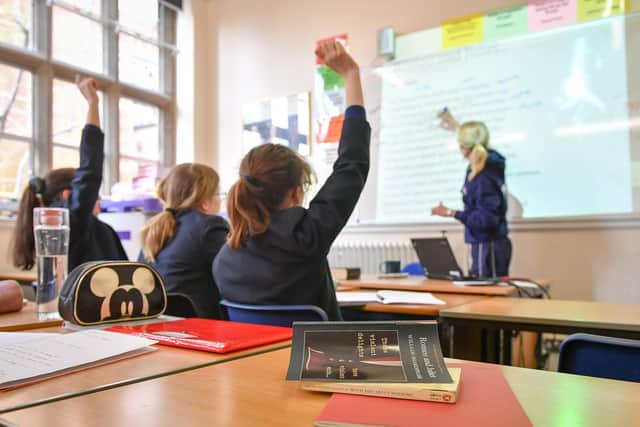

The school curriculum often fails to talk to the lived experiences of disadvantaged children – and because they do not see themselves reflected in what is taught, how it is taught, and who it is taught by, they do not feel it is for them. They think education is alien, for someone else; they don’t see a pathway to future success and so they absent themselves - first intellectually, then physically. Furthermore, these children often lack the vocabulary and cultural capital needed to access the curriculum and so fail to achieve their potential.
There’s little doubt that a child who lives in middle-class affluence will outperform one who lives in poverty, both at school and at every juncture of their lives, not because one pupil is brighter or harder working, but because the affluent child started the race of life halfway round the track and has more expensive running shoes.
We must not conflate advantage with ability. Think not that disadvantaged children are less able but, instead, that they have not been afforded the same opportunities as their more advantaged peers and thus have gaps in their prior knowledge and a smaller frame of reference. Think not that children with SEND have disabilities but, rather, that the school environment is not suited to their needs, that their impairment becomes disabling because society’s expectations of how they engage in class and demonstrate their learning are not well-matched to their needs.
In practice, schools should treat each child as an individual not as part of a homogenous cohort of similarly labelled learners and convert the causes of disadvantage (such as living in poverty) into tangible classroom consequences (such as having limited vocabulary and cultural capital). Schools then need to move from equality to equity.
And underpinning all this is belonging - ensuring every child is seen and heard, valued and respected, and can participate fully in school life and is helped to prepare for full participation in life beyond the school gates.
Matt Bromley is CEO of bee and Chair of the Building Equity in Education campaign. He’s the author of numerous non-fiction books on education and leadership, the latest being Why School Doesn’t Work for Every Child.