
Andy Burnham must ditch the vacuous gibberish and start levelling with the country - Andrew Vine
I’m getting mightily fed up with the language being used by those either running the country, or hoping to. And no, that doesn’t mean the rancorous and sometimes insulting discourse that can pass for debate these days.

The stuff annoying me is the woolly and vacuous rubbish that is increasingly presented as policy, which is intended to persuade us that something of substance is being said when in fact the words amount to nothing.
It is a triumph of public relations speak over truth, designed to lull audiences into thinking they have heard a visionary, and the man who is overwhelmingly likely to be our next Prime Minister, Andy Burnham, is a master at it.
Listen to almost everything he has said along the lightning-fast journey from announcing his candidacy in the Makerfield by-election to being welcomed as a saviour by Labour MPs, and it has told us virtually nothing about what he will do when he follows Sir Keir Starmer into 10 Downing Street.
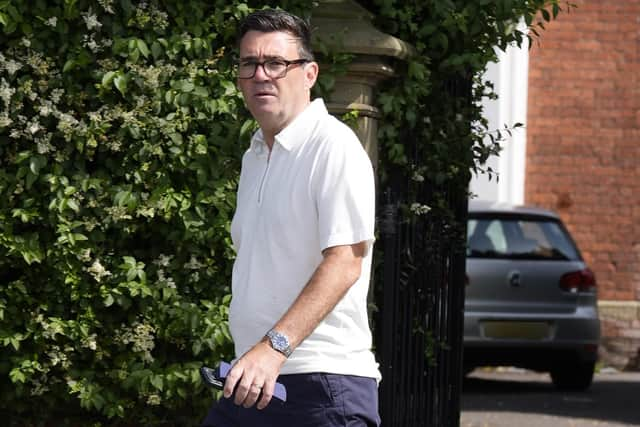

His speeches have been littered with the same words – change, hope, making politics better – and I haven’t a clue what any of them mean in practical terms.
Nor does the oft-used mantra of his colleagues in government, ‘Labour values’, leave me any the wiser.
To be fair to Mr Burnham, he’s not the only one guilty of this verbal sleight-of-hand. In fact, his approach is a rerun of that adopted by the man he seeks to replace during the general election campaign almost two years ago.
Then, Sir Keir was at pains to say as little as he possibly could about Labour’s detailed policy programme if it won office.
The same old stuff about change, hope and a better sort of politics was trotted out, the intention being to say nothing that would alarm voters, let alone treat them like grown-ups by telling them the country’s finances were dire and fixing the problems would be painful.
The party’s manifesto might just as well have been blank sheets of paper bound together into a glossy booklet for all it told us.
There was no clue about what would actually be sprung on the public, such as the cut to pensioners’ winter fuel payments, the family farm tax, or the concreting over of the countryside with houses and solar farms, all of which alarmed the electorate, leading to Sir Keir’s plummeting popularity and consequent resignation.
The country was effectively taking a leap into the unknown by electing Labour, giving the thinness of what it actually said about governing, and now we’re about to take a similar leap, without even being given a vote on whether to back Mr Burnham or not.
Are our taxes going to go up? Don’t know. Will anything be done to tackle the spiralling welfare bill that is slowly bankrupting the country? Don’t know. Are our armed forces going to be beefed up to make them a credible deterrent to aggressors once more? Don’t know.
Talking about change, hope, fairness and Labour values doesn’t answer any of those key questions for Britain, and nor does it offer even the slightest clue about how the country’s new leader would get the sluggish economy growing to increase general prosperity and wages.
Labour is not alone in adopting this slippery strategy of swerving detailed policy proposals for tackling the big and unavoidable issues.
It has crept into all the major parties’ campaigning in recent years, and is one the reasons for public suspicion of politicians.
Mr Burnham’s election is behind him – and if all goes to plan he won’t face another for three years – so there is no reason to stick to the vague waffle he has spouted so far. He’s more likely to win public confidence if he’s honest, straightforward and specific about what needs to be done.
That’s shown by one of the few specifics he has cited – to move part of the Downing Street operation to Manchester, a step that will be greeted enthusiastically in the North.
The centralisation of power has been one of the major factors in the north-south economic divide persisting for so long, hampering Yorkshire’s growth and prosperity.
However well meaning, efforts made from a desk in London to close that gap can never be as effective as having decision-makers based in the north, where they can see and experience at first hand the problems this massive part of the country faces.
Cut the platitudes, Mr Burnham, and level with the country that you’re about to lead.
We’re all adults and we want answers to the hard questions, not soft-focus sentimental gibberish about change, hope, fairness and Labour values.