
Animal cruelty cases shine a light on the great contradiction we face in this country - Daxa Patel
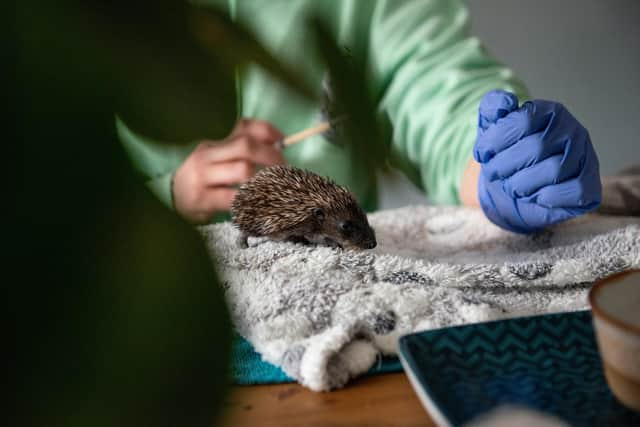
A short BBC report this week carried a weight far greater than its length. A pregnant hedgehog was taken to Castleford Hedgehog Rescue after what the charity described as one of the worst cases of cruelty it had encountered in 16 years of caring for wildlife.
According to the report, she had been attacked by a group of boys in Sharlston Common and kicked around like a football. When rescuers saw her, she was badly smashed. She died the following night, along with her unborn litter.
It is the kind of story the mind instinctively wants to turn away from. It is brutal, senseless, and profoundly uncomfortable. Yet perhaps that is precisely why we should not look away. In May, another incident involving schoolgirls attacking a hedgehog was reported. Two separate cases within months should trouble us deeply.
We can have difficult public conversations when we choose to. We discuss reports of domestic abuse increasing during major sporting events and extended pub opening. We ask what lies beneath the statistics, what behaviour is being normalised and what more society can do to intervene. Animal cruelty deserves the same willingness to confront what we would rather not see.

Children do not grow up in isolation. They learn from the adults and the environment around them. They learn what is normalised, tolerated and ignored. Equally, they learn what is cherished. The other morning, while walking with my German Shepherd, a young boy standing beside his father looked at him with the biggest smile on his face. From a distance, I said that I could tell he liked dogs. The boy smiled and his father explained that his first experience of a dog had been with an Alsatian. It was an ordinary moment, yet quietly lovely. A child, a father, a dog, and an uncomplicated expression of affection.
Set that beside the horror of a pregnant hedgehog being kicked around for amusement. Something is badly out of sync.
The law does provide significant penalties for the most serious cruelty offences. Under the Animal Welfare Act 2006, causing unnecessary suffering to a protected animal is an offence, and the maximum penalty was increased in 2021 to five years’ imprisonment and an unlimited fine. Courts can also disqualify offenders from owning or keeping animals. Sentencing guidelines recognise death, grave injury and very high levels of pain and suffering as the most serious category of harm.
There is, however, an important distinction when the alleged perpetrators are children. The adult sentencing guidelines do not apply to those under 18. Instead, the courts must have regard to separate principles for sentencing children and young people, where rehabilitation and the welfare and development of the child rightly play a significant role. That principle matters. A child should not simply be treated as a smaller version of an adult. But neither should we be afraid to ask difficult questions when behaviour is so extreme.
If an act of deliberate cruelty is committed by a young person, our response cannot be to hope that it was a phase. There must be intervention, education, accountability, and a serious attempt to understand what has happened and why. Rehabilitation should not mean minimising the significance of the behaviour. A meaningful consequence can itself be part of rehabilitation.
There is another difficulty. The law does not always treat wildlife and domestic animals in precisely the same way. The Government has acknowledged differences in the penalties available for some wildlife offences and has committed to reviewing whether stronger and more consistent protection is needed. That should concern us. A hedgehog should not have to become a pet before we recognise that deliberate cruelty towards it matters.
The RSPCA received around 61,000 complaints concerning abused or neglected pets in 2024. Its work, alongside that of smaller rescue organisations and countless volunteers, is a constant reminder that animal suffering is not an occasional aberration. It is an ongoing reality which requires investigation, intervention and, where necessary, prosecution.
Yet this is where we encounter one of the great contradictions of modern Britain. We are, in many ways, a nation of extraordinary animal lovers. Many of us would think nothing of spending thousands of pounds on veterinary treatment if it meant saving the life of an animal we love. We describe our dogs and cats as members of the family. We rearrange our lives around their needs. We worry about them when we are away. We celebrate their birthdays and grieve for them when they die.
And yet, alongside that compassion, cruelty persists. Last week, while in Grassington, I watched a man walking his dog. Each time the dog attempted to move in another direction, the man dragged him by the neck. He was presumably the legal owner. But ownership and suitability are not the same thing.
The pregnant hedgehog at Sharlston Common was eventually found by someone who did the right thing. A rescue organisation was contacted. But rescue after the event is not enough.
Daxa Manhar Patel is a leadership coach, author and solicitor.